Academic Writing

Tuesday, November 19, 2013

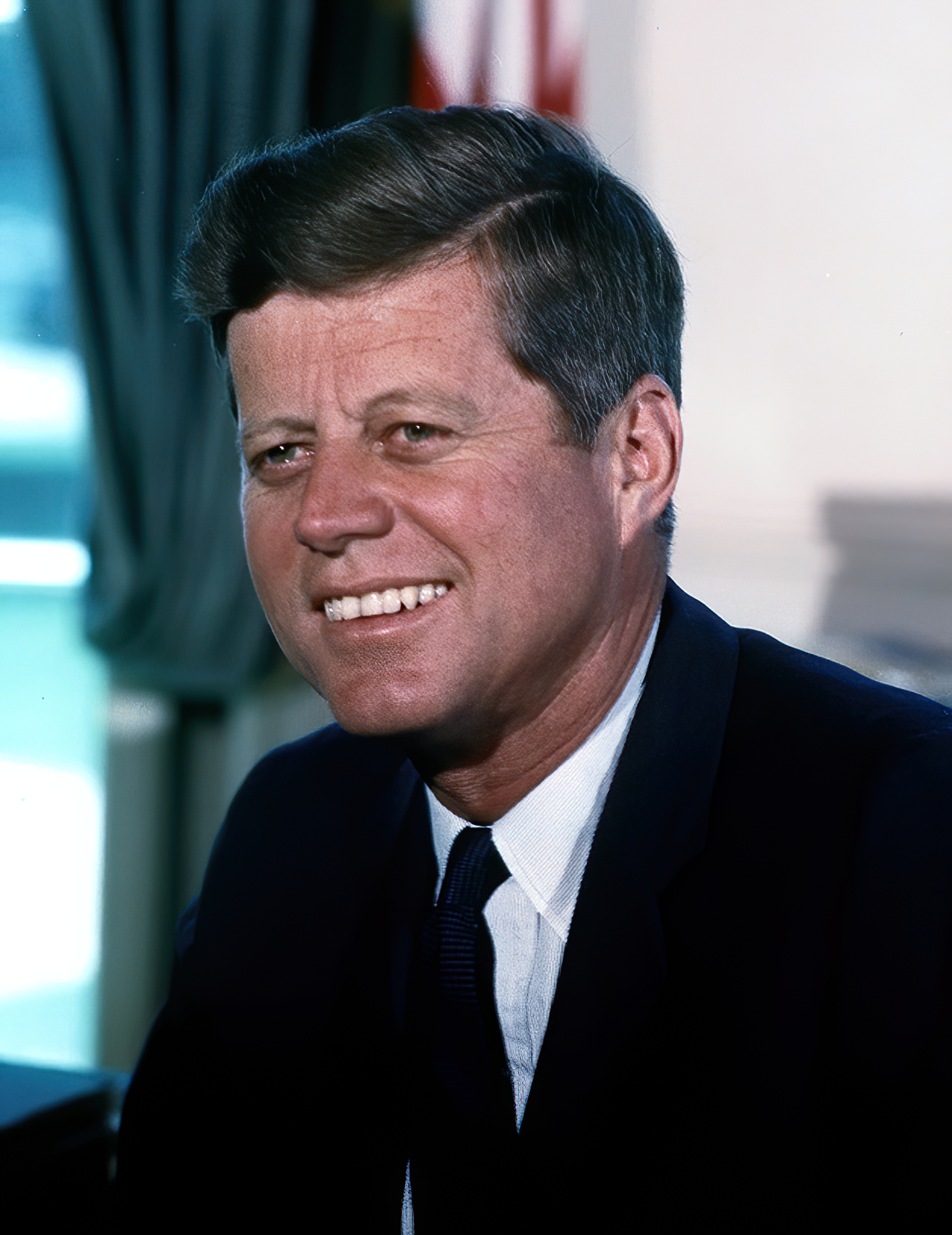
The Kennedy Assassination 50 Years Later: Why do we still care so much?

If you've turned on a TV this week you've been likely to see some mention of a special about the 50th anniversary of the JFK assassination.  There have news specials, documentary films, and entire News Magazine shows devoted to the tragic events that unfolded 50 years ago, this Friday.  Sure, it’s a ratings grab.  Every network wants a piece of the pie.  But the question is, why is there even a pie to be shared?  Why are Americans so drawn to the barrage of coverage that there are enough eyeballs to watch everything and make them profitable?

What is it about the untimely death of our 35th president that is still so intriguing to Americans that it warrants so much time and attention by our popular media?

John F. Kennedy is an enduring character in our popular and political culture, yet his story is so uncharacteristic of who Americans tend to hold up to our highest regards.  He did not struggle to the top from humble beginnings.  He was not an underdog who overcame great odds to become our president.  He was born to a wealthy family with great political, social and economic resources.  He had the best education America had to offer and great social status.  He is the antithesis to the American dream.  He didn't have to work for his social and economic status.  He probably didn't have to work at all if he didn't want to.  Not that everything was handed to him on a silver platter (despite chronic medical woes he was a decorated Navy lieutenant who fought in WWII and suffered injuries during his service, and he worked his way up in politics to our country's highest office), he does not embody the values that the American character tends to celebrate. 

So, what then is it about him that endures?  I've been watching a lot –and I mean a lot of the specials on Kennedy and there are 2 themes are at the heart of almost all of the retrospectives and explorations into Kennedy’s life and death.

The first is how he is frozen in time as this handsome, charismatic young man who had so much potential to make this world a better place and all of that potential was cut short in one instant.  His beautiful wife and children are the things fairy tales are made of.  He had it all and he could have been our great savior – after all, he founded so many important social, environmental and scientific initiatives that are, till today, cornerstones of our society such as the Peace Corps, desegregation initiatives, Space exploration, foreign policy, and the list goes on.  Who knows what he could have gone on to do?  He was a doer and a joiner.  In today’s era where things are so contentious and divisive and seemingly nothing actually can get done in Washington, he was someone who had ideas about what would make our country – and this world – a better place, and he actually got a lot done.  So yes, he was born into greatness, and he reached a place of potential, but just how much farther could he have gone?

The second theme is the conspiracy theories that endure till today.  The Warren commission swore up and down that there was no conspiracy.  Additionally, new forensic evidence and 21st century technology and experiments also have shown that there was no second shooter, no magic bullet and no government involvement in the death of our president.  Yet there are still some strongholds out there that there is more going on than what that evidence seems to point to.  Oliver Stone, the director of the 1991 movie, JFK said it then and reaffirms now that he believes that there had to be a conspiracy surrounding the shooting.  Part of it is that Americans love a good murder mystery.  But I think the other part of it is that there’s a disbelief – or a want to disbelieve that the most powerful person in the free world could be taken down by just one guy with a grudge.  One guy hiding out in a book depository who no one noticed taking aim at our President.  Could security be that lacking?  The conspiracy theory also feeds our seeming need to distrust government and big brother who watches and controls the day to day of our society.  The events surrounding his assassination is rife with questions and so rich with opportunity for conspiracy theories and doubts of the actual events, its no wonder people are still trying to piece together all of the elements to form a sequence of events that give closure.

These are two fundamental pieces of our American character.  So while John F. Kennedy was not the typical character one might write up to be a model of the American dream but in his death so many questions are left unanswered.  That rich text for exploration and questions will endure because there’s no way to answer “what if” and each generation can place their hopes and dreams onto what could have been and hope for something better for them.

Sunday, May 26, 2013

The Great Gatsby


The 1920s is having a moment.   The decadence, the opulence, the sheer extravagance seem to make its way onto the big and small screen time and again and pervade so many aspects of our popular culture today.  It’s no surprise, however, that this should be the case.  Both now and then have many similarities. In a time of great economic instability – then, right before major economic upheaval and us right after – the wealthy seem to be getting richer and the poor seem to be pushed into deeper economic despair.  Music and fashion are pushing cultural boundaries.  Social and political unrest are prevalent and a growing distrust of the government is blooming.  It is no wonder than in both of these times another constant is that people are looking for some kind of relief and outlet for their woes. 

Directed by Baz Luhrmann, The Great Gatsby is a retelling of an old story – both because we’ve all read F. Scott Fitzgerald’s book at least once and because the themes of lost loves, lavish excess, star crossed lovers, cheating lovers, outsiders, insiders, rich and poor have all been covered throughout the history of literature and film.  In his film, Luhrmann puts his own unique auteur stamp on it.  Through his whimsical and often chaotic aesthetic style and a true understanding of the medium in which he works, he layers together his special brand of filmmaking.  The bright and vibrant colors, quick cuts, and close up shots are all signature Luhrmann.  He magnificently recreates the world of the narrative and brings a new and exciting vibrancy to 1920s New York.  

Gatsby takes place in 1922, right at the height of stock market boom, before it all came crashing down.  Nick Carraway (Tobey Maguire) is our narrator, the outsider to the world in which he takes us, the viewers.  His cousin Daisy (Carey Mulligan) is married to an old Yale buddy of his, Tom Buchanan (Joel Edgerton) out on Long Island.  Across the Bay is the famed yet mysterious Jay Gatsby (Leonardo DiCaprio) who is in love with Daisy and throws extravagant parties for whomever wishes to join yet remains allusive to all of his guests.

In Luhrmann’s brilliant twist of fate, he gives Nick the voice of Fitzgerald as the literary voice behind the narrative.  After graduating from Yale, where he had hoped to become the next great American writer, Nick abandons that dream to become a stock broker and make money.  His summer takes a turn for the strange when he meet’s Jay Gatsby at one of his lavish parties.  Immediately he is sucked into the drama that comes with someone like Jay.  Additionally, he pairs up with his cousin, Daisy and her bombastic and disgustingly rich husband Tom.  Nick finds out about Jay’s history with Daisy and suddenly becomes a part of their secret love triangle.  It is at his psychiatrist’s behest that he writes down journal entries of what bothers him and yet what he is unable to convey through the spoken word.  Those entries become the story of The Great Gatsby.  It is Luhrmann’s tribute to Fitzgerald for maintaining his objective view while living in and observing the world he so delicately wrote about.

Gatsby rehashes the age old trope that money cannot buy happiness.  For all of the characters, there is a constant to feel full – full of money, full of friends.  The more you have, or pretend to have, is how you can prove your worth in this world.  This was the case in the 1920s and this is again the case now.  People believe that the more things they have the better they seem and the more people will like them.  For Gatsby he thought that providing people with lavish parties full of free alcohol and entertainment made him loved.  As it turned out, all of those were empty gestures.  When he died, none of those takers were there to give back to him and pay their respects.  He was surrounded by photographers and the press who ogled in the spectacle that was Jay Gatsby.  The only one who was around for him and who really cared was Nick.  Not coincidentally, he was also the one person who refused to take anything from him.  The one person who just wanted his company and his friendship.

Ultimately the lives that our characters live become a race to see who can become the one to die with the most toys – and for what?  No one, not one person in the whole story has a meaningful relationship. Nick thought he had one with Gatsby, but in truth, we don’t actually see a true friendship blossom.  Nick only finds out about who Jay Gatsby was at the end of the film and right before Gatsby dies.  Perhaps they were on their way to a great friendship, but that opportunity was snuffed out.  Daisy and Gatsby – the great star crossed lovers whose fate was never realized – also did not have any evidence of a real relationship outside lust at first side and raw sexual desire.  Five years before our story begins they met at a party and were instantly attracted to one another.  He was in love with her yet when she heard he was penniless she found someone who could provide her with the riches she (and her social status) so desired.  Tom and Daisy, while they are married and have a child together are another dysfunctional pair as he has a wandering eye and hops into bed with any woman he finds beautiful.  He somehow seems to think it’s a redeeming quality of his that he always comes back to Daisy.  

The story, mostly told through flashback, is narrated by Nick while psychiatric care after his summer with Gatsby and the Buchannans.  This perspective conjured up a comparison to One Flew Over the Cuckoo’s Nest – the idea that the insane are running the asylum.  As a culture we value those with money because that status gives them power.  They gorge themselves on material wealth and neglect their emotional states for it.  It is those who go against that grain and don’t buy into that hype are relegated to the sidelines because they don’t have the same “values” or cash on hand to enjoy the finer things in life.  Nick is perfectly happy in his small cottage that he rents for $80 a month.  He wants to use his summer to learn a trade – the stock and bonds business.  Yet he is sucked into the world that Daisy, Tom and Gatsby inhabit and it ends up driving him crazy.

Nick is the consummate outsider – commenting on and observing other people’s drama.  In his voice over narration he laments how he is the keeper of everyone’s secrets which places him both on the inside of their lives and yet always just to the side of it.  Initially he so wants to be a part of it, doing all he can to join in.  Yet, it is his outsider status that ultimately allows him to maintain his sanity and an objective viewpoint to bring him to the other end of the narrative where no one else was able to.

Maybe it’s not that the early 2000s is so similar to the 1920s, rather that American culture is a constant and that The Great Gatsby has maintained its status throughout the generations since it was written because of its universality.  The story recounts struggles that everyone faces in one form or another at some point in life.  Since 1776, the American dream has been such that people believe they are always able to pull themselves out of whichever social or economic sphere they were born into and grown into the next one up.  Generations of successful Americans have proven that to be a viable option. Yet as The Great Gatsby states, the dichotomy between the Nuevo-riche and the old money people is a constant struggle.  The idea that being born into money (as is the conversation in Gastby) or being the “dominant race” or religion, or in today’s cultural climate, the “right sexual preference” somehow gives you a greater stronghold in the world goes directly against the ideal of the American dream yet is alive nonetheless.  Gatsby is a story for the ages and never has that been more evident in Luhrmann’s most recent retelling.  I have no doubt it will be told again and again for decades to come.

Tuesday, February 19, 2013

JC YL GIFs


When I tell main shul members that I have three roommates in a converted one bedroom apartment they're like:


and I'm like:


When we have to sit through another membership appeal speech:


Signing up for all YL events:


When I'm pressured to go to a public lecture in the main shul:


Walking down the OZ stairs friday night:


Walking into YL minyan on shabbos morning:


When I think I look cute eating the chulent and potato kugel at kiddush:


When I told my friends I was moving to the west side and not the heights:


When I walk into shul and realized I got there JFK:


When my little sister moved to the west side she's like:


When my mom comes for shabbos and wants to go to OZ friday night:


What I wish simchat torah at the JC was like:


Getting ready for the YL Purim Shpeil:


Walking into shul before Torah reading has started I'm like: 


When the JC raised YL membership rates, I was like: 


YLers before the Shmini Atzeret lunch started:

image


How I look at work:


and how I look at shul:


When I'm on the elevator going to kiddush and I see main shul members coming:


PURIM!
image


Nonmembers on a non-hot kiddush day:


When I hear kiddush is on the 5th floor and YL davening was on the first:


When Facebook becomes a show-off showcase for everyone's cooking (and their kids):

image


Going to Ali Baba's on a saturday night at 4 AM:


When I can finally afford my own apartment:

image


My roommate dragging me to Darchei Noam:


When the shul tells me I've aged out of the YL membership price range:


Me on a first SYAS phone conversation:

image


When I spot a cute guy across the crowd at kiddush:


My roommate when I head out on a first date:


How I feel when my married friends invite me to Riverdale:


When I get my renewal email from SYAS:


When my mom insists I go back on SYAS, even if she's paying:


When a guy friend tries to be a suave wingman at the JC kiddush


-- 

Monday, February 11, 2013

Girls Recap - "One Man's Trash"


I know I haven't mentioned Girls on this blog yet.  But after watching last night's episode, "One Man's Trash" I felt compelled to speak out.  I have watched this show for now a season and a half unsure about how I felt about it.  I have now come to the conclusion that I'm over this show.

Quick recap of the episode:  Grumpy Bushwick resident (Patrick Wilson, character to be named later) comes into Mr. Grumpy's (ironic, huh?) because some scourge of the earth is dumping their trash into his garbage cans.  Ray knows nothing about this and refuses to implicate his staff in such a heinous crime. Unsatisfied with the response, he storms back home.

A few minutes later Hannah shows up at his door to confess to her misdoings.  He offers her lemonade.  She kisses him.  He kisses back and they have sex on his kitchen counter.  And of course Hannah's boobs pop out to say hello.  Oh, and we learn his name is Joshua (not Josh, get it right).  They both call in sick to work the next morning and spend the day lazing about, reading, eating and playing naked ping pong (boobs, boobs and more boobs, of course).  Joshua dotes on her, caresses her lovingly and cares for her like a loving husband or boyfriend would.  Later that night she breaks down emotionally and returns his boyfriend-like behavior with supposed girlfriend-like behavior - needy "love me" and "I deserve to be happy" tears.  Not surprisingly he's not turned on by this literal outcry of emotion from his one-day stand and suddenly the once charming guy becomes a distant stranger to Hannah.

Now here's my analysis:  First of all, I can't stand Hannah (or Lena Dunham's) self aggrandizing and self important nature.  First, put some damn clothes on.  I get it.  We all get it.  You're comfortable with your body, despite its odd disproportionate features.  But I don't need to see it.  Always.  In every episode.  Enough.  Seriously.

Additionally, similar to why I couldn't stand Carrie on Sex and the City, it's really not so pleasant watching someone constantly talk about how great they are or how deserving of a storied life they are.  You also are not so special that you deserve anything different from anyone else.  From the first episode Hannah was a brat.  Getting all pissed off at your parents because at 23 they aren't going to completely pay your way anymore is something that is supposed to happen.  (For more on people taking credit on things you're supposed to do, see Chris Rock at the 2:12 mark.)  I get it, young women make bad decisions when it comes to men.  That's true.  Getting attached to guys your not supposed to get attached to also often happens.  But her little pity party for herself when she realizes that she's not above being human was infuriating.

Hannah is 24.  Joshua is 42.  They are totally wrong for each other in so many ways - she tells him she didn't even know that houses like his - opulent and grand - existed in her neighborhood.  He is a successful doctor coping with a divorce.  She is a needy millennial who is convinced she is going to be the definitive voice of her generation.  I am smack in the middle of these two generations, so maybe that's why I don't get it.  I've had to (and am still) struggling to get my career off the ground.  I've had to work hard to get to where I am and seeing some kid complain that at her age she isn't as successful as her pipe dreams had assured her they will be makes me feel like this:


Also, not to mention that Lena Dunham is the successful version of Hannah, so watching her play this pathetic, self-important, immature character is all the more frustrating.

That is all for now.  Comments.  Agreements. Disagreements. All are welcome.


Friday, January 18, 2013

Violence and American Culture


I've been thinking a lot about violence in our movies and popular culture lately.  The tragedy in Newtown, CT is just the latest in a string of violent acts.  Talking heads and politicians are always so quick to place blame - it's because we need tighter gun control or because our movies and TV shows are too violent.  Maybe it's because our video games are too violent.  

Those all might be true.  But I couldn't help but wonder, why is this a problem in the United States and not so much in other countries.  Our movies get shipped overseas and are seen across the entire planet.   I think it’s a deeper issue.  

We are a nation that values violence.  If we go back to our roots, it is how we became who we are today.  American broke free from the British rule through a major war.  Violence got us what we wanted.  Then we had another war on our land where the north and south fought over which way of life was better.  The North won, and history has proven that the victor in that moral dichotomy was in fact the appropriate victor.  When violence was perpetrated against us – both on Pearl Harbor and then again on 9/11 how did we react?  Through violence.  How did that turn out for us?  Well, with WWII we had a clear victory, and while with this current war on terror things aren’t as clear cut but with the elimination of Saddam Hussein and Osama bin Laden I think people are ok with our whole “let’s go get the bad guys” way of reacting.  In the 1960s when the students and hippies were attempting peaceful protests more often than not they were met with violence (Kent State anyone?  How about the 1968 DNC?  Violence, violence, and more violence).  For better or for worse violence is how we as a nation get things done.  We always have.  

Our movies, TV shows and video games just glorify what we already know.  We know we get what we want through imposing violence on others.  And in a ratings rat-race on TV and a money hungry movie industry these standards are always getting upped higher and higher to outdo the last iteration.  It’s happening with sexual depiction as well, but our culture has always been on the prudish side of sexual explicitness so it’s a longer climb (but don’t worry, we’re getting there with a big thanks to premium cable!).  Moreover, when violence in real life occurs we tend to focus on the positive outcomes it had – the military victories for example.  Very little attention is paid to the thousands of dead, injured and maimed soldiers who risked their lives for the greater good.  So the consequences tend to not seem like they outweigh the result.  In media violence doesn’t have a long term consequence either.  In video games you can restart even if your character dies.  The characters you’ve killed come back in the next round.  Movies and TV shows end and death and destruction goes along with them.
This past week I watched the season finale of HBO’s Boardwalk Empire.  A show which I like and which I’ve followed since it premiered 3 years ago.  In the finale Richard (Jack Huston) walks into a house that was overrun with the mobsters from his opposing gang and one by one shoots them all with a rifle.  Blood smeared everywhere.  Death and destruction all around him.  What’s his punishment?  Not much other than getting a scolding and a disappointed look from his girlfriend.  Quentin Tarantino’s Django Unchained unleashed almost nonstop bloodshed from the first scene to the overbearingly gory  final sequence.  But it’s ok because the people who are doing the killing are the good guys and they’re working to stop slavery.  It’s justified slaughter.  It’s ok to kill if you think what you’re doing is ok.  What are the consequences?  Well, either you’ll be a hero or you’ll get in trouble, but either way you’ve done what you think is ok. 

So yes, other nations around the world watch and consume our violent entertainment, but they do so know it’s not their culture.  We create and consume our own media making it a self-fulfilling prophecy.  

Since the Newtown shootings there’s been a lot said about imposing new gun laws.  The NRA is doing all it can to fight it.  President Obama is doing his part in imposing them.  I’m all for imposing stricter gun laws that keep guns controlled and in the hands of people who know how to use them.  We need this legislation and stronger laws to protect us.  Daily, it seems that assault weapons are getting into the wrong hands and imposing devastating and fatal damage to innocent people.  However, what I think is missing from the conversation is an appreciation of why gun culture is the way it is here.  There are other nations who understand violence – take Israel for example.  Whenever I go there and I see 18 year old soldiers walking around carrying m-16 or when a waiter at a restaurant I was at leaned over and the pistol which was holstered to his hip was revealed I don’t feel an ounce of fear.   This a society which deals with violence on a frequent basis and its citizens know the dire consequences of it as they are directly affected by it.  The frivolity in which we as Americans handle bloodshed is embarrassing and quite problematic.  Hopefully by both implementing stronger gun control laws while understanding why we behave the way we do on a cultural and psychological level we as a society won't totally miss the point and just put a Band-Aid on a gushing wound. 
Lincoln

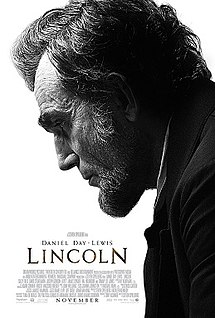
Steven Spielberg's Lincoln is, from a cursory vantage point, exactly what you would expect from sweeping period piece assembled by a superstar director, accomplished and prolific screen writer, impressive cast.  In that regard it's like a brand name that you know will be good so you don't have to worry about being disappointed.  However, what sets Lincoln apart are the nuances it brings to the screen.  Not surprisingly, Daniel Day-Lewis is fantastic.  He embodied Lincoln to the point where you forget your watching an actor at times.  It was uncanny.  Day-Lewis is a chameleon in all of his roles, so it was no surprise he was going to absolutely nail this one, but to see the performance is to watch art in motion.  Sally Fields was a question mark for me going into this, but she did an excellent job as well.  Tommy Lee Jones, playing his usual ornery character shows his softer side as well.   Rounding out the rest of the cast, as a friend of mine put it, is a veritable who's who of "Oh, it's that guy!"  You'll recognize most of the actors (yes, mostly men) in the film, and you'll spend the rest of the time trying to figure out if you'd know who they were if they weren't wearing those huge 19th century beards.

From a cultural perspective, this film comes out at a particularly appropriate moment in modern history and current events.  It's probably partially coincidental, but as this is often the trend with films it's also more intentional.  As I was watching it, I thought to myself, the title could have been Lincoln: Nothing’s Changed.  The white, controlling male majority was so fearful of losing their footing as such that any notion of rights for other groups was considered a traitorous affair.  In this narrative, freeing the slaves was a heretical thought for many and sparked physical and verbal vitriol against those who opposed them.  Screenwrite Tony Kushner did a masterful job using language to highlight how similar this argument is to issues surrounding gay marriage today or as (literally) laughable as giving women the vote.  Yes, we've evolved in many ways as a society - this film is about freeing black slaves and today we have a black president!  However, it’s painful and pathetic to see that 150 years later as a society we have not evolved enough to understand that change is good.  In that sense Lincoln is speaking to those political blowhards and often time bigots to beg them to see that being on the side of allowing civil rights to flourish is a GOOD THING.  

The message of the film is “which side of history do you want to be on?”  Watching Lincoln in 2012 it’s so beyond obvious that abolishing slavery is the right thing to do.  All the relatively small details like worrying about the economic changes the south will face and the stress that the opposing party has to deal with in this new social structure is pittance compared with the moral obligation of freeing the slaves and the march towards enlightenment.  Let's hope that in 150 years (most definitely less, here’s hoping) movies will be made about the struggle towards equality for homosexuals (and women, unfortunately we’re still dealing with that too) and audiences will be shocked to see something that they take so for granted was a hugely polarizing issue once upon a time.


Tuesday, December 25, 2012

The Perks of Being a Wallflower


Abuse.  Sexual, drug, child, emotional, bullying: in any number of forms, abuse is a resounding theme in The Perks of Being a Wallflower. 

Perks is a coming of age film that is firmly grounded in this age.  It’s basically along format “It Gets Better” video to a generation of wallflowers and outsiders.  Perks tells the story of Charlie (Logan Lerman) as he embarks on his freshman year of high school.  In a new place with no friends he counts down the days till graduation and does all he can to not stand out.  He is intrigued by Patrick (Ezra Miller), a flamboyant class clown who offers Charlie an island of acceptance when no one else does.  Patrick and his sister Sam (Emma Watson who has entirely shed her Hermione Granger persona) bring Charlie into their group of Wallflowers and misfits. 

Other than Emma Watson, all of the other “kids” who lead this film this have had small parts here and there but are virtual unknowns.  They carry this film with gravitas and strength through its emotional ups and downs.

Based on a book by the same name, the narrative is set in the 1990s.  It's interesting that the story is set twenty years ago rather than today where bullying has become so prevalent and part of the national conversation after the suicides of bullying victims.  I think that is significant because in our age of facebook and twitter bullies have a much larger stage to abuse their victims but the notion of being an outsider in high school is nothing new.  In some instances this is a retelling of all high school stories from Rebel without a Cause to Grease and everything in between and everything since then. 

Charlie is plagued by demons –he’s lived through the hell of losing his beloved aunt and suffered through the suicide of his best, and only, friend.  Charlie has a darker side and as the narrative progresses we learn more about that.  His parents and teachers exist on the periphery, supporting him but never truly seeing all the parts of him and breaking through his tough exterior shell.  This is about young people coming together to support one another and creating a family of their own.   This concepts is not new in cinema, since James Dean burst onto the scene as America's rebellious teenager, "The Movies" have been fascinated by this concept of young people creating their own societies where the mainstream one has failed them.  One significant difference here, though, is that the parents are not ineffectual or absent.  Whereas traditionally teenagers found themselves unable to relate to or trust their parents, in Perks, they very much want to help their children, and when they do step in their help is appreciated and successful.  However, here the teenagers are seeking their independence despite the best intentions and efforts of their parents. 

Sexual abuse is another unfortunate reality of the teenagers at the heart of this narrative.  Charlie by someone he loved.  Sam by her father's business associate.  These children have been unfairly been forced to grow up beyond their years.  However, directly in contrast with the theme of abuse, though, is the theme of love.  Charlie asks his teacher, about Sam, why do some people choose the wrong people to love.  His teacher's response is, we accept the love we think we deserve.  When you're a broken person you believe you only deserve broken love.  It is through their close bond as a group that these three learn to respect themselves and to understand that they are in fact deserving of the good things that life has to offer, not only of the pain that it sometimes unfortunately throws their way.

Tuesday, November 13, 2012

Crossfire Hurricane

I had the privilege of watching Crossfire Hurricane at HBO's US premiere of the film Tuesday night at the Ziegfeld theater in New York.  The band was in attendance and introduced the documentary with humor and excitement.  The theater was packed and you could feel the excitement in the room as the rock legends paraded down the aisle to speak from the podium.  However, once the film started and while watching the "Rise of the Stones" and listening to them talk about how they were the antidote to the good-boy Beatles and how they offered a release to a generation yearning to break free from the older generation I couldn't help feel as though I was experiencing a very meta-moment.  I was in a room full of industry insiders - member of the press, television executives, and a number of socialite New Yorkers (not to mention the sheer amount of botox and collagen implants on the aging women)  - exactly the population that the young Stones were rebelling against.  The documentary also highlighted those sentiments.  It was very much about a band who was founded on the notion and ideal of being the anti-establishment.  The irony was not lost on me.  However, as the documentary closes on Jagger stating that "You can't be young forever" it became clear that while yes, these guys have been playing the bad boys of music well into their 70s, they have mellowed some, as we all must, to become functioning members of society. Jagger is quoted in the film as saying that their music resonated with the youth because they were so dissatisfied with the generation that they think controls them - but what does it mean when the rockers singing about dissatisfaction are well above the age of that so-called generation?

Watching Brett Morgen's Crossfire Hurricane I couldn't help but feel as though a major theme was just how strongly the idea is that the 1960s was essentially a failed experiment by "the youth" to create a Utopian society based in anti-establishment, anti-bourgeois, and anti-authoritarian society.  It pains me to say this, but the concert at Altamont makes that abundantly clear - Mick Jagger's voice over introduces the segment by saying that this was going to be the youth's chance to prove that they can create a society where police are not needed and they can gather peacefully.  When it ended with a murder and the band in genuine fear of being attacked the realization that that is impossible becomes clear.  The involvement of the Hell's Angels to be the "security" proved to be more dangerous that actual police officers and the abundant drug use was ultimately one of the major causes of the disturbance.  Ultimately social order is necessary to a functioning society and the band came to realize that and Altamount ultimately marked a major turning point in their evolution.

The doc doesn't delve into the peripheries of the life of the - namely the women that came in and out of their lives were noticebly absent - it is truly about the band, and about how the members as individuals came together to make music history.  The drugs do play a major role in the film - one of the opening scenes shows Mick snorting cocaine off a knife blade.  Keith Richards talks candidly about his run ins with the law over his drug use and how it both enhanced and hindered their music making at times.  Additionally, the aging rockers talk openly about the band members who have both come in and out of the Stones throughout the years.  Brian Jones' tragic death is handled with elegance and delicately while Mick Taylor's rather sudden departure from the band is also covered with candor and in Taylor's own words.

Also interestingly, while the Morgen recorded 80 hours of interviews, none of those hours were on screen.  The documentary was told entirely in voice over while stunning archival footage shows the story.  At first I was hoping to see the band in their current state telling their story, but as the documentary went on I found that I wasn't missing that at all.  In fact, the voice over allowed for the images to tell the story of the history rather than focusing on where the band is now.  Yes, Mick's voice is so distinct and Richards' voice is so ravaged it was often clear as to when they were speaking and while Morgen did often offer visual cues as to who the speaker was, it was still unclear at times and that left me wanting a more obvious context as to who was offering the voice over.

Clocking in at just about 2 hours, the film felt long towards the end, but all in all offers an interesting glimpse at the band which, after so many years in the spotlight (not to mention a plethora of other documentaries made about them) still feels fresh and illuminating.  Definitely worth the trip.

Crossfire Hurricane airs on Thursday night at 9PM on HBO.

Wednesday, October 31, 2012

Salvation Boulevard


It’s no new thought that religious zeal makes people do some admittedly crazy things.  People get swept away with thinking that religious leaders are beyond mortal existence and seek to protect them at all costs.  Salvation Boulevard calls that unconditional trust into question.  The movie itself is all over the place, bombastic acting and choppy editing, but ultimately that is the message.  It also, and more successfully, calls into the question the sanity of those who follow these leaders.  In particular during this tumultuous election season which is rife with religious extremism and political leaders acting equally as religious pundits contesting the legitimacy of science and compassion for the sake of their religion, the message has never seem more relevant.

In Salvation Boulevard, Pierce Brosnan is Daniel, pastor and leader of “The Church of the Third Millenium,” a Megachurch with throngs of followers.  Carl (Greg Kinnear) is an ex-deadhead who is now a devout follower of Daniel’s who is vying to be in Daniel’s inner circle.  When he witnesses his leader commit a heinous act, he sees the powerful reach Daniel has at his disposal.  While in a private meeting with a colleague (Ed Harris), Daniel accidentally shoots him in the head, and soon after, instead of doing the right and noble thing, he starts to turn the tables back on Carl and blames him for his act.  Carl begins to question his unconditional devotion to “The Church.”  Concurrently, the narrative structure also creates a situation where the audience begins questions Carl’s reliability as a narrator.  As Carl goes on the run from the powers that be, and as he sinks deeper into a state of paranoia, a parallel narrative is suggested and the audience is unsure of whom to trust.

Contrasted with Carl and his questioning of the legitimacy of The Church is his wife, Gwen (Jennifer Connolly).  Gwen is an unswerving totally devoted member of the church.  When her sense of stability gets called into question when Carl goes missing as he’s on the run from Daniel’s thugs, her religious fervor manifests itself into what can only be described as crazy behavior.  Through Gwen, religious zealots are linked with mental illness.  To illustrate this, her coping mechanism in time of crisis is to isolate herself in her art studio.  Her paintings reflect her paranoia regarding drug dealers and the devil pulling Carl away.  This highlights that point and directly linked religious fervor with mental illness and socially deviant behavior.

If being suspicious of religious leadership is the message this film is seeking to get across, it succeeds.  The film is hard to watch despite the strong cast and often feels like these professional actors are overacting to convey a sense of campiness.  The message is an interesting one and one which is important to have as part of the national dialogue when religion is dangerously close to becoming how our laws are decided.

To get your copy of Salvation Boulevard you can get it here:


Friday, October 12, 2012

Frances Ha


Frances Ha is the newest Noah Baumbach vehicle which just wrapped its run at the New York Film Festival and will get a wide release this Spring.  Starring virtual unknowns, this film is about Frances (Greta Gerwig, the co-writer of the film as well), a 27 year old woman living in New York and trying to make it as an adult.  A dancer, she is trying to succeed in a business known for its expiration date where being older and more experienced is a hindrance rather than a selling point.  Her friends all seem to be on the fast paths to success – even Sophie (Mickey Summer) her best friend and roommate seems to be able to move on from her while Frances does all she can to hold on to her youth.

After the screening at the NYFF, both Gerwig and Baumbach were in attendance to discuss their work.  When asked about the inspiration for the film and her character, Gerwig mentioned one phrase that she kept thinking about as writing this role.  She referred to "The Death Rattle of Youth" - the awareness that your youth is passing you by and in some ways, this is analogous to feeling like you're losing a friend.  It’s a real fear in our culture, always but now seemingly more than ever, and there's no real word (or place) for that in our culture. 

While in New York and interacting with her peers, Frances is all over the place – emotionally, professionally and otherwise, she can’t seem to get her shit together (to use an oft used phrase among millennials)  Yet, when back in the bosom of her family she transforms into a completely different person.  She goes home to Sacramento for the holidays and while there she totally has her shit together:  she is a productive member of her family, is good to her parents and attends church dutifully.  The subtext of this is a comment on life in New York City – New York is the city of dreamers where young people come in droves to live out their greatest fantasies, both professional and social.  Yet, in this narrative, those who attempt to achieve full maturity can only do so once they’ve left the island of Manhattan.  Sophie leaves with her boyfriend to Japan, Abby (another college friend) lives in Paris.  Frances even tries escaping to in Paris but that doesn't help.  When she fails at capturing the maturity that another has in Paris she realizes that she needs to forge her own path and decides to escape to someplace that is safe for her – she goes back to college.  Spending the summer as a dance instructor for kids on campus she has returned to her womb and expects for things to be the same.  This encounter makes it painfully clear that she has in fact changed, and now she has to acknowledge is.  New York City, adults are living together in this highly intense and highly stimulating environment their joint suspended adolescence is perpetuated and seems to be a major contributing factor to this inability to grow up.  The only way for the characters to realize that is to get distance from it.

There's one scene towards the beginning of the film where Frances is frolicking through the streets of New York.  Looking at her it might seem that she is carefree and loving her youthfulness.  However upon further inspection, she is anything but. This scene caught my eye as I found it to be one of the saddest in the film – the imagery is so directly juxtaposed to the actual emotions behind it.  Frances is anything but carefree.  She wants to be enjoying herself but her surroundings do not allow her to. While watching this I couldn’t but help to think of my grandmother. She and her sisters also lived in New York, exploring what the big city had to offer.  They attended college in NY, explored acting careers here and looked for love here.  Yet by the time any of them were Frances' age they were all married and had finished having their children. They had their careers in place and ha settle comfortably into suburbia with their families.  A lot has changed in two generations and 60 years, but interestingly the underlying goals have not.  Everyone wants to "find themselves" and pursue happiness.  The disconnect seems to lie in the manner in which the generations go about looking for it and the ages in which it seems to happen.

One manifestation of her refusal to grow up is Frances’ perpetual reference to things that happened when she was in college and friends from her college years – this was a time where she was forging the relationships that would come to define so much of her and now those relationships are fading and moving on to new ones.  If she clings to it she can avoid the reality that she’s not evolving and doesn’t have to face her inevitable reality.  She even leaves her boyfriend simply because he wanted to move in with her.  She was not interested in taking this next step so without the slightest of arguments, she walks out.  In another attempt to protect herself she also claims that she is simply, undate-able.  Whenever she does something quirky or weird she announces, “Undate-able!” no matter how awkward the setting.  Is that true or is she protecting herself from having people move on from her?  

Other than Sophie, the only other person Frances seems to be able to trust is Benji, a new roommate who seems to be trapped in this suspended adolescence with her – they even joke about being undatable together.  He’s a writer, yet we never see him writing.  He talks about his projects – one in particular is a script for Gremlins 3.  He’s another example of someone clearly attempt to recapture and connect back to his childhood. 

This film is shot entirely in black and white.  Interestingly it was shot in digital black and white so even though visually it harkens back to a bygone era, the new technology with which it was shot adds a layer of modernity to the historical aesthetic.  This medium gives it a certain timelessness while also acting as an homage to its cinematic predecessors. The presence of technology within the narrative will root it in an era but aesthetically it will always be grounded in a sort of timeless ether as well.

Frances desperately looks for someone or something to complete her.  The ending of the film leaves the audience wanting more.  Eventually (SPOILER ALERT:) she does start getting things together and she is on the path to becoming a grown up.  She doesn’t have to abandon herself and her dreams to do so.  Yet, the final scene which makes it clear that she’s finally gotten her shit together is jarringly contrasted to the previous one where she had no plan.  The audience had gone on this wild ride with her watching her struggle and try to work things out and it was frustrating that everything suddenly was wrapped up in a nice bow with no explanation of how she got there.