Academic Writing

Tuesday, July 14, 2026

Camp Grossman: A Love Letter

Part of our family lore is that when I was 5 years old, the summer that before I entered kindergarten my parents brought me to the corner of our street, a big yellow bus pulled up, and without any hesitation or trepidation I stepped onto that rumbling behemoth, didn't look back and went on my way.  

That bus took me to what would become my happy place for the next 14 years.  


What was the place?  The JCC Jacob and Rose Grossman Camp in Westwood, Massachusetts.  


In the years that followed I was joined by my brother and then my sister.  Every summer from then on I looked forward to all that awaited me.  At Grossman I explored the world in ways I wouldn't otherwise have the chance to.  There was boating, fishing, gymnastics, frog catching, camp crafts, singing, drama, photography - you name, this camp had it.  All in one place. And the best part, I got to come home at night.  


It’s no secret that Jewish Camp is crucial for Jewish pride and connection.  Grossman was absolutely that place for me.  I spent three summers at sleepover camp which were also formative, but for me, I’m proudly a day camp kid and to this day I am amazed by how much it has transformed me into the person I am today.


I was a camper at Grossman from 1987-1996 before going on to being a counselor.  It was the wild west for campers in a lot of ways. There was no technology - no parents were tracking us to and from camp.  We got on that bus at 8am with only our bus tag to identify us (name, address, bunk number, bus number - the important stuff), and they just assumed we’d be back at the stop by 5pm.  They didn't hear from us, they didn't get pictures of us, they couldn't see where the bus was at any given moment to make sure it was taking the right route.  My bus counselors didn't have phones.  The only way to get in touch with the bus before or after it got to camp was through the driver’s CB radio.  Fred Friedberg was the Director of Transportation at Grossman during those years.  On the occasion where we were picked up from camp, and I waited in the office for my parents, I remember Fred with his CB radio communicating with the drivers during those commutes.  He’d sit there with a pile of paper maps of all the routes the buses would take - probably about 30 buses in all - and with lists of all the campers on each bus - probably over 1,000 in all.  For that hour each direction Fred was King.  He knew it all, and it was quite an amazement that he did it all without the internet. 


The other thing about not having any technology at that time means I have virtually zero images or records from my time there other than the few photos my parents took at family night.  However, the memories are seared into my brain like a carved sculpture.  Baking potatoes or making fresh blueberry jam in the woods on an open fire with our Israeli Camp Crafts specialists.  We trusted these sabras implicitly that knew what they were doing - but an open fire at a camp?  Ein Ba’ayah (no problem)They had just been in the IDF, they probably knew what they were doing.  


Nature was an activity we looked forward to as well - whether it was trekking down the road to the bear caves hoping to catch a glimpse of the bears who lived there (for the record, there were never any bears, this is Grossman lore), or learning about the various flora that fill the Grossman forest.  But wherever we went, we looked for those wild blueberries that we could nosh on as we walked through the woods, or the sassafras root we could chew on to keep ourselves occupied. 


I can still feel the mud squishing between my toes and the smell of the slop when we went to the “other side” of the lake to catch frogs in the swampy marsh.  We hoped we’d catch just the frogs and avoid the snapping turtle which lore told us had lived in the lake for decades.  Did we ever catch one? I have no recollection.  But did we love being dirty and messy?  Yes. Did we love the adventure? Absolutely.  Was it worth it?  No doubt.


Frog catching wasn't the only thing the lake was used for.  We’d go out on the boats and circle the mysterious haunted Victorian house that sat on an island in the middle of the lake shrouded by ivy and enclosed by trees.  We wouldn't dare to dock the boat and get out to see what was really inside those shuttered doors for fear it would break the illusion of the mystery.  


The lake held lots of mysteries - but we also swam in it every day.  I learned to swim on those sandy shores, first in the shallow end with my bathing suit seat filling with sand as we practiced our kicks and strokes in just inches of water.  As we progressed in our skills we made it further and further into the deep end for our lessons.  But we were still never allowed to walk on the dock.  The dock was for the oldest kids, the best swimmers, and the lifeguards in their red bathing suits.  You knew someone was a Grossman lifeguard because by the end of the summer their tan had gotten so dark they were barely recognizable and you were sure those tan lines would be permanent.  


The Grossman Lake (which I learned much later is actually a pond, but we’ll stick to calling it the lake because that’s how we all knew it) holds legends of catching fish with your bare hands when you practiced your diving.  Adina got her earring caught on the dock and it ripped right out of her ear.  My own Star of David earring fell out at some point and now lives somewhere deep beneath the sand.  My brother coming home with what we thought was a permanently red chest from winning the belly flop contest.  We’d change in the rickety wooden changing rooms, in the stalls pairing up with a friend so you could hold each others’ towels up while the other changed.  Because, who needs doors in a changing room? 


When I had excelled at swimming to the point that I was able to take my lessons on the other side of the dock - the "real" deep end - I knew I had made it.  And as I took the scorching walk from the beach to the deep end on the metal dock I watched those littlest kids learning their strokes from Josh Shapiro, the beach mainstay and head of the waterfront for over 50 years and smiled with a sense of nostalgia that they too were making memories that would last a lifetime.  


In those years Grossman was led by Stu Silverman.  The man, the myth, the legend.  Stu was a looming character who you only went to see if you did something really bad.  The smaller offenses bought you a visit to David Wolf or Sue Green who were only moderately scary by comparison.  Luckily, I was a good kid, and to me David was Mr. Maccabiah and Sue was just Sue - the nice lady who brought us challah and Hoodsies at Oneg Shabbat on Friday and introduced the rainy day movies.  Sometimes you caught a glimpse of Stu driving around in the golf cart or you could hear his loud booming Boston accented voice yelling for something or someone across camp.  I had the pleasure of working in the winter office during my breaks from college and got to know Stu as a professional doing that admin along with Alice Friedberg (Fred’s wife).  We stuffed envelopes, sent acceptance letters and invoices, we processed checks and mailed out the bus tags.  I joked with Stu that I was the glue that kept that camp running, but without him at the helm for 40 or so years the camp would be a very different place.


In many ways Grossman is structured like an overnight camp. Housed on the sprawling land of Hale Reservation in Westwood, MA, there are only about 2 or 3 fully enclosed buildings.  The office, of course, which we’d volunteer to bring notes to to get a puff of air conditioning on those scorching days, the Lodge, which housed gymnastics, the kitchen, and where our sleepovers were held.  During rainy days the whole camp would pile into that building and we’d watch from the rotation of VHS tapes:  Princess Bride, The NeverEnding Story, Goonies.  By the end of the summer we knew those movies by heart.  Stu always said that it doesn’t rain at Grossman - which really meant that rain doesn’t keep a Grossman kid down.  Between the movies, the arts and crafts, music, drama, or sports specialists who came to the units, there was never a dull day.  The counselors also did their very best to keep us entertained.  Case and point: to this day, Simon Feil’s lipsync rendition of Bohemian Rhapsody is one of the best moments of theatrical performances I’ve ever witnessed.  


In the later years, the Arts and Crafts building became the third enclosed building, replete with Gimp (decidedly NOT lanyard), paint, glue, clay, and all of the other fixings you’d expect in a camp’s crafting repository.  We always looked forward to gimp days when we would ask for outlandish stitches to be started by the counselors.  By the time I became counselor I was known as the Gimp Queen (not an awesome title, I know) but my 6x6 tornado stitch became something that made me Grossman-famous.  We looked forward to tie dye day when our moms would send us with old bedsheets to get spruced up and then waited with baited breath for it to dry so we could observe our creations.  


I’d be remiss not to remember the bathrooms.   Technically they were toilets - but since Grossman sits on Hale reservation where plumbing is limited, the toilets were just seats on open pits.  That’s right.  You’d open the toilet seat and get to view the business of the entire camp’s week.  Lots of kids claimed they stopped coming to Grossman over the bathrooms, but as Kelly Clarkson promises, "What doesn't kill you makes you stronger."  If you were a lifer at Grossman, you learned to do your number 2 at home, hold it in, pee in the lake or, as a last resort, use the bathroom.  My friend Shosh was the counselor for the youngest kids.  The fear of falling was real for those tots (no one ever did).  But inevitably, a volleyball, a basketball, and a few kippahs would end up down there every week.  To be a Grossman kid, you had to be tough. 


And then there was my unit.  As an Orthodox kid growing up in Boston who did not want to go to sleepaway camp, Kehilla, the Orthodox unit, became by home away from home.  Grossman was organized by age - which each unit named after a different part of Israel.  The youngest kids were Carmel, then Galil, Negev, Golan, Kinneret, Kfar, Kibbutz, CITs.  Kehilla was thrown in there, although we always wished they called us Jerusalem.  When the camp grew they added Aravah between Negev and Golan.  We were a little enclave of religious kids: boys in hats, girl counselors in skirts.  We swam separately from the boys even though our bunks were mixed, we had parsha class once a week, davened every morning, benched after every lunch, skipped free swim during the 9 days, and watched our counselors fast on tisha b’av.  It was pretty special being a part of the JCC community camp and also being able to observe in our way.  Sometimes it was hard being separated - like we had our own Maccabiah and the “rest of the camp” kinda thought we were weird because we were off in our own little corner of the camp, but mostly it was great.  


There was of course a steady cohort of friends from school.  My school - Maimonides - was a major feeder to Kehilla, but there were also the friends I made who were new.  Frum kids from Malden, Lowell, Medford, Lexington and other places. Kids I became friends with and spent my summers with who only existed for 8 weeks out of my year, but became central to it.  But it was the counselors I remember and looked up to with such awe and wonder.  Kira, Sara, Penny, Lisa, Amy, Rachel, Jen, Rob, Jake, Simon, Josh, JJ, Akiva, Elana, and the list goes on.  I don’t even know all of their last names - they exist only in my memories or in nostalgia talks when I reminisce with other Kehilla alumns.  These were some of the coolest high schoolers I had ever met.  They were frum, they were fun, and they were interested in me - me?!  They introduced me to pop music that we listened to on the walks down the long road to the waterfront.  Nothing says high quality audio than “blasting” Joe Jackson’s Is She Really Going Out With Him? from the headphones of a walkman. Sara taught us, “breeze - armpits up” as we walked through the heat of the summer. Jen lived down the street and even became my babysitter too. And then when I got back to Maimo and would occasionally see some of them in the halls they even said hi to me - i knew HIGH SCHOOLERS!?  It was the literal best. 


Fridays at Grossman - no matter which unit you were in - were great. The final period of the day was Oneg Shabbat. Each bunk had to put on a skit, perform a song, or lead a unit activity. Each week there was a bunk who “won” and got an extra freezer pop or Hoodsie. We lit shabbat candles, ate challah and celebrated the week that had just passed. Doing Jewish at camp was special and very different from doing Jewish anywhere else.  Grossman Jewish was like a time travel through hippie Judaism from the 1960s into the 1980s.  Every week we had bunk music where we pulled classics from the songbook like Puff the Kosher Dragon, Nachamu, Just Another Foreigner, Wherever you go (there’s always someone Jewish).  Those songs exist deep in my soul and you can always spot another Grossmanite if they know all the words. 


Food at Grossman was, of course, also a big thing.  Afternoon snack was always the very nutritious bug juice and sugar cookie.  You just hoped that the person who made the bug juice that day knew what they were doing when it came to the water to syrup ratio - you want that flavor needle threaded just right so you didn’t go into glucose shock but could still taste the orange, red or yellow flavoring.  I still want to know where they got those sugar cookies and why the pizzas at the overnights were square. 


Bus rides tend to get a bad rep - but the Grossman bus was definitely different.  When I worked at Grossman as a high schooler, I remember Stu telling us bus counselors during our training that the bus is the most important part of the day at Grossman.  Why? Because if a kid has a terrible day at camp but then has a great bus ride, he’ll get off that bus and tell his parents he had a great day.  But conversely, if he had a great day at camp but then something happens on the bus - the whole day is shot and he’ll come off that bus crying that he had a terrible time.  He was 100% right. 


The Grossman bus is an experience all its own. I can still pick out the sound of a yellow bus’s motor rumble from other motor sounds.  As a kid I’d sit with my brother and sister at the end of our street which sits at the top of the highest hill in metropolitan Boston and we’d wait to hear that rumble.  Sometimes there was a garbage truck throwing us off the trail, but at 8:00, you could set your watch to it, and that bus would appear.  We’d get on it, sit down and make our journey to camp.  When the bus took the turn onto Dover road and made that winding trip down what seemed like an infinite road we knew we were close.  We also didn't know how the driver made those tight turns but we trusted him and he always got the job done. 


Each bus had its own culture.  Ours was the Brookline/Newton bus.  One of the longest routes - mine was the first stop on and the last stop off.  I would sit and watch all those kids on the bus. I learned the back roads of those towns by just looking out the window.  I learned about the world on that bus - like when Josh Klaver led us in a moment of silence for Celtics player Reggie Lewis in July of 1993 after he died during a practice at the Brandeis gym. Robert Lebowitz taught us all the words to Pretty Woman on that bus. We did gimp, made friendship bracelets, and gossiped.  It was also a chance for some of the kids (ahem, boys) to act out.  My brother’s hat got thrown out the window onto Beacon street by someone who shall remain nameless, others would start food fights.  You never knew what the ride would bring.


As a kid that bus was also the chance to mingle with new kids - the “regular camp” kids that were outside my Kehilla bubble.  There was Fish - no idea his real name - who wore black and had a chain attaching his wallet to his Jenkos.  He sat in the back seat.  No one else dared to.  There was my best friend Julia, who would get off the bus 10 minutes before me in the afternoons so she could catch the last 10 minutes of our favorite summer show, Swans Crossing, and tell me what I missed.  I met kids who lived on my street that I never had met before.  Stu’s immortal words couldn't have been more true.  


After 8 summers as a camper I graduated to counselor.  My dreams had come true - I had made it to the big leagues.  I knew most of my co-counselors from school but something magical happened when we gathered together under the awning of the Kehilla unit building. Ari, Yaakov, Dave, Dov, Avi, Jon, Gabe - guys I had known my whole life were suddenly, friends.  Bonded.  My female co counselors are my co-counselors for life.  Shira, Shosh, Fradie, Lainie, Gabi (sister and counselor!), Rachel.  Teachers at school became trusted colleagues and mentors - Rabbi E. I’d even argue that without Grossman I wouldn't have met my husband as it was Shosh who introduced us and it was through Grossman that Shosh and I became close.  Sweating together for 8 weeks in the woods changes a person - for the better.  Plus we all bonded over which sports specialist was the cutest and who chatted with them the most. 


Something unique to Grossman (or at least it felt unique) were the sleepovers.  As a kid watching Kira master the art of washing her hair in the water fountains was awe inspiring. We played Capture the Flag in the dark with flashlights (for the record, I hated that), and we piled in the lodge in our sleeping bags for a night of ghost stories and girl talk. When I was the counselor for the oldest kids - Kehilla Kibbutz, we slept over once a week.  I don't know who decided that leaving 15 12 year olds alone in the woods with five 16 year olds with no cell phones was a good idea - but, again, wild west and we all made it through just fine.  There were the indoor barbecues when it poured (bad idea, we know), nighttime joy rides on the golf carts to the lake when all we had were flashlights as our guides, and taking more than our fair share of freezer pops from the lodge’s kitchen (sorry, Marcia).  Nothing says “camp” more than an apology note written on purple construction paper with a green Crayola marker.


In those days my campers made the time special also - Hannah, Janna, Maya.  These girls brought the joy every single day.  When I see them now - all of us adults with kids of our own - we still talk about the Grossman memories.  


I thought all JCC camps were like Camp Grossman.  I knew that wherever I ended up in the world when I had kids I’d send my kids to their own Camp Grossman to have incredible adventures similar to what I had.  But when I searched, I did not find anything like the camp that had nurtured me so deeply.  Nothing with the focus on the outdoors, rustic play time. I knew my mission.  When my oldest daughter finished first grade we shipped up to Boston from our home in Connecticut and thanks to the generosity of my parents who opened their house to us and freed up their week for her, we were able to make it happen for the next generation.  My parents took on the challenge of getting her up and out of the house every morning to get on that bus.  When my twins were ready to go I joined them and now it's tradition.  We interrupt our summer for two weeks every year so three Connecticut kids get their Boston camp fix.  


What’s amazing is that that hasn't changed.  When my oldest started Sue, David and Shari were all still there and could look out for this legacy camper who knew no other kids.  They’ve since retired but I’m grateful for that overlap.  David’s son Jesse now runs Maccabiah though!  When I return today for family night and to pick them up, the camp looks exactly as it did 40 years ago.  Still rustic, still outdoors.  Same wooden signs with carved lettering on the unit walls.  The kids still kick up dirt as they walk the paths to the unit.  The bathrooms still get pumped out once a week.  They sing the same songs, swim in the Grossman Lake, go boating and fishing, get Hoodsies and play with gimp.  The bug juice is gone though (maybe not the worst thing). There have been some updates, ropes course, lake trampoline and mountain biking are now available - and all awesome.  Grossman remains a stronghold of those simpler days when there was no technology and when analogue living was king.  These days though I can track their bus ride, get photos automatically tagged of them right to my phone and follow the camp on social media.  Small changes that come with our digital times, but as for the rest of the camp, this is one camper who hopes it never changes.  


It brings me so much joy when my three kids pile off the bus, sweaty, adorned with first, second, third ribbons, come home.  Their socks filled with sand, regaling me with the same songs I sang, showing off their ceramic masterpieces, their gimp creations, and most of all their memories.


Monday, October 24, 2022

A League of their Own...and still on our own

I am a 90s girl through and through.  My first issues of YM magazine arrived at my house right after River Phoenix's death and immediately I remember being immersed into the world of pop culture where we truly cared about our celebrities and what happens to them.  I immediately loved all things pop culture - movies especially.  Watching movies was - and still is - not only about the plot or the characters in the movie.  Movies have always been about the immersive experience, allowing those personalities to jump off the screen and relate to me and my life, and whit means in context of what’s going on in our larger culture.  

During these formative years a number of movies entered my own personal Canon - West Side Story, Goonies, Grease, Cinema Paradiso, and, of course, A League of their Own.  The other movies are for a discussion at another time.  But today I wanted to talk about A League of their Own, and namely the Amazon reboot of the same name. 

As some of you might be familiar with, A League of their Own takes place during WW2 when American women stepped into the cleats of the country’s men who had gone off to fight overseas.  These were women from across the country and spanned all socio-economic statuses.  They stepped in to entertain America at a time where that was so much needed to heal the soul of the country.  

So you can imagine my excitement when I heard that Amazon Prime was rebooting the movie as a series.  Written, EP'ed and Starring Abbi Jacobson this reboot promised to dive deeper into the private lives, personalities, struggles and triumphs of these women - topics of which the movie barely had time to scratch the surface.  Notably, the series was gaining attention for diving into the homosexuality of many of these women - something that the culture was not ready to deal explore in 1992 when the original film was released, but 30 years later we are more than ready to talk about it. 

Additionally, with the character Max - an African American woman with a mean fast-ball - is unceremoniously and aggressively ejected from try-outs just based on the color of her skin.  Her impressive pitching skills notwithstanding.  

In the first episode there’s a scene when Carson (Jacobson) enters the baseball diamond and encounters a field full of women practicing their ball skills.  I got choked up watching this scene filled with women of all shapes and sizes (ok so they were also all white but as previously mentioned they’re gonna deal with race).  But despite their varied body types these women were all confident, skilled and - yes - beautiful.  This show was going to show that there’s more to a woman’s worth than her restrictive bust-waist-hips dimensions. 

The queer-ness and shame or secrecy surrounding these women’s personal sexual preferences is handled with nuance, and delicate care.  Appropriately evoking sympathy and caring for these characters.  Additionally, the emotional distress endured by the black protagonists are overt and painful.  Being ejected from a baseball tryout without being given a fair shot, having your request to apply for a job being rejected or being ignored by the fish-monger at the white supermarket when politely and assertively requesting to be served.  

All of this nuanced and sensitive treatment to marginalized people while also actively working to debunk gross stereotypes is powerful and very much needed in our society.  However, what it also accomplishes is making the gross stereotypes of the lone Jewish character so painful.  Shirley Cohen, played by Kate Berlant, is the lone Jewish character.  And upon our introduction to the character we’re also introduced to her many neuroses, anxieties and hypochondriac nature.  Wikipedia, in its list of characters, gives her the description of “a highly anxious player” When the ladies go out for lunch in episode 2 she tells Carson she has specific dietary restrictions and heads over to get some tuna from the supermarket (see above fish-monger scene).  She is being set up as not only Jewish but at least somewhat observant alluding to her need to have kosher food.  Almost as though to say, the more “Jewish” you are, the more neurotic you become.  She is a peripheral character and also someone set up to be the butt of the jokes.  The one towards whom eye rolls are accepted and the one that everyone agrees is annoying and ridiculous.  She’s not othered to the extent of Max, the black woman, but she’s accepted just enough to make the WASPy players feel better about themselves.  She’s the perfect foil - she can generally pass as a white player, but the second she opens her mouth it’s clear that she’s not the same. 

Even is 2022, when we as a society are so sensitive to the needs of others, to the plight of minorities and to the pain of marginalized people, it’s still ok to sideline and mock Jews for the stereotypes that have followed us for years.  Shame on Abbi Jacobson and the producers of this iteration of A League of their Own.  Shame on Amazon for allowing these stereotypes to be promulgated.  Shame on the press for not calling this out.  This show takes place during the 1940s and World War 2, a time when millions of Jews were being slaughtered based on gross stereotypes and here we have a show - coming almost 80 years after the fact - created by a Jewish woman - who doesn’t seem to take issue with the fact that she’s perpetuating caricatures that have plagued her people for millennia.  Jews are more than the stereotypes that have followed us for years.  We don’t deserve to be the people upon whom stereotypes can remain.  For a show to take such care and kid-gloves to marginalized people’s plights and yet care little about what it says about its Jewish characters means it’s missed its own point.   

We love to say about media that “representation matters.”  It’s important for there to be representation in our media for people who feel underrepresented to feel like they belong in society.  For those whose differences often make them feel small and insignificant or even ashamed to see someone who acts or looks like them projected onto the big (or little) screen.  To feel seen to feel mainstreamed.  When a little black girl sees a black muppet on Sesame Street singing about how much she loves her hair it gives that little girl the sense of belonging and love of herself.  When an Arab person sees themselves on screen being depicted as a main-stream doctor or lawyer and not terrorist or delivery person they feel as though they’ve finally broken out of the stereotype that has plagued them.  And then there are the Jews - always neurotic.  And then there are the Jews - always neurotic.  Always showcasing a version of the neurotic Woody Allen-esque Jew no matter how progressive the show portends to be. 

This isn’t just an issue with this one show.  As I mentioned at the top - one of the most interesting parts of movies and TV for me is how it relates to our culture and what it says about us.  This show is just a symptom in a culture that allows for antisemitic talk to be accepted. When JK Rowling dared to speak her opinion as it relates to trans women she was immediately canceled - no dialogue, no engagement with her.  Nothing.  Canceled.  And yet when Kanye West spews horrific Antisemtic venom we have a national conversation about antisemitism - even Orthodox Jewish pundit Ben Shapiro offers his 2-cents saying that Kanye’s words aren’t so bad because he’s experiencing a manic state.  Yes - it’s just as bad.  There is no - and should not be - any excuse for this despicable speech and yet, there is.  There always is.  What if the black or queer characters in A League of their Own embodied gross stereotypes people in those communities have been battling for centuries?  Would that be tolerated by society? Definitely not.  It’s time that Jews be put into the same category of protected minority where the stereotypes placed on our heads be shot down at every turn.  That not happening is what allows the Kanye’s of this world - and much much worse - be allowed to spew their hatred without fear of - or any- retribution.  

So, in closing, I implore you, Hollywood.  Include the Jews in your sensitive treatment of marginalized minorities. We are done being mocked for being neurotic or anxious.  We are through sitting on the sidelines, afraid to cause a stir.  If you want to explore how certain peoples have been treated unfairly throughout history, include us in that exploration.  There are 6 million of us who cannot speak out about the permanent damage that this has caused so maybe you’ll listen to this one. 

Sunday, June 21, 2020

RUN

What’s the ultimate expression of selfishness and privilege? HBO’s latest dramedy RUN has the answer.  Two people unhappy with the lives they’ve made for themselves decide to run away from them and throw the lives of everyone else around them into turmoil rather than acting like grownups and resolving them appropriately. 

Merritt Weaver’s Ruby is a married mom who is feeling bored.  The first scene lays the groundwork for the bored housewife motif with her, new yoga mat in hand, sitting in her car staring at the only two paths life has laid out in front of her - Ralph’s Supermarket or Target.  Neither is the road less traveled.  When she gets a mysterious text saying nothing other than RUN.  She replies in kind which sets off a frenetic, anxiety laden cross country trip to NY.  She’s running from what, we don’t know exactly and to whom is a mystery as well but we do know that she suddenly cares what her hair and makeup looks like. 

It turns out she’s running towards Billy (Domhall Gleeson), a college friend? Lover? Unclear but apparently this adventure has been a possibility since they were students together 20 years earlier.  He’s also running from something whose details unfold in the following episodes.  What we do learn is that these two college friends had made a pact that if at any point either one of them texts the other “RUN” and the other responds in kind it would set off an immediate plan where they meet in Grand Central Station and then hop on the next train westward.  Using the classic trope in American cinema of traveling East to West to discover something unknown comes off as trite and  simplistic as the revelation never truly comes to fruition.

By episode 2 we still don’t have a full picture or any reason to think she’s anything but a desperate housewife.  The 17 year itch perhaps?  Whatever it turns out to be, I can’t help but be annoyed with these characters from the outset.  They both have jobs, homes, family.  To put it simply: responsibilities.  And in a moment of impulse they abandon it all to fulfill a 2-decades old pact that they made when they were still teenagers.  The fact that they’re nearing 40 makes this even more intolerable because they are full blown grownups who should know better and act as such.  

The glorification of fulfilling a fantasy that I’m sure thousands - if not more - people have to just leave it all behind and escape the life that they’ve made for themselves is, frankly, gross.  It’s also an expression of such white privilege.  Imagine the connotations if, let’s say, it was an African American man escaping his fatherly duties to run away with a woman he knew 20 years ago.  

I won’t give away the ending, but I will say this: the ending didn’t change my overall feeling of the show.  It was a huge disappointment given the talent attached.  Archie Punjabi as Billy’s Production Assistant is underused as her character is never fully developed and Executive Producer Phoebe Waller-Bridge has a small role that feels more like a cameo more than anything else.

Yes the acting is great - at this point I would expect nothing else from HBO shows and from these fine actors.  But that is not enough to make this show compelling.  What’s particularly sad to acknowledge is that since our media acts as a reflection of our culture and mores, this show is tapping into the thoughts and actions of American audiences.  Selfish parenting on screen is nothing new, but the proliferation of it seeing how commonplace it's becoming is another sign of the times that it’s not going anywhere soon. 

Tuesday, February 13, 2018

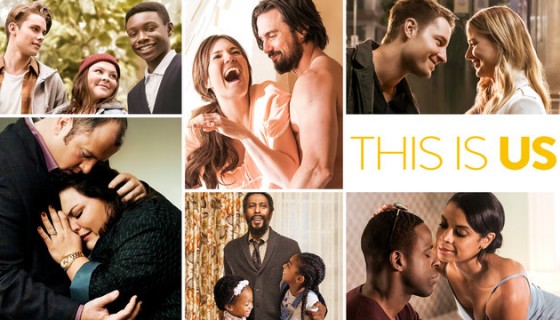
This Is Us and Building Resiliency

This is Us has been teasing us with Jack’s death for a season and a half now.  Every episode we seemed to have been getting a little closer to finding out how he died and why the kids are so screwed up over it.

Last week we finally found out.  In a self-referential post superbowl episode we find out that patriarch, Jack Pearson died from a heart attack following excessive smoke inhalation after not only rescuing his entire family from a fire, but Kate’s dog and a pillowcase full of family mementos.  

The entire series has painted Jack and Rebecca as amazing parents. They parented each kid according to their own needs.  They pushed them out of their comfort zones when they needed pushing and above all loved each one so wholley and individually.  So of course it's fitting that Jack's death occurred as one final act of selflessness in service to their children. Knowing his daughter would be crushed at the loss of her beloved dog, of course he went back to get him. Of course he would do anything to spare his daughter the hurt of losing a pet. Of course he went back to get Katie-bear her audition tape as a reminder of how much faith he had in her abilities of a singer. Furthermore, as the diligent husband he was, of course he went back to grab a necklace, a photo album, and other trinkets of their lives together. 

But maybe that's not what he should have done. 

Maybe he should have put his own life first in this instance and taught his family a different lesson. That pets aren't people. That trinkets can't replace the love of a husband. In what was his last act of fatherly and husbandly valor he lost sight of what was actually important - himself.  His presence in their lives. 

Jack was an amazing dad, but this was his fatal flaw. It's was made him mortal and imperfect. Thinking he could be all and do all for his family. Thinking he could forever shield his kids from pain and suffering is what caused the most pain and suffering. 

Seemingly, as a result of this final act which caused him more smoke inhalation and ultimately led to his death, he caused his family immeasurable sadness. Intentional or not, the show is saying that love and selflessness in service of your family is not ultimately what a good parent makes. I've been asking myself, how could two loving, emotionally stable and supportive parents produce such emotionally unstable children?  Kevin, Randall and Kate are all rife with different issues.  Kate’s obesity is linked with emotional eating, depression, feeling a lack of self-worth.  Kevin’s addiction issues that he’s inherited from his father is coupled with his narcissistic personality and impulse control issues.  Randall struggles with his own anxiety disorder. 

So what happened to these three kids whose parents loved and supported them?  They had a dad who did love them and wanted the best for them, but he also overestimated his mortality and by doing so, for instance, didn't teach his daughter that suffering a loss of a pet is easier to overcome than suffering the loss of a parent.  They didn’t allow their children to struggle with the small stuff to build resiliency for when the big stuff hit.  It’s those relatively small moments of despair and sadness in our lives that what strengthen us for the big ones and it’s a parent’s job to help children through the small(er) tragedies and to give them the support and resilience so that when they have to face the big ones – either alone or with said parent – they have the tools to do so.

In an age of television where parenting has become a contest of who can be the most selfish (see: Blackish, Modern Family, and others) THIS IS US offers a glimpse into a different model of parenting where the kids needs are actually put first. For the most part it's beautiful and refreshing, but it also reminds us that parents need to remember that teaching resilience through allowing their kids short term pain will give them the tools for emotional stability later on. 

Tuesday, February 23, 2016

Sesame Street

Like I’m sure many people were, I was confused and surprise when I heard the news that the beloved public television TV show, Sesame Street would be moving over to premium HBO.  Sesame Street, home to childhood favorites like Big Bird, Snuffy, Bert, Ernie, Elmo and Grover (and others I know) taught generations of kids their numbers, letters, how to share, how to be nice and inclusive to other children, showed scores of videos of real kids doing real things alongside cartoons of a more whimsical nature.  We sat in front of that TV for a full hour, mesmerized.  It was a comfortable place we could both learn and be entertained.  For me, watching it in the 80s and early 90s, we didn’t keep coming back because of the technological achievements or for the critical acclaim.  We came back because that’s where we could find familiar friendly faces with whom we sang and enjoyed spending time.

When the news came that Sesame Street would be moving to HBO along came the announcement that the show would be shortened to a half hour and would focus mainly on Elmo, Cookie Monster, Oscar the Grouch, Grover, and relative newcomer Abby Cadabby.  Having a 15-month old daughter who is already obsessed with Elmo, I was relieved that Elmo would still be around, but saddened by the omission of so many of the other beloved characters that are getting pushed to the side for what – marketability?  Merchandising?  

I’ve been watching the HBO version with my daughter and for comparison sake have also been going back to the older episodes to make sure my nostalgia for the original format isn’t taking over my sensibilities.  That being said, this new version of the show is a far cry from where it originated.  The 1/2 hour format feels very rushed and compressed.  It starts with a 10-15 minute segment that takes place on Sesame Street, usually featuring Abby and Elmo and 1-2 human counterparts.  Then there’s a song that features all of the characters singing about what the letter of the day will be (it’s a total earworm, I don’t recommend listening to it unless you want to be kept up at night because you can’t get it out of your head) and then maybe another small sketch, and then a song with The Count and the rest of the cast of muppets singing about the number of the day (another, less offensive earworm) and then the show generally closes with either Elmo’s World or Elmo the Musical.  It's a nice neat, predictable package that doesn't veer too much outside of it's schedule.

This new format leaves much to be desired, and feels, essentially, like a dumbed down version of the original.  First of all, the letter and the number of the day are largely irrelevant to the viewer.  Whereas in the longer format version of the show would be introduced to a letter and a number and those would both be repeated in nearly all segments, there are so few segments now that even if it were repeated it would only happen 1 or 2 times.  Second, since the premiere there have yet to be any sketches that I’ve seen (and again, I watch with my toddler so full disclosure I’m occasionally distracted) that show real kids interacting in real and meaningful ways that the viewers can emulate. 

I lament the lacking educational component on this new shinier version of the show as what used to be on public, educational television is now on an entertainment channel vying for subscribers.  PBS will get second run-rights to the show after the 9 month exclusivity window closes, but the format will remain the same.  In the meantime, my daughter and I are watching both the PBS and the HBO versions.  The differences are still stark.  Even though PBS has shortened the show to a half hour, probably to prepare for the switch in a few months, they still manage to pack more education into each episode, ensuring that Murray gets around town teaching kids the “word on the street” or having a character interact with a celeb of the day to learn about the word of the day.  There’s more focus on counting and learning numbers during the heart of the show.  

True, television viewing habits have changed, and are constantly evolving, but don’t we owe it to our kids to give them the opportunity of longer attention spans instead of forcing the shortened spans of their parents’ on them right off the bat?  I know funding is tight for public television, and unfortunately this merger was probably essential for the show’s survival, but with that comes HBO’s creative input and rather than leaving the creativity and the education to the masters who have been entrenched in it for decades and who have the actual educational degrees, it seems as though that has been sacrificed for pure entertainment value.  No doubt HBO is a programming master and knows how to create and market quality television, but something about public programming moving to the premium pay space just doesn't sit so well with me.  Let me be clear, the new version of Sesame Street isn’t bad, it just isn’t as rich as it once was, or as it could be. 

Wednesday, January 20, 2016

Son of Saul

Son of Saul is one of those haunting films that stays with you long after the credits begin to roll.  As you think more about it and your 107 minutes spent with Saul Auslander more questions and revelations about his story creep into your mind.  Who was this man?  What was his history? 

Set in Auschwitz concentration camp during WWII, Son of Saul follows 2 days in the life of Hungarian Sonderkommando, Saul Auslander (Géza Röhrig).  Responsible for collecting the dead after slaughtered in the gas chambers, cleaning said chambers, and bringing the bodies for cremating Saul goes through his duties expressionless.  Shot mostly in close up, the audience is there with Saul.  Much of the background is blurred out or obstructed from our view, we focus on Saul.  This changes when he comes across the body of a young boy who he takes as his son and seeks to have buried properly.  His mission and his will to live suddenly change as now he has a purpose.  He becomes totally obsessed with finding a Rabbi to do a proper preparation for and subsequent burial according to Jewish law.  This is all against the backdrop of not just the horrors of Auschwitz, but also as he and the other Sonderkommandos prepare a revolt against their captors. 

Throughout the less than 48 hours spent with Saul not a lot is learned about him.  We get bits and pieces throughout the narrative, but even those are questionable.  Is the child really his son?  If not, what is his motivation for obsessing over this child’s burial?  Did he have children at all?  Was he married?  We do meet one woman, who has a different last name as him, that he clearly has some past with, but what is that past?  Was he religious or is his preoccupation with finding a Rabbi for this child his way of honoring the shred of his humanity that is left.

The cinematography is also fascinating.  The first three shots of the film are very long takes, focusing in on Saul as he performs his duties.  They are from behind and from the side, not focusing in on his face.  These takes set the scene, they draw the viewer in.  Subsequently the camera mostly focuses in on Saul’s face.  In contrast to Dreyer’s The Passion of Joan of Arc (1928), the close ups here don’t serve to highlight specific expressions, rather they highlight lack of expression.  Paired with quick takes and cuts it creates a chaotic sense of claustrophobia that is uncomfortable for the audience.  We cannot look away.  We cannot escape.  We are disoriented and unsure of our surroundings.  We are Saul, stuck in the mire of the horrors of the camp. 

In the final scene (don’t worry, I won’t give away the ending but you might want to skip this if you don’t want any hints to the ending) Saul offers, for the first time, a new expression, followed by one of, if not the, widest shots in the entire film.  Its meaning is also ambiguous, although I took it to mean peace, the scenic shot and new expression on Saul’s face offer a different aesthetic from the rest of the film and even though the ending was not what we were hoping for there is value in the conclusion.

On a separate note, this film represents something that is valuable to what I call the “Jews on screen” narrative.  Since WWII, Holocaust films have been abundant.  Both about the Jews as they suffer at the hands of the Nazis, or in the PTSD era of how they had to cope with the horrors they lived through while many of their families did not (The Pawnbroker, for instance).   Traditionally, the narrative has been “Jews as victims” and only recently has it morphed into “Jews as heroes.”  Recently, with films such as Defiance, Inglorious Basterds, The Debt, No Place on Earth and others, the Jew as hero narrative begins to emerge.  Jews are not people who are mere victims, unable or unwilling to take charge of their own destinies.  They won’t lie down and take what is being given to them.  They will fight back, physically or emotionally. 

What I find to be really fascinating about this shift is that it comes at the same time that Anti-Semitism is on the rise around the world, but now it’s disguised as anti-Israel sentiment.  Jews are being celebrated on screen for defending themselves, but when they do it in “real life,” they are disparaged.  While Palestinians murder Jews in the streets of Israel and in their homes, the world is calling for boycotts of Jewish goods from Judea and Samaria, not to mention the insistence that Jews leave their homes in that area.  When the IDF or the Israeli police retaliate and neutralize (kill) the murdering terrorists or when they return the rockets that are fired from Gaza, the world cries out that Israel is not showing restraint and they should react with “proportionality.”   Jews can be masters of their own fates on screen but when it happens in reality there is a disconnect and people don’t know how reconcile that.  How can those who celebrate strength and honor in the face of imminent destruction decry the same strength and honor in another scenario? 


Son of Saul brings up all of those questions through focusing in on a short time spent with one man in a horrific situation.  Maybe through these on screen Jewish heroes during their darkest time, the world can translate that to modern day and honor the actions of Jews today as they live and defend their rightful homeland, the one place in the world where they can be safe from the horrors that the world wishes to impose on them.

Thursday, November 20, 2014

Black-ish

Blackish, the new show on ABC offends me. Not on the basis of race, as many people assumed it would be, but based on how incredibly immature and selfish the adults in this show are. 

Blackish was originally marketed as a show which would buck stereotypes and show a thriving, affluent black family with two professional parents living in a nice house on a nice block.  They have 4 kids who go to a good school. 

Aside from the fact that the frenetic pace of the show and the dad's obsessive preoccupation with his kids being "black enough" makes it practically unwatchable, the parents utter selfishness just compounds it. 

Father Andre and mother Bo force their children to conform to their wants and needs. In one episode rather than taking pride in his son's social and academic achievements, Andre laments his son's disinterest in subscribing to black codes and notes that are largely irrelevant to his life. It's one thing to build in a love of ones heritage into a child's upbringing, it's another thing entirely to force it down their throats after the fact. And even another still to do it for your own reasons because of your own guilt and needs and not really for your kids. 

This is a running theme throughout the show. The parents time and again insist on their children behaving in certain ways because it's what they want, not because it's best for their kids.  This seems to be a growing trend in TV parents overall. There's an infantilization of parents and adults throughout TV these days.  It's hard to say or understand exactly why, but it seems like networks are pandering to their target audience - 25-54 year olds - and if they keep them feeling young they'll keep tuning in. Maybe that means it's not a problem with the shows, but rather with this generation of young adults who aren't ready to grow up and who aren't being told that they have to grow up. I'm not excluding myself from that group, it's scary to grow up and to be told that we have real responsibilities, but ignoring them and sidestepping them will not benefit anyone - not ourselves and not our children. Our children need mature adults to look up to and to learn from. They don't need to grow up emulating parents who look out for themselves and the best interests above all else. 

Media has always been a lens that both reflects and in turns influences our culture and society. Do we want to project the best or the worst of what the parents of the next generation will be. Do we want our children growing up to emulate parents who look out for themselves or for their children's needs. 

I won't be turning in to watch more of Blackish. It's too upsetting and frustrating to see what parenting has become, or expected to become.