Academic Writing

Monday, October 24, 2022

A League of their Own...and still on our own

I am a 90s girl through and through.  My first issues of YM magazine arrived at my house right after River Phoenix's death and immediately I remember being immersed into the world of pop culture where we truly cared about our celebrities and what happens to them.  I immediately loved all things pop culture - movies especially.  Watching movies was - and still is - not only about the plot or the characters in the movie.  Movies have always been about the immersive experience, allowing those personalities to jump off the screen and relate to me and my life, and whit means in context of what’s going on in our larger culture.  

During these formative years a number of movies entered my own personal Canon - West Side Story, Goonies, Grease, Cinema Paradiso, and, of course, A League of their Own.  The other movies are for a discussion at another time.  But today I wanted to talk about A League of their Own, and namely the Amazon reboot of the same name. 

As some of you might be familiar with, A League of their Own takes place during WW2 when American women stepped into the cleats of the country’s men who had gone off to fight overseas.  These were women from across the country and spanned all socio-economic statuses.  They stepped in to entertain America at a time where that was so much needed to heal the soul of the country.  

So you can imagine my excitement when I heard that Amazon Prime was rebooting the movie as a series.  Written, EP'ed and Starring Abbi Jacobson this reboot promised to dive deeper into the private lives, personalities, struggles and triumphs of these women - topics of which the movie barely had time to scratch the surface.  Notably, the series was gaining attention for diving into the homosexuality of many of these women - something that the culture was not ready to deal explore in 1992 when the original film was released, but 30 years later we are more than ready to talk about it. 

Additionally, with the character Max - an African American woman with a mean fast-ball - is unceremoniously and aggressively ejected from try-outs just based on the color of her skin.  Her impressive pitching skills notwithstanding.  

In the first episode there’s a scene when Carson (Jacobson) enters the baseball diamond and encounters a field full of women practicing their ball skills.  I got choked up watching this scene filled with women of all shapes and sizes (ok so they were also all white but as previously mentioned they’re gonna deal with race).  But despite their varied body types these women were all confident, skilled and - yes - beautiful.  This show was going to show that there’s more to a woman’s worth than her restrictive bust-waist-hips dimensions. 

The queer-ness and shame or secrecy surrounding these women’s personal sexual preferences is handled with nuance, and delicate care.  Appropriately evoking sympathy and caring for these characters.  Additionally, the emotional distress endured by the black protagonists are overt and painful.  Being ejected from a baseball tryout without being given a fair shot, having your request to apply for a job being rejected or being ignored by the fish-monger at the white supermarket when politely and assertively requesting to be served.  

All of this nuanced and sensitive treatment to marginalized people while also actively working to debunk gross stereotypes is powerful and very much needed in our society.  However, what it also accomplishes is making the gross stereotypes of the lone Jewish character so painful.  Shirley Cohen, played by Kate Berlant, is the lone Jewish character.  And upon our introduction to the character we’re also introduced to her many neuroses, anxieties and hypochondriac nature.  Wikipedia, in its list of characters, gives her the description of “a highly anxious player” When the ladies go out for lunch in episode 2 she tells Carson she has specific dietary restrictions and heads over to get some tuna from the supermarket (see above fish-monger scene).  She is being set up as not only Jewish but at least somewhat observant alluding to her need to have kosher food.  Almost as though to say, the more “Jewish” you are, the more neurotic you become.  She is a peripheral character and also someone set up to be the butt of the jokes.  The one towards whom eye rolls are accepted and the one that everyone agrees is annoying and ridiculous.  She’s not othered to the extent of Max, the black woman, but she’s accepted just enough to make the WASPy players feel better about themselves.  She’s the perfect foil - she can generally pass as a white player, but the second she opens her mouth it’s clear that she’s not the same. 

Even is 2022, when we as a society are so sensitive to the needs of others, to the plight of minorities and to the pain of marginalized people, it’s still ok to sideline and mock Jews for the stereotypes that have followed us for years.  Shame on Abbi Jacobson and the producers of this iteration of A League of their Own.  Shame on Amazon for allowing these stereotypes to be promulgated.  Shame on the press for not calling this out.  This show takes place during the 1940s and World War 2, a time when millions of Jews were being slaughtered based on gross stereotypes and here we have a show - coming almost 80 years after the fact - created by a Jewish woman - who doesn’t seem to take issue with the fact that she’s perpetuating caricatures that have plagued her people for millennia.  Jews are more than the stereotypes that have followed us for years.  We don’t deserve to be the people upon whom stereotypes can remain.  For a show to take such care and kid-gloves to marginalized people’s plights and yet care little about what it says about its Jewish characters means it’s missed its own point.   

We love to say about media that “representation matters.”  It’s important for there to be representation in our media for people who feel underrepresented to feel like they belong in society.  For those whose differences often make them feel small and insignificant or even ashamed to see someone who acts or looks like them projected onto the big (or little) screen.  To feel seen to feel mainstreamed.  When a little black girl sees a black muppet on Sesame Street singing about how much she loves her hair it gives that little girl the sense of belonging and love of herself.  When an Arab person sees themselves on screen being depicted as a main-stream doctor or lawyer and not terrorist or delivery person they feel as though they’ve finally broken out of the stereotype that has plagued them.  And then there are the Jews - always neurotic.  And then there are the Jews - always neurotic.  Always showcasing a version of the neurotic Woody Allen-esque Jew no matter how progressive the show portends to be. 

This isn’t just an issue with this one show.  As I mentioned at the top - one of the most interesting parts of movies and TV for me is how it relates to our culture and what it says about us.  This show is just a symptom in a culture that allows for antisemitic talk to be accepted. When JK Rowling dared to speak her opinion as it relates to trans women she was immediately canceled - no dialogue, no engagement with her.  Nothing.  Canceled.  And yet when Kanye West spews horrific Antisemtic venom we have a national conversation about antisemitism - even Orthodox Jewish pundit Ben Shapiro offers his 2-cents saying that Kanye’s words aren’t so bad because he’s experiencing a manic state.  Yes - it’s just as bad.  There is no - and should not be - any excuse for this despicable speech and yet, there is.  There always is.  What if the black or queer characters in A League of their Own embodied gross stereotypes people in those communities have been battling for centuries?  Would that be tolerated by society? Definitely not.  It’s time that Jews be put into the same category of protected minority where the stereotypes placed on our heads be shot down at every turn.  That not happening is what allows the Kanye’s of this world - and much much worse - be allowed to spew their hatred without fear of - or any- retribution.  

So, in closing, I implore you, Hollywood.  Include the Jews in your sensitive treatment of marginalized minorities. We are done being mocked for being neurotic or anxious.  We are through sitting on the sidelines, afraid to cause a stir.  If you want to explore how certain peoples have been treated unfairly throughout history, include us in that exploration.  There are 6 million of us who cannot speak out about the permanent damage that this has caused so maybe you’ll listen to this one. 

Sunday, June 21, 2020

RUN

What’s the ultimate expression of selfishness and privilege? HBO’s latest dramedy RUN has the answer.  Two people unhappy with the lives they’ve made for themselves decide to run away from them and throw the lives of everyone else around them into turmoil rather than acting like grownups and resolving them appropriately. 

Merritt Weaver’s Ruby is a married mom who is feeling bored.  The first scene lays the groundwork for the bored housewife motif with her, new yoga mat in hand, sitting in her car staring at the only two paths life has laid out in front of her - Ralph’s Supermarket or Target.  Neither is the road less traveled.  When she gets a mysterious text saying nothing other than RUN.  She replies in kind which sets off a frenetic, anxiety laden cross country trip to NY.  She’s running from what, we don’t know exactly and to whom is a mystery as well but we do know that she suddenly cares what her hair and makeup looks like. 

It turns out she’s running towards Billy (Domhall Gleeson), a college friend? Lover? Unclear but apparently this adventure has been a possibility since they were students together 20 years earlier.  He’s also running from something whose details unfold in the following episodes.  What we do learn is that these two college friends had made a pact that if at any point either one of them texts the other “RUN” and the other responds in kind it would set off an immediate plan where they meet in Grand Central Station and then hop on the next train westward.  Using the classic trope in American cinema of traveling East to West to discover something unknown comes off as trite and  simplistic as the revelation never truly comes to fruition.

By episode 2 we still don’t have a full picture or any reason to think she’s anything but a desperate housewife.  The 17 year itch perhaps?  Whatever it turns out to be, I can’t help but be annoyed with these characters from the outset.  They both have jobs, homes, family.  To put it simply: responsibilities.  And in a moment of impulse they abandon it all to fulfill a 2-decades old pact that they made when they were still teenagers.  The fact that they’re nearing 40 makes this even more intolerable because they are full blown grownups who should know better and act as such.  

The glorification of fulfilling a fantasy that I’m sure thousands - if not more - people have to just leave it all behind and escape the life that they’ve made for themselves is, frankly, gross.  It’s also an expression of such white privilege.  Imagine the connotations if, let’s say, it was an African American man escaping his fatherly duties to run away with a woman he knew 20 years ago.  

I won’t give away the ending, but I will say this: the ending didn’t change my overall feeling of the show.  It was a huge disappointment given the talent attached.  Archie Punjabi as Billy’s Production Assistant is underused as her character is never fully developed and Executive Producer Phoebe Waller-Bridge has a small role that feels more like a cameo more than anything else.

Yes the acting is great - at this point I would expect nothing else from HBO shows and from these fine actors.  But that is not enough to make this show compelling.  What’s particularly sad to acknowledge is that since our media acts as a reflection of our culture and mores, this show is tapping into the thoughts and actions of American audiences.  Selfish parenting on screen is nothing new, but the proliferation of it seeing how commonplace it's becoming is another sign of the times that it’s not going anywhere soon. 

Tuesday, February 13, 2018

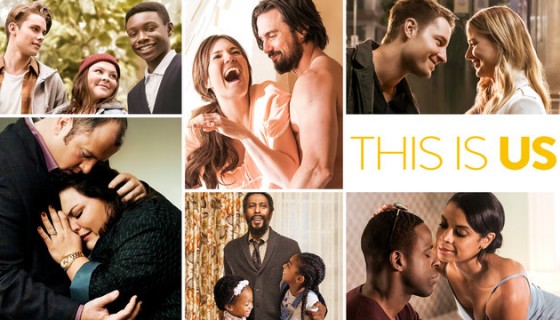
This Is Us and Building Resiliency

This is Us has been teasing us with Jack’s death for a season and a half now.  Every episode we seemed to have been getting a little closer to finding out how he died and why the kids are so screwed up over it.

Last week we finally found out.  In a self-referential post superbowl episode we find out that patriarch, Jack Pearson died from a heart attack following excessive smoke inhalation after not only rescuing his entire family from a fire, but Kate’s dog and a pillowcase full of family mementos.  

The entire series has painted Jack and Rebecca as amazing parents. They parented each kid according to their own needs.  They pushed them out of their comfort zones when they needed pushing and above all loved each one so wholley and individually.  So of course it's fitting that Jack's death occurred as one final act of selflessness in service to their children. Knowing his daughter would be crushed at the loss of her beloved dog, of course he went back to get him. Of course he would do anything to spare his daughter the hurt of losing a pet. Of course he went back to get Katie-bear her audition tape as a reminder of how much faith he had in her abilities of a singer. Furthermore, as the diligent husband he was, of course he went back to grab a necklace, a photo album, and other trinkets of their lives together. 

But maybe that's not what he should have done. 

Maybe he should have put his own life first in this instance and taught his family a different lesson. That pets aren't people. That trinkets can't replace the love of a husband. In what was his last act of fatherly and husbandly valor he lost sight of what was actually important - himself.  His presence in their lives. 

Jack was an amazing dad, but this was his fatal flaw. It's was made him mortal and imperfect. Thinking he could be all and do all for his family. Thinking he could forever shield his kids from pain and suffering is what caused the most pain and suffering. 

Seemingly, as a result of this final act which caused him more smoke inhalation and ultimately led to his death, he caused his family immeasurable sadness. Intentional or not, the show is saying that love and selflessness in service of your family is not ultimately what a good parent makes. I've been asking myself, how could two loving, emotionally stable and supportive parents produce such emotionally unstable children?  Kevin, Randall and Kate are all rife with different issues.  Kate’s obesity is linked with emotional eating, depression, feeling a lack of self-worth.  Kevin’s addiction issues that he’s inherited from his father is coupled with his narcissistic personality and impulse control issues.  Randall struggles with his own anxiety disorder. 

So what happened to these three kids whose parents loved and supported them?  They had a dad who did love them and wanted the best for them, but he also overestimated his mortality and by doing so, for instance, didn't teach his daughter that suffering a loss of a pet is easier to overcome than suffering the loss of a parent.  They didn’t allow their children to struggle with the small stuff to build resiliency for when the big stuff hit.  It’s those relatively small moments of despair and sadness in our lives that what strengthen us for the big ones and it’s a parent’s job to help children through the small(er) tragedies and to give them the support and resilience so that when they have to face the big ones – either alone or with said parent – they have the tools to do so.

In an age of television where parenting has become a contest of who can be the most selfish (see: Blackish, Modern Family, and others) THIS IS US offers a glimpse into a different model of parenting where the kids needs are actually put first. For the most part it's beautiful and refreshing, but it also reminds us that parents need to remember that teaching resilience through allowing their kids short term pain will give them the tools for emotional stability later on. 

Tuesday, February 23, 2016

Sesame Street

Like I’m sure many people were, I was confused and surprise when I heard the news that the beloved public television TV show, Sesame Street would be moving over to premium HBO.  Sesame Street, home to childhood favorites like Big Bird, Snuffy, Bert, Ernie, Elmo and Grover (and others I know) taught generations of kids their numbers, letters, how to share, how to be nice and inclusive to other children, showed scores of videos of real kids doing real things alongside cartoons of a more whimsical nature.  We sat in front of that TV for a full hour, mesmerized.  It was a comfortable place we could both learn and be entertained.  For me, watching it in the 80s and early 90s, we didn’t keep coming back because of the technological achievements or for the critical acclaim.  We came back because that’s where we could find familiar friendly faces with whom we sang and enjoyed spending time.

When the news came that Sesame Street would be moving to HBO along came the announcement that the show would be shortened to a half hour and would focus mainly on Elmo, Cookie Monster, Oscar the Grouch, Grover, and relative newcomer Abby Cadabby.  Having a 15-month old daughter who is already obsessed with Elmo, I was relieved that Elmo would still be around, but saddened by the omission of so many of the other beloved characters that are getting pushed to the side for what – marketability?  Merchandising?  

I’ve been watching the HBO version with my daughter and for comparison sake have also been going back to the older episodes to make sure my nostalgia for the original format isn’t taking over my sensibilities.  That being said, this new version of the show is a far cry from where it originated.  The 1/2 hour format feels very rushed and compressed.  It starts with a 10-15 minute segment that takes place on Sesame Street, usually featuring Abby and Elmo and 1-2 human counterparts.  Then there’s a song that features all of the characters singing about what the letter of the day will be (it’s a total earworm, I don’t recommend listening to it unless you want to be kept up at night because you can’t get it out of your head) and then maybe another small sketch, and then a song with The Count and the rest of the cast of muppets singing about the number of the day (another, less offensive earworm) and then the show generally closes with either Elmo’s World or Elmo the Musical.  It's a nice neat, predictable package that doesn't veer too much outside of it's schedule.

This new format leaves much to be desired, and feels, essentially, like a dumbed down version of the original.  First of all, the letter and the number of the day are largely irrelevant to the viewer.  Whereas in the longer format version of the show would be introduced to a letter and a number and those would both be repeated in nearly all segments, there are so few segments now that even if it were repeated it would only happen 1 or 2 times.  Second, since the premiere there have yet to be any sketches that I’ve seen (and again, I watch with my toddler so full disclosure I’m occasionally distracted) that show real kids interacting in real and meaningful ways that the viewers can emulate. 

I lament the lacking educational component on this new shinier version of the show as what used to be on public, educational television is now on an entertainment channel vying for subscribers.  PBS will get second run-rights to the show after the 9 month exclusivity window closes, but the format will remain the same.  In the meantime, my daughter and I are watching both the PBS and the HBO versions.  The differences are still stark.  Even though PBS has shortened the show to a half hour, probably to prepare for the switch in a few months, they still manage to pack more education into each episode, ensuring that Murray gets around town teaching kids the “word on the street” or having a character interact with a celeb of the day to learn about the word of the day.  There’s more focus on counting and learning numbers during the heart of the show.  

True, television viewing habits have changed, and are constantly evolving, but don’t we owe it to our kids to give them the opportunity of longer attention spans instead of forcing the shortened spans of their parents’ on them right off the bat?  I know funding is tight for public television, and unfortunately this merger was probably essential for the show’s survival, but with that comes HBO’s creative input and rather than leaving the creativity and the education to the masters who have been entrenched in it for decades and who have the actual educational degrees, it seems as though that has been sacrificed for pure entertainment value.  No doubt HBO is a programming master and knows how to create and market quality television, but something about public programming moving to the premium pay space just doesn't sit so well with me.  Let me be clear, the new version of Sesame Street isn’t bad, it just isn’t as rich as it once was, or as it could be. 

Wednesday, January 20, 2016

Son of Saul

Son of Saul is one of those haunting films that stays with you long after the credits begin to roll.  As you think more about it and your 107 minutes spent with Saul Auslander more questions and revelations about his story creep into your mind.  Who was this man?  What was his history? 

Set in Auschwitz concentration camp during WWII, Son of Saul follows 2 days in the life of Hungarian Sonderkommando, Saul Auslander (Géza Röhrig).  Responsible for collecting the dead after slaughtered in the gas chambers, cleaning said chambers, and bringing the bodies for cremating Saul goes through his duties expressionless.  Shot mostly in close up, the audience is there with Saul.  Much of the background is blurred out or obstructed from our view, we focus on Saul.  This changes when he comes across the body of a young boy who he takes as his son and seeks to have buried properly.  His mission and his will to live suddenly change as now he has a purpose.  He becomes totally obsessed with finding a Rabbi to do a proper preparation for and subsequent burial according to Jewish law.  This is all against the backdrop of not just the horrors of Auschwitz, but also as he and the other Sonderkommandos prepare a revolt against their captors. 

Throughout the less than 48 hours spent with Saul not a lot is learned about him.  We get bits and pieces throughout the narrative, but even those are questionable.  Is the child really his son?  If not, what is his motivation for obsessing over this child’s burial?  Did he have children at all?  Was he married?  We do meet one woman, who has a different last name as him, that he clearly has some past with, but what is that past?  Was he religious or is his preoccupation with finding a Rabbi for this child his way of honoring the shred of his humanity that is left.

The cinematography is also fascinating.  The first three shots of the film are very long takes, focusing in on Saul as he performs his duties.  They are from behind and from the side, not focusing in on his face.  These takes set the scene, they draw the viewer in.  Subsequently the camera mostly focuses in on Saul’s face.  In contrast to Dreyer’s The Passion of Joan of Arc (1928), the close ups here don’t serve to highlight specific expressions, rather they highlight lack of expression.  Paired with quick takes and cuts it creates a chaotic sense of claustrophobia that is uncomfortable for the audience.  We cannot look away.  We cannot escape.  We are disoriented and unsure of our surroundings.  We are Saul, stuck in the mire of the horrors of the camp. 

In the final scene (don’t worry, I won’t give away the ending but you might want to skip this if you don’t want any hints to the ending) Saul offers, for the first time, a new expression, followed by one of, if not the, widest shots in the entire film.  Its meaning is also ambiguous, although I took it to mean peace, the scenic shot and new expression on Saul’s face offer a different aesthetic from the rest of the film and even though the ending was not what we were hoping for there is value in the conclusion.

On a separate note, this film represents something that is valuable to what I call the “Jews on screen” narrative.  Since WWII, Holocaust films have been abundant.  Both about the Jews as they suffer at the hands of the Nazis, or in the PTSD era of how they had to cope with the horrors they lived through while many of their families did not (The Pawnbroker, for instance).   Traditionally, the narrative has been “Jews as victims” and only recently has it morphed into “Jews as heroes.”  Recently, with films such as Defiance, Inglorious Basterds, The Debt, No Place on Earth and others, the Jew as hero narrative begins to emerge.  Jews are not people who are mere victims, unable or unwilling to take charge of their own destinies.  They won’t lie down and take what is being given to them.  They will fight back, physically or emotionally. 

What I find to be really fascinating about this shift is that it comes at the same time that Anti-Semitism is on the rise around the world, but now it’s disguised as anti-Israel sentiment.  Jews are being celebrated on screen for defending themselves, but when they do it in “real life,” they are disparaged.  While Palestinians murder Jews in the streets of Israel and in their homes, the world is calling for boycotts of Jewish goods from Judea and Samaria, not to mention the insistence that Jews leave their homes in that area.  When the IDF or the Israeli police retaliate and neutralize (kill) the murdering terrorists or when they return the rockets that are fired from Gaza, the world cries out that Israel is not showing restraint and they should react with “proportionality.”   Jews can be masters of their own fates on screen but when it happens in reality there is a disconnect and people don’t know how reconcile that.  How can those who celebrate strength and honor in the face of imminent destruction decry the same strength and honor in another scenario? 


Son of Saul brings up all of those questions through focusing in on a short time spent with one man in a horrific situation.  Maybe through these on screen Jewish heroes during their darkest time, the world can translate that to modern day and honor the actions of Jews today as they live and defend their rightful homeland, the one place in the world where they can be safe from the horrors that the world wishes to impose on them.

Thursday, November 20, 2014

Black-ish

Blackish, the new show on ABC offends me. Not on the basis of race, as many people assumed it would be, but based on how incredibly immature and selfish the adults in this show are. 

Blackish was originally marketed as a show which would buck stereotypes and show a thriving, affluent black family with two professional parents living in a nice house on a nice block.  They have 4 kids who go to a good school. 

Aside from the fact that the frenetic pace of the show and the dad's obsessive preoccupation with his kids being "black enough" makes it practically unwatchable, the parents utter selfishness just compounds it. 

Father Andre and mother Bo force their children to conform to their wants and needs. In one episode rather than taking pride in his son's social and academic achievements, Andre laments his son's disinterest in subscribing to black codes and notes that are largely irrelevant to his life. It's one thing to build in a love of ones heritage into a child's upbringing, it's another thing entirely to force it down their throats after the fact. And even another still to do it for your own reasons because of your own guilt and needs and not really for your kids. 

This is a running theme throughout the show. The parents time and again insist on their children behaving in certain ways because it's what they want, not because it's best for their kids.  This seems to be a growing trend in TV parents overall. There's an infantilization of parents and adults throughout TV these days.  It's hard to say or understand exactly why, but it seems like networks are pandering to their target audience - 25-54 year olds - and if they keep them feeling young they'll keep tuning in. Maybe that means it's not a problem with the shows, but rather with this generation of young adults who aren't ready to grow up and who aren't being told that they have to grow up. I'm not excluding myself from that group, it's scary to grow up and to be told that we have real responsibilities, but ignoring them and sidestepping them will not benefit anyone - not ourselves and not our children. Our children need mature adults to look up to and to learn from. They don't need to grow up emulating parents who look out for themselves and the best interests above all else. 

Media has always been a lens that both reflects and in turns influences our culture and society. Do we want to project the best or the worst of what the parents of the next generation will be. Do we want our children growing up to emulate parents who look out for themselves or for their children's needs. 

I won't be turning in to watch more of Blackish. It's too upsetting and frustrating to see what parenting has become, or expected to become. 

Monday, June 30, 2014

Patriotic Cognitive Dissonance

How do you reconcile two diametrically opposing feelings? I've been struggling with many emotions since the horrific news of the kidnapping of three Israeli teenagers, Eyal Yifrach, Gilad Shaar, and Naftali Fraenkel. Even more emotions have piled on since the devastating news of their deaths crept out in the news.  Sad and angry for the senseless deaths. Pain for the mothers, fathers, brothers, sisters, aunts, uncles, grandmothers, grandfathers, cousins and friends who are directly enduring this loss. Sadness for a nation who weeps at the loss of three young innocent souls whose only crime was following in their parents' footsteps of fulfilling the promise made to our forefathers of inhabiting the land designated to the Jewish people. Sadness for a culture who swears "never again" but slowly sees antisemitism rearing it's ugly head under the guise of anti-Zionism and pro-Palestinian sentiments.

Piled on top of those overbearing emotions is the disappointment and upset I feel towards our US leaders. How could president Obama remain silent for 18 days? How can he continue to fund a government that is known to be backed by an internationally recognized terrorist organization? How can the nation I live in and love for it's freedoms of human rights be so callous to say that both sides should show restraint when one celebrates by handing out candies and cakes upon hearing the news that Israelis have been taken?

Therein lies my internal conflicting feelings. I voted for president Obama twice, admiring his domestic policies. True liberal ideals, equal rights for all - gay marriage, women's health, universal health care, raising the bar on educational standards, etc. Even with many of his the overseas policies I agreed as he vowed to end the wars in Iraq and Afghanistan. He promised to be a continued friend to Israel. And now, the president who I trusted with the country in which I live has torn my heart out regarding his attitudes for the country in which my heart lies. As a Jew living in the United States I feel marginalized. I feel all of a sudden like a second class citizen without equal rights. The hundreds of tweets, letters, and calls he received on this matter (many of which from me) fell on deaf ears. He ignored his own people who were pleading their needs to him. He avoided responding to the cries of a people who had sought out this country when their countries oppressed and slaughtered them.  Now as it's happening in the country of our homeland he's silent.  How can I on the one hand be proud of the domestic issues he tries to push through into policy and be shamed in how he's so mishandled issues regarding Israel.

Never did I think the day would come where being an American and being a Zionist would conflict, but the day has come. How do I support  a president whose policies on Israel are so antithetical to my belief system yet his American policies are so in line with what I would wish for for this country? I'm split in half and grappling with this tremendous weight. 

How has being a supporter of Israel become something that is split on party lines?  At a recent Shabbat meal when I said I was a liberal and an Obama supporter, the first question from a staunch republican was - "But do you think Obama's been good for Israel?"  Why are the republican Senators and pundits, who make me sick when they talk about US policy, the only ones who have said anything in support for Israel in the past few weeks?  Where is the outrage from Democratic leaders over the hypocrisy and violations of human rights by Hamas?  Why does a vote in support for US ideals mean a betrayal for my devotion to Israel?  When did it mean you are anti-Israel if you are Pro-choice in this country? 

These are the issues I've been facing of late.  I love both of my countries. That of my communal people and that of my personal history and place. How can my chosen leader betray me so?  I've been grappling with this since his first moments of deafening silence 18  days ago, I continue to grapple with it today and likely for days to come. 

Thursday, May 29, 2014

The Power of Nostalgia


You might have seen the recent buzz surrounding LeVar Burton's Kickstarter campaign to resurrect Reading Rainbow.  As he explains in the accompanying video, he is hoping to raise 1 million dollars over the course of the month of June in order to be able to fund a reboot of the series and make it available to all children across all media for free.

In less than one day he reached his monetary goal of 1 million dollars.  By 4:30 on the second day he has already surpassed the 2 million dollar mark.  How did that happen so fast?  Why were so many people (over 45,000 people thus far) happy to open their wallets and make donations to fund this project?  To me, this exemplifies the power of nostalgia.

Reading Rainbow is a powerful brand to those of us who grew up watching it, and while he's done plenty of well know and important work (Roots, Star Trek), for many of us, Burton is mostly known as "the guy from Reading Rainbow."  We grew up in an age where cable TV was not as pervasive as it is today, and even if you had cable, the best children's programming was on PBS.  It was educational, empathetic, interesting, smart, and most of all, it didn't pander to the lowest common denominator of attention grabbing.  (See: Any of The Disney Channel's current line-up to see what I'm talking about).  Children were spoken to with the assumption that they were smart and excited to learn new things be it Reading, Math, how things are made, or even social skills (Thank you Mr. Rogers, 3-2-1 Contact, Square One).  The value of educational television for children on that level seems to have been lost in the bombastic ratings-grab game of the 21st Century.

Are people yearning to give today's children what we had back then? Are people excited to be able to relive a piece of what we grew up on?  Burton offered incentives for large donations - private dinners with him, etc - maybe that's what spurred some of the donations, but overall it's clear that like generations before us, we believe that the good old days were in fact the good old days and are willing to open our wallets to bring even a taste of it back.  I just hope that the things we valued then are adapted appropriately and functionally to this brave new world and can impart good into it, rather than being watered down and bastardized to fit our current frenetic pandering media landscape.

Thursday, May 22, 2014

The Normal Heart

Devastating. Tragic. Heart-wrenching. Infuriating

These are just some of the words that come to mind when trying to describe how I felt while watching The Normal Heart, airing on May 25 at 9 PM on HBO.  

Brought to television and starring some pretty big Hollywood hitters, this film tells the story of the early days of the AIDS crisis in New York when gay men were suddenly coming down with a mysterious disease that was, as one character puts it, killing of a generation.

Written by Larry Kramer as a semi-autobiographical play in 1984 and premiering on Broadway in 1985, these issues were still fresh and ongoing.  President Ronald Regan hadn’t even publicly said the word AIDS when Kramer began writing this.  National research funding was very limited, and thousands of people were dying every year from something that was killing off an entire generation of young men.

Starting in 1981, The Normal Heart, opens on a carefree Memorial Day weekend trip to Fire Island. Ned Weeks (the Kramer figure, played by Mark Ruffalo) joins his friends for partying and having a good time, but that carefree enjoyment soon turns to tragedy when one of their friends, Craig (Jonathan Groff) mysteriously collapses on the beach in a coughing fit.  The joy turns to concern for this individual and this is the moment the film turns into a horror story.  No one yet quite understands the more global problem that this seemingly isolated event represents.  Until this point the “only” hurdle gay men had to face was social and political disparagement, little did they know they would be faced with something far more sinister.

This initial scene lays the groundwork and foreshadows much of the narrative from that point on.  In an era where until that point, love was free from fear and the gay community was just starting to mainstream, comes a danger that lurks underneath that carefree attitude.  Not only their lifestyles were marginalized by society, but their sex lives now had real life and death consequences.

As the story goes on, Ned observes more and more of his peers falling ill and dying, including his lover Felix (Matt Bomer, who proves he’s more than steely blue eyes and devilishly good looks in one of the film’s strongest performances).  He endures the lack of respect and acknowledgement from leading political figures like Ed Koch and family members like his brother, Ben (Alfred Molina).  He finds one ally in Dr. Emma Brookner (an unusually dowdy Julia Roberts), a polio stricken doctor who has been in the front lines of the burgeoning epidemic as she has treated hundreds of dying men to this mysterious illness.

What is so painful for Ned, and in turn for modern audiences watching in 2014, there doesn't seem to more public outrage on the hundreds and thousands of deaths.  This disease didn't have a name yet, it was still referred to as Gay Cancer, as it tore through New York and the US.  Ned insists on being that voice of outrage – despite the resistance he gets from his family members and friends.  He, along with a few friends, found The Gay Men’s Health Crisis as a nonprofit to spread the word about AIDS awareness.  Even within the group there’s a schism over how they should plead their case.  Ned is a loud, sharp voice who wants to scream and yell to get heard, but there’s also the closeted Bruce Niles (Taylor Kitsch, having shed all of his Tim Riggins persona) and Tommy Boatwright (a strong Jim Parsons) feel like they’ll catch more flies with honey.  Nevertheless, despite the differing ways they feel will be most effective in how to get people’s attention, the film, as did the play before it, capture the real sense confusion and urgency of action at this time.  They didn’t know what to do, but they knew something must be done.

What is so fascinating about this story is how little people under the age of 35 actually know what went on in those early days.  Despite films like Philadelphia and And the Band Played On, there has been limited public and widespread presence to this issue of the early days in our popular culture, and unfortunately without the knowledge of our past, we are destined to relive it.  In one impassioned  plea to Felix, Ned decries what would have happened if the Jews in America and in Europe had spoken up and out against the Nazis.  Moreover, Emma states that “People once died from Polio” to say that this too could be curable, if people paid attention to it.  In these instances, Ned and Emma are not only the voices of their generation and "his people," but he’s also the voice of future generations who will need their voices heard on their important issues.  Above all else, The Normal Heart is a warning of what happens when people don’t stand up to social justice issues - either for causes that directly effect them or for injustices they see going on in the world.  This happens to be a great film with stellar acting and impressive direction, but it’s most important element is it’s truth.

The truth is that today the big fight is about gay marriage and equal rights which is a huge step from 30 years ago when politicians wouldn't even recognize the gay community of deserving equal health care.  The fight for equal rights for this minority group has evolved, but it still continues.  In fact, the fight for equality for all minority groups continuities and the importance of The Normal Heart is important not only to know the history of this historic fight, but as a lesson for the future on how we treat people in our societies and to ask ourselves, what side of history do we really want to be on?  And, if the outrage isn't there and you think it should be, sometimes, in order to win a war, you have to be willing to start one.


Monday, March 10, 2014

The Normal Heart Trailer

On May 25th, HBO's film version of Larry Kramer's Tony winning play, The Normal Heart will hit the airwaves.  The Normal Heart tells the grim story of the early days of the AIDS crisis in New York City.  It implicated doctors, politicians and every day citizens in covering up the crisis and not taking it seriously as a national and global epidemic.

The Normal Heart stars Julia Roberts, Mark Ruffalo, Matt Bomer, Jim Parsons and Taylor Kitsch and it is directed by Ryan Murphy.  It is sure to pack a punch.  Here is the first trailer promoting the film.  I highly recommend watching it and saving the date to watch the whole film on May 25th on HBO.


Sunday, March 02, 2014

Oscars 2014

Tonight is the 86th Oscar ceremony, honoring the year's best films - or the films the Hollywood Machine has told us are the best.  I watch every year with ritual.  I have my ballot, my highlighter, my notes, and I do it all - alone.  My phone is off, my friends, my family and husband know that this is my night and not to bother me.  I will be acting out this ritual again tonight, and yet, I won't do it with the same fervor that I usually do.  Why? Well, frankly, I don't think this year's films deserve all of the attention that they're getting.

As a group at least.  Not one film has risen to the level of acclaim they've been receiving.  Her was a terribly boring film that had me squirming in my seat for 2 hours.  Joaquin Pheonix falls in love with his phone's operating system - and yet, no one seems to think this is strange.  If it was a comment on how we a society are becoming to reliant on technology then the film might have had something to say, but that's not what it was saying.  It seemed to be asking the question of can machines feel and think.  This topic is not new - the Twilight Zone asked this of us half a century ago.  There was never a moment of revelation where the characters realized how much better human interaction is, nor was there a time where the audience was given any real insight as to how the characters on screen believed this to be a viable option.  The acting was...ok.  Phoenix's character oscillates between being a nebbish ne'er do well and a likeable loner.  Amy Adams is a cute filmmaker and friend to Phoenix's Theodore but her character never is given the opportunity to develop fully - and, let's be real, Adams is always cute and likable so that's no shocker or a stretch for her.

American Hustle was just ok- it's characters were all caricatures, which made for a fun romp, but serious film it is not.  The plot was convoluted and inane with little character development, but the acting and costumes were definitely superb.

12 Years a Slave offered a powerful story with excellent acting, but the screenplay was often forced and many directorial choices were odd.  For instance, a major plot point - like the moment that Solomon Northup, the main character, was kidnapped and sent down south to be sold as a slave was vague and convoluted.  One would think that this pivotal moment would be wrought with emotion and nuances.  Yet, it was lacking.  And yes, it does take on a powerful important story to tell, and it's important to keep the atrocities of slavery top of mind in our history to make sure we do not repeat the sins of our fathers. 

Gravity made a huge splash this year because of its technological achievement, but as far as storytelling goes, there wasn't much there.  Sandra Bullock spends much of the film floating around space just trying to get back into planet earth's atmosphere.  There is an emotional heart at the center of the film, but best film winner it is not. 

Of the films that I actually liked were Dallas Buyers Club and Wolf of Wall Street.  Both films are biopics, telling a part of the story of our national history and about a person who made a difference - good or bad in our historical narrative.  They were good, yes, and definitely deserving of nominations.  Will they go down in history as best films of all time?  Probably not. 

2014 should not go down in history as a year of great filmmaking, but as the Hollywood machine dictates, we have to honor up to 10 films with "best film" nominees.  I am excited about the show and the pomp and circumstance that comes with the show because I love the glamor.  What I am not excited about is being forced to root for a film that I am not excited about.  The FYC campaigns that surround the titles and entice voters to cast their ballot for the film that spends the most money is a system that falsifies its results and doesn't truly honor the best in show. 

So during tonight's telecast, let's consider those who might not have had the most money to spend or the biggest horn to blow and consider some of the true artistic expressions that deserve the top prize.


Friday, February 28, 2014

Dallas Buyers Club

For all of its cultural, historical, and medical significance, you would think Hollywood would devote more time to exploring the AIDS crisis in America.  Be it the onset, politics or social repercussions of it.  However, save for a few poignant and landmark films, Hollywood has explored AIDS with a near deafening silence.

30 years after AIDS emerged Hollywood continues to tentatively explore the disease with Dallas Buyers Club.  Starring Matthew McConaughey as Ron Woodroof, a homophobic rodeo cowboy/electrician who finds himself stricken with HIV.  He is given 30 days left to live, and after the initial shock wears off he decides that he won’t resign himself to the initial prognosis and lack of traditional medicine and takes action.  Not someone to follow protocol and stick to rules he finds alternative medicines and ways of getting the drugs to other sick men. 

McConaughey is getting a lot of rightfully positive attention for this film.  He physically transformed himself for the role of Ron Woodroof by losing 40+ pounds and he solidly asserted himself as more than a comedic actor with this turn.  Another transformation was made by Jaret Leto, playing the transvestite, Rayon who becomes Ron’s unlikely friend and business partner.  Leto dissolves into the role and un-selfconsciously became his character allows the audience to be sympathetic with someone who they might find strange and maybe even repugnant in real life.  He brings heart to someone who, even in our modern day culture, is either maligned as the strange other trying to hide in their own skin, or celebrated as a bombastic, fierce performer. 

Upon their first meeting each is disgusted and offended by the other.  Ron is a homophobic, violent drunk who emotionally alienates and cheats anyone who comes into his world.  Rayon can be both soft and biting - clearly someone who has learned to take care of himself when no one else would.  They discover that to survive their fates they learn to trust and rely on one another even though in other circumstances they would never tolerate cooperating.  Through the evolution of the friendship between Ron and Rayon, the audience too learns to admire these characters and their strength.

While such a huge part of our modern history and central to our culture, AIDS has not been a mainstay in popular culture as other historical atrocities has.  I suppose it makes perfect sense as it can be traumatizing to revisit and relive a time that is still effecting so many people directly.  And yet at the same time, to not tell the story to future generations would be a mistake as it’s vital to make sure generations to come know what happened and how the revolution came at such a grass roots level thanks to vocal activists.  Today, we have some key films and plays that tell the story - The Normal Heart (an award winning Broadway play and an upcoming HBO Film), The Band Played On, Philadelphia, and now, Dallas Buyers Club (and hopefully more to come) will all be a part of the legacy and education for future generations.

Tuesday, November 19, 2013

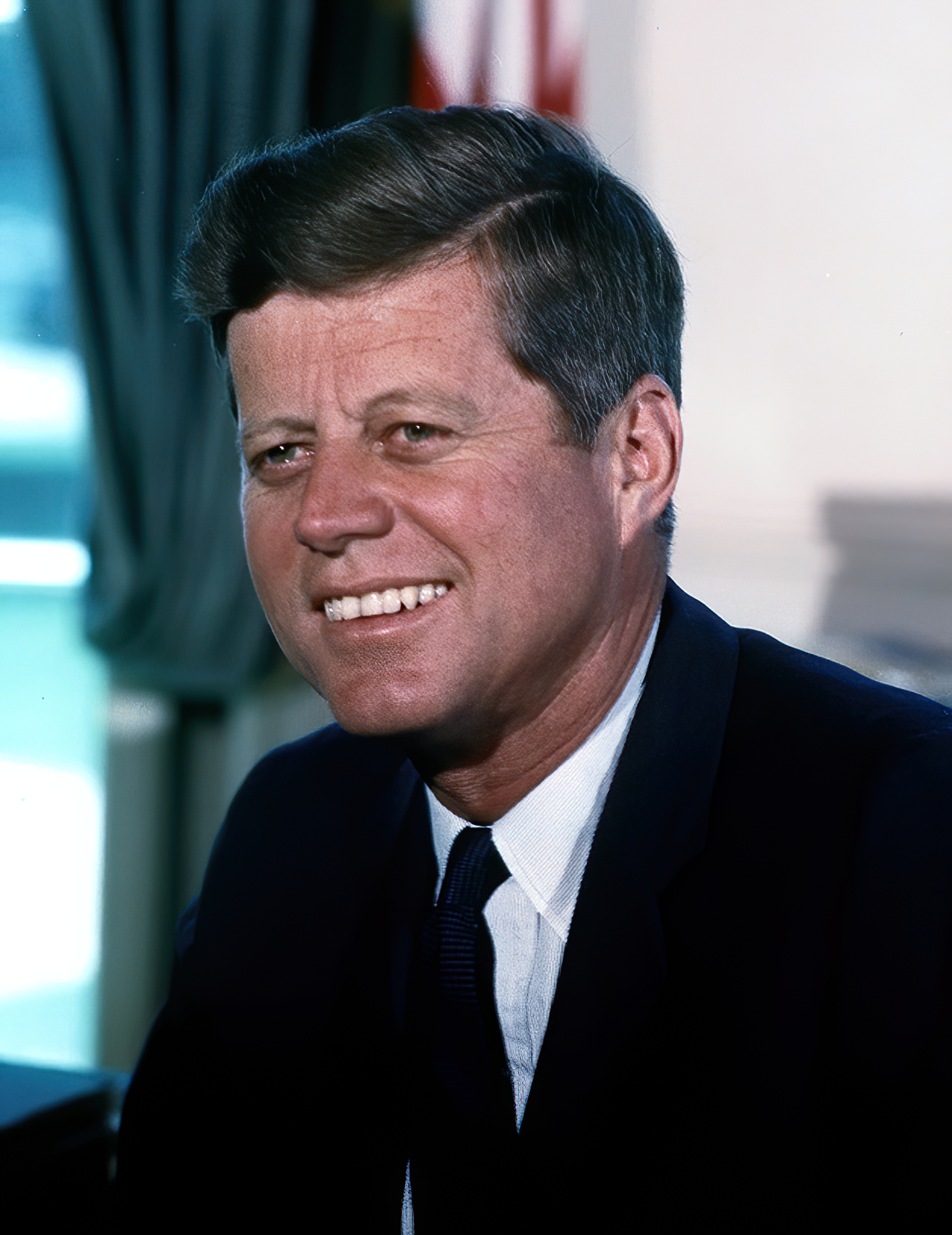
The Kennedy Assassination 50 Years Later: Why do we still care so much?

If you've turned on a TV this week you've been likely to see some mention of a special about the 50th anniversary of the JFK assassination.  There have news specials, documentary films, and entire News Magazine shows devoted to the tragic events that unfolded 50 years ago, this Friday.  Sure, it’s a ratings grab.  Every network wants a piece of the pie.  But the question is, why is there even a pie to be shared?  Why are Americans so drawn to the barrage of coverage that there are enough eyeballs to watch everything and make them profitable?

What is it about the untimely death of our 35th president that is still so intriguing to Americans that it warrants so much time and attention by our popular media?

John F. Kennedy is an enduring character in our popular and political culture, yet his story is so uncharacteristic of who Americans tend to hold up to our highest regards.  He did not struggle to the top from humble beginnings.  He was not an underdog who overcame great odds to become our president.  He was born to a wealthy family with great political, social and economic resources.  He had the best education America had to offer and great social status.  He is the antithesis to the American dream.  He didn't have to work for his social and economic status.  He probably didn't have to work at all if he didn't want to.  Not that everything was handed to him on a silver platter (despite chronic medical woes he was a decorated Navy lieutenant who fought in WWII and suffered injuries during his service, and he worked his way up in politics to our country's highest office), he does not embody the values that the American character tends to celebrate. 

So, what then is it about him that endures?  I've been watching a lot –and I mean a lot of the specials on Kennedy and there are 2 themes are at the heart of almost all of the retrospectives and explorations into Kennedy’s life and death.

The first is how he is frozen in time as this handsome, charismatic young man who had so much potential to make this world a better place and all of that potential was cut short in one instant.  His beautiful wife and children are the things fairy tales are made of.  He had it all and he could have been our great savior – after all, he founded so many important social, environmental and scientific initiatives that are, till today, cornerstones of our society such as the Peace Corps, desegregation initiatives, Space exploration, foreign policy, and the list goes on.  Who knows what he could have gone on to do?  He was a doer and a joiner.  In today’s era where things are so contentious and divisive and seemingly nothing actually can get done in Washington, he was someone who had ideas about what would make our country – and this world – a better place, and he actually got a lot done.  So yes, he was born into greatness, and he reached a place of potential, but just how much farther could he have gone?

The second theme is the conspiracy theories that endure till today.  The Warren commission swore up and down that there was no conspiracy.  Additionally, new forensic evidence and 21st century technology and experiments also have shown that there was no second shooter, no magic bullet and no government involvement in the death of our president.  Yet there are still some strongholds out there that there is more going on than what that evidence seems to point to.  Oliver Stone, the director of the 1991 movie, JFK said it then and reaffirms now that he believes that there had to be a conspiracy surrounding the shooting.  Part of it is that Americans love a good murder mystery.  But I think the other part of it is that there’s a disbelief – or a want to disbelieve that the most powerful person in the free world could be taken down by just one guy with a grudge.  One guy hiding out in a book depository who no one noticed taking aim at our President.  Could security be that lacking?  The conspiracy theory also feeds our seeming need to distrust government and big brother who watches and controls the day to day of our society.  The events surrounding his assassination is rife with questions and so rich with opportunity for conspiracy theories and doubts of the actual events, its no wonder people are still trying to piece together all of the elements to form a sequence of events that give closure.

These are two fundamental pieces of our American character.  So while John F. Kennedy was not the typical character one might write up to be a model of the American dream but in his death so many questions are left unanswered.  That rich text for exploration and questions will endure because there’s no way to answer “what if” and each generation can place their hopes and dreams onto what could have been and hope for something better for them.

Sunday, May 26, 2013

The Great Gatsby


The 1920s is having a moment.   The decadence, the opulence, the sheer extravagance seem to make its way onto the big and small screen time and again and pervade so many aspects of our popular culture today.  It’s no surprise, however, that this should be the case.  Both now and then have many similarities. In a time of great economic instability – then, right before major economic upheaval and us right after – the wealthy seem to be getting richer and the poor seem to be pushed into deeper economic despair.  Music and fashion are pushing cultural boundaries.  Social and political unrest are prevalent and a growing distrust of the government is blooming.  It is no wonder than in both of these times another constant is that people are looking for some kind of relief and outlet for their woes. 

Directed by Baz Luhrmann, The Great Gatsby is a retelling of an old story – both because we’ve all read F. Scott Fitzgerald’s book at least once and because the themes of lost loves, lavish excess, star crossed lovers, cheating lovers, outsiders, insiders, rich and poor have all been covered throughout the history of literature and film.  In his film, Luhrmann puts his own unique auteur stamp on it.  Through his whimsical and often chaotic aesthetic style and a true understanding of the medium in which he works, he layers together his special brand of filmmaking.  The bright and vibrant colors, quick cuts, and close up shots are all signature Luhrmann.  He magnificently recreates the world of the narrative and brings a new and exciting vibrancy to 1920s New York.  

Gatsby takes place in 1922, right at the height of stock market boom, before it all came crashing down.  Nick Carraway (Tobey Maguire) is our narrator, the outsider to the world in which he takes us, the viewers.  His cousin Daisy (Carey Mulligan) is married to an old Yale buddy of his, Tom Buchanan (Joel Edgerton) out on Long Island.  Across the Bay is the famed yet mysterious Jay Gatsby (Leonardo DiCaprio) who is in love with Daisy and throws extravagant parties for whomever wishes to join yet remains allusive to all of his guests.

In Luhrmann’s brilliant twist of fate, he gives Nick the voice of Fitzgerald as the literary voice behind the narrative.  After graduating from Yale, where he had hoped to become the next great American writer, Nick abandons that dream to become a stock broker and make money.  His summer takes a turn for the strange when he meet’s Jay Gatsby at one of his lavish parties.  Immediately he is sucked into the drama that comes with someone like Jay.  Additionally, he pairs up with his cousin, Daisy and her bombastic and disgustingly rich husband Tom.  Nick finds out about Jay’s history with Daisy and suddenly becomes a part of their secret love triangle.  It is at his psychiatrist’s behest that he writes down journal entries of what bothers him and yet what he is unable to convey through the spoken word.  Those entries become the story of The Great Gatsby.  It is Luhrmann’s tribute to Fitzgerald for maintaining his objective view while living in and observing the world he so delicately wrote about.

Gatsby rehashes the age old trope that money cannot buy happiness.  For all of the characters, there is a constant to feel full – full of money, full of friends.  The more you have, or pretend to have, is how you can prove your worth in this world.  This was the case in the 1920s and this is again the case now.  People believe that the more things they have the better they seem and the more people will like them.  For Gatsby he thought that providing people with lavish parties full of free alcohol and entertainment made him loved.  As it turned out, all of those were empty gestures.  When he died, none of those takers were there to give back to him and pay their respects.  He was surrounded by photographers and the press who ogled in the spectacle that was Jay Gatsby.  The only one who was around for him and who really cared was Nick.  Not coincidentally, he was also the one person who refused to take anything from him.  The one person who just wanted his company and his friendship.

Ultimately the lives that our characters live become a race to see who can become the one to die with the most toys – and for what?  No one, not one person in the whole story has a meaningful relationship. Nick thought he had one with Gatsby, but in truth, we don’t actually see a true friendship blossom.  Nick only finds out about who Jay Gatsby was at the end of the film and right before Gatsby dies.  Perhaps they were on their way to a great friendship, but that opportunity was snuffed out.  Daisy and Gatsby – the great star crossed lovers whose fate was never realized – also did not have any evidence of a real relationship outside lust at first side and raw sexual desire.  Five years before our story begins they met at a party and were instantly attracted to one another.  He was in love with her yet when she heard he was penniless she found someone who could provide her with the riches she (and her social status) so desired.  Tom and Daisy, while they are married and have a child together are another dysfunctional pair as he has a wandering eye and hops into bed with any woman he finds beautiful.  He somehow seems to think it’s a redeeming quality of his that he always comes back to Daisy.  

The story, mostly told through flashback, is narrated by Nick while psychiatric care after his summer with Gatsby and the Buchannans.  This perspective conjured up a comparison to One Flew Over the Cuckoo’s Nest – the idea that the insane are running the asylum.  As a culture we value those with money because that status gives them power.  They gorge themselves on material wealth and neglect their emotional states for it.  It is those who go against that grain and don’t buy into that hype are relegated to the sidelines because they don’t have the same “values” or cash on hand to enjoy the finer things in life.  Nick is perfectly happy in his small cottage that he rents for $80 a month.  He wants to use his summer to learn a trade – the stock and bonds business.  Yet he is sucked into the world that Daisy, Tom and Gatsby inhabit and it ends up driving him crazy.

Nick is the consummate outsider – commenting on and observing other people’s drama.  In his voice over narration he laments how he is the keeper of everyone’s secrets which places him both on the inside of their lives and yet always just to the side of it.  Initially he so wants to be a part of it, doing all he can to join in.  Yet, it is his outsider status that ultimately allows him to maintain his sanity and an objective viewpoint to bring him to the other end of the narrative where no one else was able to.

Maybe it’s not that the early 2000s is so similar to the 1920s, rather that American culture is a constant and that The Great Gatsby has maintained its status throughout the generations since it was written because of its universality.  The story recounts struggles that everyone faces in one form or another at some point in life.  Since 1776, the American dream has been such that people believe they are always able to pull themselves out of whichever social or economic sphere they were born into and grown into the next one up.  Generations of successful Americans have proven that to be a viable option. Yet as The Great Gatsby states, the dichotomy between the Nuevo-riche and the old money people is a constant struggle.  The idea that being born into money (as is the conversation in Gastby) or being the “dominant race” or religion, or in today’s cultural climate, the “right sexual preference” somehow gives you a greater stronghold in the world goes directly against the ideal of the American dream yet is alive nonetheless.  Gatsby is a story for the ages and never has that been more evident in Luhrmann’s most recent retelling.  I have no doubt it will be told again and again for decades to come.

Tuesday, February 19, 2013

JC YL GIFs


When I tell main shul members that I have three roommates in a converted one bedroom apartment they're like:


and I'm like:


When we have to sit through another membership appeal speech:


Signing up for all YL events:


When I'm pressured to go to a public lecture in the main shul:


Walking down the OZ stairs friday night:


Walking into YL minyan on shabbos morning:


When I think I look cute eating the chulent and potato kugel at kiddush:


When I told my friends I was moving to the west side and not the heights:


When I walk into shul and realized I got there JFK:


When my little sister moved to the west side she's like:


When my mom comes for shabbos and wants to go to OZ friday night:


What I wish simchat torah at the JC was like:


Getting ready for the YL Purim Shpeil:


Walking into shul before Torah reading has started I'm like: 


When the JC raised YL membership rates, I was like: 


YLers before the Shmini Atzeret lunch started:

image


How I look at work:


and how I look at shul:


When I'm on the elevator going to kiddush and I see main shul members coming:


PURIM!
image


Nonmembers on a non-hot kiddush day:


When I hear kiddush is on the 5th floor and YL davening was on the first:


When Facebook becomes a show-off showcase for everyone's cooking (and their kids):

image


Going to Ali Baba's on a saturday night at 4 AM:


When I can finally afford my own apartment:

image


My roommate dragging me to Darchei Noam:


When the shul tells me I've aged out of the YL membership price range:


Me on a first SYAS phone conversation:

image


When I spot a cute guy across the crowd at kiddush:


My roommate when I head out on a first date:


How I feel when my married friends invite me to Riverdale:


When I get my renewal email from SYAS:


When my mom insists I go back on SYAS, even if she's paying:


When a guy friend tries to be a suave wingman at the JC kiddush


--