I generally love award shows. I love the pomp and circumstance. I love the fashion - both terrible and awesome. I love the acceptance speeches, especially when the winners cry/ramble/feign shock and awe. But admittedly, they generally tend to be quite repetitive and follow pretty much the same formula year in and year out. This year, I will say, was an exception. The Emmy producers found innovative and interesting ways to keep the show feeling fresh. Jane Lynch was a great host - there when you wanted her and gone when she wasn't needed.
It was also great seeing so many of my favorites win. Modern Family with pretty much the sweep was so satisfying. It's such a great show with clever writers and great characters. Well deserved. In the drama category, I LOVED that Kyle Chandler won for Friday Night Lights and I admit to shrieking just a bit when he did. The little show that could also won for best writing, but unfortunately Connie Britton didn't score a win and Mad Men beat it for best drama, but hey, beggers can't be choosers. (Although I will say the recent Matthew Weiner/AMC/Mad Men drama has soured the show a little bit for me and I would have liked to see the show lose to bring it down a few notches, ego-wise.) Jon Stewart won everything in his category, which was not a surprise, and still deserved. Even after 9 consecutive wins, his show stays fresh, interesting, and informative.
Below are some of my favorite moments. Did you have any favorites?
The Opening:
I love how many shows got on board with participating. The reference to Newton Minow's "Vast Wasteland" speech was excellent (which I'm sure was lost on most people watching the telecast).
Best Actress, Comedy:
I wish I could find the announcement of the names, because honestly that was amazing, but this "beauty pageant" conceit was great. I loved the sense of camaraderie on stage (which I'm sure speaks to their acting abilities) and when Melissa McCarthy won (which, lets be honest, was for Bridesmaids) she was so honestly taken by surprise and Amy Poehler's support was so genuine that it was one of the biggest highlights of the night.
Kyle Chandler's win for Best Actor, Drama:
The girls from the new Charlie's Angels along with Drew Barrymore presented this award. I'd be willing to bet that this is the last time that show is going to be honored by the Academy in any way, but it was so nice seeing Lyla Garrity (aka Minka Kelly) get to present this award to Coach Taylor. I only wish he had remembered to thank Tami before the mic went out...
Lonely Island Medly:
Why was this so much funnier than when it aired originally on SNL? I love Michael Bolton's gravitas as though he is performing an important piece of art. Chill dude. The giant American Flag and general USA jingoism mockery was hilarious, especially coming off the recent CNN debates. Oh, and thank you Emmys for finding a place for Uncle Jesse. Hearts.
In Memoriam:
This is always my favorite part of any awards show. Honoring those who paved the way for today's television and and appreciating those who came before us is so important. I love that they continue to include it in the telecast when they are constantly making changes to encourage younger viewers. The musical accompaniment was beautiful. So tasteful and so poignant.
Modern Family, Outstanding Writing in a Comedy:
Now I understand why this show is so brilliantly funny. The hilarious comedic timing of Steve Levitan's wife!! Loved this.
Monday, September 19, 2011

Tuesday, September 13, 2011
Enough with the Remakes!
I get it, I really do. The Movies are a business. While those of us purists and academics like to think of film as an art form, adhering to rules or style and aesthetics, I am savvy enough to also know that while those elements are involved, as an industry film is first and foremost a commodity and a business that needs to make money or else it will fail.
The two schools of thought, art and business, have generally been able to coexist, making it a rather unique business model. Hollywood has traditionally made the big budget movies and, largely beginning in the 1960s, the smaller Art House and Independent movies have been about the art form. Nevertheless, to succeed they both have largely relied on story telling and the development of interesting characters. However, with the recent downward trend of movie-going habits and an upsurge crappy movies it looks like the art form had been traded for pandering. It seems that today for the medium to survive, the film industry is, for the vast majority, capitalizing merely on what they think will make the most money, forgoing all originality. Have all stories been told? Is Pixar the only creative entity left in Hollywood?
What exactly am I referring to? Well take last week's news that Hollywood, in it's infinite wisdom, has decided to remake Beetlejuice. It was also recently announced that Dirty Dancing will be remade. Footloose 2.0 is about to hit theaters. And 2013 and 2014 will see remakes of Drop Dead Fred and The NeverEnding Story, respectively. Please. How uninspired are they? To me, it feels as though the 80s are under attack by a generation of imaginationless studio heads. The 1980s saw an upsurge in teen and adolescent-geared movies and they were hugely successful and immensely popular. The teen culture had, by the 1980s, become huge and its movies lived on in toys, promotional items and other franchises. Today Hollywood seems to be desperately trying to recapture that magic. They are hoping that the original audiences will return, and this time with their kids. Movies are being greenlit by marketing executives who think in terms of demographics. Hmm, they think, the original fans are now of child bearing age and they'll want to take their kids to this movie for the nostalgia factor. That creates a whole new built in audience.
The sad thing to me is that rather than allowing the next generation to appreciate the original versions, they'll have a new shinier one, one which is probably overly sexualized and likely even more violent than the originals (Which, by the way, says a lot. I had to cover my eyes for a lot of the scary scenes in the movies from when I was a kid.) As a child of the 80s and 90s who grew up on all of those movies, I can tell you with utmost authority that these are all revered films and are in no need of revamping. They might be a little dated with their special effects, but if we made movies just to update special effects and make it feel more modern we'd have Casablanca 2 and Rebel without a Cause 2 (Don't get any ideas, Hollywood).
Point is, we don't need remakes of classic 80s movies. Let this generation fall in love with Patrick Swayze as he dances at Kellermans. Kids should be challenged to figure out what a Luck Dragon is. Is it a dog? An actual dragon? Let them marvel at Tim Burton's imaginative landscaping and storytelling with Beetlejuice. But, and this is almost more important, let them have their own stories. Let them see kids on screen who are dealing with the issues they are facing. Movies so often reflect the culture from where they come so what does it say about our culture if no new ideas are being generated? Telling stories from 30 years ago (ugh, has it really been that long?!) doesn't really add much to the zeitgeist. The occasional remake is ok when it actually makes significant and interesting changes, such as landscape (Like moving The Departed to Boston from a Chinese setting in Infernal Affairs) or when its commenting about where our culture has evolved to (note the two versions of Scarface) but so often they are terrible (Manchurian Candidate anyone?) and add nothing to the cinematic landscape (Like Gus Van Sant's shot for shot remake of Psycho). Hollywood was once known as a Dream Factory. These days it seems more like deja vue.
I also think these remakes talk to a bigger issue facing out culture, namely the disposable nature our society has come to value so much. It fosters an idea of disregarding our past and only valuing the present: if there's a new one, that must mean the original is old and obsolete. This might seem like a little dramatic, but I do think that these remakes do make a comment on our society that might be deeper than what it might initially seem. Remaking 80s movies just to capitalize on nostalgia factors and to make a boatload of cash is an insult to our generation and a shame for the next one who won't have their own stories that reflect their lives and the times in which they are living.
Here are some of the original trailers, to remind you of a better time when Hollywood was generating new ideas and not just regurgitating old ones and trying to replicate what an entire generation already values.
The two schools of thought, art and business, have generally been able to coexist, making it a rather unique business model. Hollywood has traditionally made the big budget movies and, largely beginning in the 1960s, the smaller Art House and Independent movies have been about the art form. Nevertheless, to succeed they both have largely relied on story telling and the development of interesting characters. However, with the recent downward trend of movie-going habits and an upsurge crappy movies it looks like the art form had been traded for pandering. It seems that today for the medium to survive, the film industry is, for the vast majority, capitalizing merely on what they think will make the most money, forgoing all originality. Have all stories been told? Is Pixar the only creative entity left in Hollywood?
What exactly am I referring to? Well take last week's news that Hollywood, in it's infinite wisdom, has decided to remake Beetlejuice. It was also recently announced that Dirty Dancing will be remade. Footloose 2.0 is about to hit theaters. And 2013 and 2014 will see remakes of Drop Dead Fred and The NeverEnding Story, respectively. Please. How uninspired are they? To me, it feels as though the 80s are under attack by a generation of imaginationless studio heads. The 1980s saw an upsurge in teen and adolescent-geared movies and they were hugely successful and immensely popular. The teen culture had, by the 1980s, become huge and its movies lived on in toys, promotional items and other franchises. Today Hollywood seems to be desperately trying to recapture that magic. They are hoping that the original audiences will return, and this time with their kids. Movies are being greenlit by marketing executives who think in terms of demographics. Hmm, they think, the original fans are now of child bearing age and they'll want to take their kids to this movie for the nostalgia factor. That creates a whole new built in audience.
The sad thing to me is that rather than allowing the next generation to appreciate the original versions, they'll have a new shinier one, one which is probably overly sexualized and likely even more violent than the originals (Which, by the way, says a lot. I had to cover my eyes for a lot of the scary scenes in the movies from when I was a kid.) As a child of the 80s and 90s who grew up on all of those movies, I can tell you with utmost authority that these are all revered films and are in no need of revamping. They might be a little dated with their special effects, but if we made movies just to update special effects and make it feel more modern we'd have Casablanca 2 and Rebel without a Cause 2 (Don't get any ideas, Hollywood).
Point is, we don't need remakes of classic 80s movies. Let this generation fall in love with Patrick Swayze as he dances at Kellermans. Kids should be challenged to figure out what a Luck Dragon is. Is it a dog? An actual dragon? Let them marvel at Tim Burton's imaginative landscaping and storytelling with Beetlejuice. But, and this is almost more important, let them have their own stories. Let them see kids on screen who are dealing with the issues they are facing. Movies so often reflect the culture from where they come so what does it say about our culture if no new ideas are being generated? Telling stories from 30 years ago (ugh, has it really been that long?!) doesn't really add much to the zeitgeist. The occasional remake is ok when it actually makes significant and interesting changes, such as landscape (Like moving The Departed to Boston from a Chinese setting in Infernal Affairs) or when its commenting about where our culture has evolved to (note the two versions of Scarface) but so often they are terrible (Manchurian Candidate anyone?) and add nothing to the cinematic landscape (Like Gus Van Sant's shot for shot remake of Psycho). Hollywood was once known as a Dream Factory. These days it seems more like deja vue.
I also think these remakes talk to a bigger issue facing out culture, namely the disposable nature our society has come to value so much. It fosters an idea of disregarding our past and only valuing the present: if there's a new one, that must mean the original is old and obsolete. This might seem like a little dramatic, but I do think that these remakes do make a comment on our society that might be deeper than what it might initially seem. Remaking 80s movies just to capitalize on nostalgia factors and to make a boatload of cash is an insult to our generation and a shame for the next one who won't have their own stories that reflect their lives and the times in which they are living.
Here are some of the original trailers, to remind you of a better time when Hollywood was generating new ideas and not just regurgitating old ones and trying to replicate what an entire generation already values.
Sunday, September 11, 2011
The Space Between
 |
| Image Source |
Today marks the 10th anniversary of the September 11th attacks. This is an event which has never left the American parlance from the day it occurred. The images are burned in our minds’ eye as something we will never forget. Across New York, and the country, people are commemorating the horrific events in many different ways. Some are choosing memorial services, private reflection, film screenings, and so-on. Broadcast and cable television stations are also honoring the day with programming devoted to memorializing the events. Something like this should be covered with grace and sensitivity, and I do believe that that’s what the networks would like to be doing. However, for so much of it, watching the networks vie for eyeballs for their 9/11coverage feels like I’m watching a modern day land-grab. With a finite number of viewers and what feels like an infinite number of watching options, each network is desperately trying to get the most viewers to tune into their coverage of the 9/11 tragedy’s 10th anniversary. At times it feels like this solemn event is being monetized and trivialized for rating points.
There are some, however, which are using the best their medium has to offer to memorialize this day. For many of the news stations it seems as though coverage will be, for the most part, interviews with survivors, first responders, politicians. And some will be replaying footage from their original broadcasts 10 years ago. The so-called 9/11 tapes have just been released and those will be sure to get a lot of air time. Personally, I find a lot of it to be reliving trauma, and PTSD-inducing. While it’s of course important to never forget, it’s also vital to move forward with the healing process and I’m not sure a constant barrage of graphic imagery, although familiar, is necessarily the best way to do that.
USA Network has chosen a different route. They have chosen to use artistry and storytelling to commemorate the attacks. As part of their pro-social initiative, Characters Unite, a "public service campaign dedicated to combating prejudice, discrimination and intolerance while promoting understanding and acceptance," they will be showing the film The Space Between tonight at 9 pm.
The Space Between, starring Oscar winner Melissa Leo, premiered at the 2010 Tribeca Film Festival and tells the story of Omar (Anthony Keyvan), a Pakistani-American boy who was on his way from New York to Los Angeles to attend an elite private Muslim school when the towers were hit. His plane is grounded and he is stranded in a strange city with no family or friends around for miles. Having been left to care for him on the plane, Montine, an ornery and irritable flight attendant, agrees to take him back home to find his father, who worked in one of the towers. As they journey back East, they learn about one another and about themselves during a time of national crisis.
The Space Between, starring Oscar winner Melissa Leo, premiered at the 2010 Tribeca Film Festival and tells the story of Omar (Anthony Keyvan), a Pakistani-American boy who was on his way from New York to Los Angeles to attend an elite private Muslim school when the towers were hit. His plane is grounded and he is stranded in a strange city with no family or friends around for miles. Having been left to care for him on the plane, Montine, an ornery and irritable flight attendant, agrees to take him back home to find his father, who worked in one of the towers. As they journey back East, they learn about one another and about themselves during a time of national crisis.
The film's plot plays a little cliché: an ill-tempered adult forced into a situation with an idealistic, innocent and somewhat precocious youngster. The unlikely pair eventually learns to take the best the other has to offer to further their personal development and they help each other get through a particularly rough period in their lives. Interestingly, it's almost reminiscent of 1969's Easy Rider. While it might seem as though these two films have nothing in common, they share a link that might shed some insight into how cinema offers a look at our country in difficult times. They are both about two unlikely heroes who travel from West to East, the opposite of the frontier exploration, and encountering what America and Americans are like in an unchartered era of unknown and fear of those who are different. Both Montine and Omar are outsiders looking for a place to fit in with society and their famlies. They have both suffered great losses and are trying to navigate in a world where their place has been called into question.
 There have been a number of films made about the attacks over the years, but none of them were particularly memorable or impressive. Further, they generally have not tackled one of its most lasting social effects. However, this film, made nearly 10 years after the horrific events, there is enough hindsight and even objectivity to understand and discern between Muslim extremists and the general Muslim community. Omar’s father has taught him to be kind and generous with people and yet he is faced with prejudice and anti-Muslim sentiments time and again. The implicit irony, of course, is that Omar is the peaceful character contrasted with Montine who instigates and incites fights pretty much wherever she goes. This irony is a commentary on our society that perhaps the world was not ready to see (nor was Hollywood ready to make) until this time. However, it offers an insight into our state of heightened prejudice and asks us to take a look at how we view others. Its asks audiences to look at the whole person, not just their skin color or how they dress or any other external features, before passing judgement.
Ten years later we, as a nation, are still grappling with the questions of how something so terrible could have happened on our shores. Our lawmakers, armed forces and all the others entrusted with our safety are trying desperately to ensure it does not happen again. Still, we remain incredulous and unsure about what the future holds. In this regard, Omar is our voice, the voice of the audience who is watching his story. In one scene Omar asks Montine’s brother why God lets bad things happen. It’s so innocent, yet at the same time, such a loaded question. He is the voice of the audience as we are as naïve as he is, despite our attempts to understand and comprehend just how something so horrific could have happened.
This film is an honest portrayal of two people’s stories. It does not attempt to make any grand assumptions about the nation on a whole or how the world reacted. It's not perfect,but it's quiet and quite gripping, and in a media landscape where everyone seems to be shouting this is the quiet whisper which actually has something to say and whose voice is worth listening to.
Friday, September 09, 2011
Another Earth
 |
| Image source |
Ever wonder what it would be like to know there was someone out there exactly like you, with the same experiences, emotions, and backgrounds you had? Someone who you could talk to and could relate exactly to you? On the one hand that would be so exciting to have someone who knows you as only you could. However, on the other hand what would that mean about your sense of self. This film asks, what is “the self” and how do you define yourself and your individual identity if there’s more than one of you?
Another Earth attempts to explore some of those issues. The story which surrounds this exploration involves Rhoda (Brit Marling), a 21 year old who was recently released from jail after driving drunk and killing a woman and her young son. Plagued with guilt, Rhoda tracks down the surviving husband to attempt to make amends. Unable to admit her misdeed to the bereaved father and widower, she makes up an excuse that she’s a housecleaner there to offer a free trial cleaning service. He accepts, and their lives once again become intertwined.
The night of Rhoda’s accident was also the night that Earth 2, as it was called, was discovered. This recently discovered planet seems to be very similar to “our” Earth, and becomes a point of instant fascination about what could be up there. By the time she is out of jail, Earth 2 has become both the target of scientific fascination as well as pop-culture interest. It has been discovered that Earth 2 is a mirror image of our Earth, with the same ecological and biological make-ups and as it turns out, another version of each human on Earth 1. An eccentric Australia millionaire (might as well have been Richard Branson) hosts a writing contest where one entrant will win a trip to Earth 2 to see exactly what's there. Initially hesitant, Rhoda eventually enters the contest to escape the world she’s in and find out if her “other self” has a better life up there.
At its heart, this film is about second chances and redemption. Rhoda is drawn to the man whose life she all but destroyed, doing her best to make amends while not having the ability to actually tell him why she’s there. John Burroughs (William Mapother), the beleaguered father, is trapped in his own misery unable to find a way out. The two are able to help one another, despite the heavy secret that lies between them.
Having only the best intentions, this film is stuffed with heavy themes ranging from the aforementioned identity and individuality to free will versus Divine Providence, being alone versus being lonely, and redemption and second chances. Unfortunately, it doesn’t have the chance to really flesh them out fully. Probably due to budget constraints as Another Earth was filmed on a shoestring budget and one of the most “indie” films I've ever seen, but it left me wanting more of a deeper exploration into these questions it brings up. Many of the issues are mentioned in passing and offered as something for the audience to think about, but the film itself doesn’t actually offer a thought or idea about them. Nevertheless, it did get me thinking about issues of identity and our place in this universe. Would there be a practical difference in our lives if another inhabitable planet was discovered with people on it who share our experiences? Is there another me out there who has managed to “do it” better than me and is more successful and happier even though she had been given the same opportunities as me?
Another issue that lies beneath the surface of the film and is never directly addressed is the issue of which Earth are these characters on? Are we egocentric enough to think they are on our planet? Or perhaps, the whole point of the movie is that we are in fact on Earth 2 and they are Earth 1. In one moment of the film Burroughs exclaims, “Do you think they are up there thinking they are Earth 2? No, they think they are Earth 1!” As humans we seem so captivated by the notion that there is life out there that we’re going to find. We assume we’re the smart, superior beings who will track others down. Maybe, however, and I think this film forces us to think about this, there are others who are looking for us and we aren’t the last word in existence. Overall, the film offers a lesson in humility and being humble despite whatever greatness you believe you deserve or are headed towards. Rhoda has been accepted to MIT the night of the crash. In the opening voice over she talks about how that night the world was hers for the taking and she could go anywhere she wanted to. Burroughs was a Yale professor and famous musician before the crash left him coma-ridden for years and unable to continue his work.
One’s world can change in an instant, and ultimately, the message that I felt that this film offered was to not take what you have for granted appreciate it and honor it. One can always ask the “what ifs” – what if I had done something differently? What if I hadn’t been offered certain opportunities? What if there was someone out there who really understood me that could help me through whatever it is I am going through? Maybe it doesn’t matter. Rhoda was so concerned about what was up there in the night sky when she crashed. Yes, she had been drinking, but she was also staring out the window at the newly discovered planet. Her mind was filled with the “what ifs” and that’s what literally caused her to veer off course and send her life into a whole new direction, lacking the promise she once had.
Thursday, September 08, 2011
Beauty and the Beast "Bonjour" Spoof
Spoofs on existing media is all the rage these days, and for good reason, they can be really awesome. The clip below is the latest video making its way around the interwebs. Sounding a lot like Honey Badger, this one takes on the iconic opening song of Disney's Beauty and the Beast.
Check it out.
There are so many great lines in here, and while probably NSFW, I was LOLing at my desk. She sings about her town of "queens and homos" as they yell "Hey Girl!" to her. "I can hear you bitches" to the women who call her peculiar. My favorite? When she tells the sheep who eats her book that she's going to make it into a sweater. This is just brilliant!
Each time I've watched it (I'm up to 3x) I find new gems which make me shake with laughter. It's awesome, I love it. Just watch.
Check it out.
There are so many great lines in here, and while probably NSFW, I was LOLing at my desk. She sings about her town of "queens and homos" as they yell "Hey Girl!" to her. "I can hear you bitches" to the women who call her peculiar. My favorite? When she tells the sheep who eats her book that she's going to make it into a sweater. This is just brilliant!
Each time I've watched it (I'm up to 3x) I find new gems which make me shake with laughter. It's awesome, I love it. Just watch.
Wednesday, August 31, 2011
Hunger Games Trailer
On Sunday night at the MTV Video Music Awards, MTV spent a significant amount of time promoting the fact that they were going to be offering the first look at the new trailer for the much anticipated Hunger Games movie. This movie has been getting a tremendous amount of buzz. First the announcement that there would be a movie, then the bated breath as each new casting choice was announced (followed by debates over whether they are appropriate choices for the roles). Personally, I think most of the casting is perfect. I was a little skeptical about the three main characters, but after seeing them in costume I'm definitely on board. The supporting cast is really great though. Woody Harrelson as Haymitch is amazing! Donald Sutherland as President Snow? Inspired! Elizabeth Banks as Effie Trinket. Love it!
And now, we finally get the trailer. I loved the books and am totally psyched for the movie, so when they announced there was finally a trailer I got super excited to see a sneak peak at the wonder that would be the Hunger Games. So here it is:
What do you think about it? I'd love to hear your thoughts!
And now, we finally get the trailer. I loved the books and am totally psyched for the movie, so when they announced there was finally a trailer I got super excited to see a sneak peak at the wonder that would be the Hunger Games. So here it is:
I personally think it's a huge let down as far as trailers go. Entertainment Weekly offered more with their photo spread of the cast in costume. All this is is Jennifer Lawrence as protagonist Katniss Everdeen running through the forest. Where are the boys and hints to the love triangle? Where is footage from Panem and the over-the-top looks of people from the capital? I know they are still in the midst of shooting and it's possible not a lot exists yet, but there has to be more than what they've offered. Maybe this is all a ploy by Lionsgate to get us talking about the film and wanting to see more. The movie is still about 7 months away so they have to keep us wanting more till then. Nevertheless, I hope they have something much better to offer us soon!
What do you think about it? I'd love to hear your thoughts!
Tuesday, August 30, 2011
Wilfred
 |
| Image source |

Has anyone been watching FX’s new show Wilfred? I've been watching since it premiered back in June and I have to say it’s probably one of the stranger shows on television right now. I wouldn’t quite say I love it, but I do find it funny and I am definitely intrigued by it.
Admittedly, I am a sucker for good marketing and anything Australian, so when I saw the hilarious promos for it on FX this past Spring, I knew I was going to give it at least a try. Wilfred stars Elijah Wood as Ryan, a depressed (and depressing) guy who can’t seem to do anything right, he’s even failed at his multiple attempts at suicide. However, everything seems to change for him when he meets Wilfred, his neighbor’s dog. Here’s where things begin to get weird. The entire world sees Wilfred as a loving, albeit mischievous, dog. However, Ryan sees a grown man wearing a dog costume (played by the creator and original Australian Wilfred, Jason Gann). Having quit his job as a lawyer and refusing to accept gainful employment, Ryan agrees to dog-sit for Wilfred whenever Jenna (Fiona Gubelmann) needs him to. I wouldn’t say that the two become fast friends by any means.
Wilfred is a walking, talking id. He has no self-control and acts on nearly all of his whims and fancies. He’s over-sexualized, constantly having sex with “Bear,” a giant stuffed bear he keeps in Ryan’s basement, always getting high, and often steals and loots other people’s belongings. More specifically, he is the id to Ryan’s super ego. Unable to stand up to anyone, be it his overbearing and nasty sister or any of the other characters that he encounters, Ryan goes through life doing as others tell him until he breaks. Through the most unconventional means, Wilfred encourages him to stand up for himself, often in a way that wreaks havoc.
Wilfred reminds me a lot of Fight Club. If you haven’t seen it (which would be ridiculous) stop reading now, because I’m going to spoil the ending. In Fight Club you spend the entire movie watching and cringing as Tyler Durden causes trouble for Edward Norton’s unnamed character. Durden starts fights, fires and creates general chaos in the life of “The Narrator.” Not until the end of the movie do we find out that Durden and Norton’s character are one in the same and that Durden was the embodiment of all of the desires and actions that Norton’s character could not act out on his own. Ultimately, it was Norton’s character who was doing all of these acts and Durden was the embodiment of his id, to which he attributed the behaviors.
Similar to Fight Club, Wilfred acts out everything that Ryan cannot or will not. However, given that he is a dog, it’s unlikely that Wilfred is actually doing many of the things for which he is blamed. For instance, in the pilot episode, after Ryan and Wilfred loot the house of a guy who lives down the block, Wilfred returns and places Ryan’s wallet at the scene of the crime, implicating Ryan in the crime and which will ultimately incur the wrath of the victimized neighbor. Ryan blames Wilfred for doing that, but would be impossible to have actually happened. In this scenario, and others similar to it, it’s likely Ryan is self-sabotaging without even knowing it and using the rascally dog as the scapegoat to him acting out on his impulses, something which he had for so long suppressed. In this sense, Ryan becomes his own worst enemy. Like Freud said in his theory on the Return of the Repressed (See my Black Swan review for more), as Ryan has for so long repressed his impulses they are now returning in the form of a monster, one which might ultimately lead to Ryan’s destruction.
Wilfred is definitely unusual and it does keep me coming back week after week. Is meant to be a comedy (which means I am probably reading too much into this) and while is often funny, doesn’t always hit the mark. However, when looked at through the psychology of a tortured young man who is trying to break free of his shell it becomes perhaps a little more meaningful than the creators intended it to be.
Monday, August 29, 2011
Media Consolidation Today
Last year Comcast purchased NBC Universal for around $6.5 billion.
Google bought Morotola a few days ago for $12.5 billion.
Time Warner Cable says it will buy Insight Communications for $3 billion.
It seems to me that almost every day there is some grand announcement that another media company is being bought or sold. Therefore, the number of companies (and ultimately individuals) that hold the control over information and technology is shrinking.
Media consolidation has been a huge topic of conversation since media as an industry was invented. Think back to the newsreels of the 1930s and 1940s. They were owned by movie studios which had their own financial best interests in mind and therefore controlled the news audiences would see in their theaters. Despite being broken up by anti-trust laws, it seems as though we are reverting back to our old ways. BIG money gets spent buying and selling these companies, and it really becomes an issue as these companies are now charged with disseminating the news to consumers and educating them about their world while also answering to their corporate overlords.
Has the recent Murdoch/News Corp scandal taught us nothing? We now see firsthand the dangers that arise when one company, or one man, has too much power over controlling media. How are we allowing this to go on? When the Comcast/NBCU merger was being discussed in congress and the FCC, Senator Al Franken was one of the most vocal voices against the merger. A former actor and comedian who has worked directly in the television industry recognized just how much power one organization will hold over The People, and he didn’t like it one bit. To make matters more complicated, Comcast is also an internet provider which can control the speed at which people receive their news in the medium most are accessing it. This potentially gives them control to decide which neighborhoods, and thus demographics and populations, get their news faster and more efficiently that others.
Now, with Google and Motorola you thrown in technology and the Internet into the mix, people have less and less options of where to go to get what they want. When all this information is being provided by companies looking out for their best interest who wins? Definitely not the consumer. Now we get our news from the same parent company that brings us the Kardashian family. I work in this industry, (and, full disclosure, get my paycheck from NBCUniversal) and I know that yes, they are two separate departments run by very different teams with what likely adds up to opposite skill sets. However, that being said they still answer to the same bosses who have one giant financial spreadsheet.
The ironic fact that the people own the airwaves. Yup, they’re ours. That’s why if you bypass a cable box and plug your TV into the white coaxial cable that’s coming out of the wall in your apartment you’ll get all the broadcast channels. It’s why the government gave out voucher for those set-top boxes that caused such a stir when television went digital a few years back. We have the right to free television. Ideally, the news that comes through on those sets should also be free from opinion, editorial commentary and corporate interests. Company party lines and News Directors will swear they keep the news objective, but sometimes with all this money changing hands and powerful executives putting it on the line for success, it’s sometimes hard to believe that will always be true.
Furthermore, it might be time to reconsider rating and selling ad time during the news the same way it is done for entertainment television. This became evident to me as I wanted the news coverage of Hurricane Irene. At least in New York, every network was trying to outdo the next and this was mainly accomplished by fear-mongering. There's a fine line between providing necessary information to the public to ensure that they stay safe and take the precautions needed to heed the storm warnings and creating a sensationalist environment where people feel they need to stay tuned into the news channels or else they might miss some catastrophe.
I was disgusted watching the coverage of Hurricane Irene. To start with, they send reporters out to the most dangerous areas that have had forced evacuations imposed on them. One reporter on NY1 was driving around a Zone A area on Saturday night showing us just how empty the neighborhood was actually said, "I hope no police men are watching this." Another reporter in Virginia was at a loss for words trying to comprehend how people could walking around and driving in the streets despite the repeated warnings. How about they start setting the examples? How can they expect people to take the necessary precautions when they don't set the standard?
Getting blown in the strong winds and sprayed by water does not actually give audiences new information. Rather it continues this cycle of sensationalism in the news that is not actually helpful. But, people watch that nonsense and it gets ratings, and ultimately benefits the aforementioned bottom line, so news stations won't stop doing it. Of course there were a lot of ravaged neighborhoods and vital information did need to be shared, but the news far surpassed any sort of helpful information. Furthermore, once the storm had passed, newscasters continued to implore with viewers that they should remain tuned in because something bad might be coming that they need to know about. This is came across as a last ditch effort to keep viewers tuned in while knowing that there was not anything essential that they would need to be covering. A stand must be made against this kind of "news reporting." It's insulting to be pandered to like that and it's an embarrassment to journalism.
So what can we do about this? Well, it's our responsibility as informed and engaged consumers to be aware of what's going on and to be vocal about our concerns. When it comes to corporate interests, if mergers are being discussed that don't seem to overstepping their boundaries, write to your congresspeople. Don't let big business get in the way of your human interests. If there are stories in the news that aren't being covered with the objectivity that they deserve, write to your news station or newspaper. And finally, do not stand for the kind of sensationalist journalism that has been coming our way for the sake of ratings. Don't get sucked into the insanity that these so-called journalists are imposing on our airwaves and insist on accurate, informative and helpful news-sharing by your local, national and cable stations.
Google bought Morotola a few days ago for $12.5 billion.
Time Warner Cable says it will buy Insight Communications for $3 billion.
It seems to me that almost every day there is some grand announcement that another media company is being bought or sold. Therefore, the number of companies (and ultimately individuals) that hold the control over information and technology is shrinking.
Media consolidation has been a huge topic of conversation since media as an industry was invented. Think back to the newsreels of the 1930s and 1940s. They were owned by movie studios which had their own financial best interests in mind and therefore controlled the news audiences would see in their theaters. Despite being broken up by anti-trust laws, it seems as though we are reverting back to our old ways. BIG money gets spent buying and selling these companies, and it really becomes an issue as these companies are now charged with disseminating the news to consumers and educating them about their world while also answering to their corporate overlords.
Has the recent Murdoch/News Corp scandal taught us nothing? We now see firsthand the dangers that arise when one company, or one man, has too much power over controlling media. How are we allowing this to go on? When the Comcast/NBCU merger was being discussed in congress and the FCC, Senator Al Franken was one of the most vocal voices against the merger. A former actor and comedian who has worked directly in the television industry recognized just how much power one organization will hold over The People, and he didn’t like it one bit. To make matters more complicated, Comcast is also an internet provider which can control the speed at which people receive their news in the medium most are accessing it. This potentially gives them control to decide which neighborhoods, and thus demographics and populations, get their news faster and more efficiently that others.
Now, with Google and Motorola you thrown in technology and the Internet into the mix, people have less and less options of where to go to get what they want. When all this information is being provided by companies looking out for their best interest who wins? Definitely not the consumer. Now we get our news from the same parent company that brings us the Kardashian family. I work in this industry, (and, full disclosure, get my paycheck from NBCUniversal) and I know that yes, they are two separate departments run by very different teams with what likely adds up to opposite skill sets. However, that being said they still answer to the same bosses who have one giant financial spreadsheet.
The ironic fact that the people own the airwaves. Yup, they’re ours. That’s why if you bypass a cable box and plug your TV into the white coaxial cable that’s coming out of the wall in your apartment you’ll get all the broadcast channels. It’s why the government gave out voucher for those set-top boxes that caused such a stir when television went digital a few years back. We have the right to free television. Ideally, the news that comes through on those sets should also be free from opinion, editorial commentary and corporate interests. Company party lines and News Directors will swear they keep the news objective, but sometimes with all this money changing hands and powerful executives putting it on the line for success, it’s sometimes hard to believe that will always be true.
Furthermore, it might be time to reconsider rating and selling ad time during the news the same way it is done for entertainment television. This became evident to me as I wanted the news coverage of Hurricane Irene. At least in New York, every network was trying to outdo the next and this was mainly accomplished by fear-mongering. There's a fine line between providing necessary information to the public to ensure that they stay safe and take the precautions needed to heed the storm warnings and creating a sensationalist environment where people feel they need to stay tuned into the news channels or else they might miss some catastrophe.
I was disgusted watching the coverage of Hurricane Irene. To start with, they send reporters out to the most dangerous areas that have had forced evacuations imposed on them. One reporter on NY1 was driving around a Zone A area on Saturday night showing us just how empty the neighborhood was actually said, "I hope no police men are watching this." Another reporter in Virginia was at a loss for words trying to comprehend how people could walking around and driving in the streets despite the repeated warnings. How about they start setting the examples? How can they expect people to take the necessary precautions when they don't set the standard?
Getting blown in the strong winds and sprayed by water does not actually give audiences new information. Rather it continues this cycle of sensationalism in the news that is not actually helpful. But, people watch that nonsense and it gets ratings, and ultimately benefits the aforementioned bottom line, so news stations won't stop doing it. Of course there were a lot of ravaged neighborhoods and vital information did need to be shared, but the news far surpassed any sort of helpful information. Furthermore, once the storm had passed, newscasters continued to implore with viewers that they should remain tuned in because something bad might be coming that they need to know about. This is came across as a last ditch effort to keep viewers tuned in while knowing that there was not anything essential that they would need to be covering. A stand must be made against this kind of "news reporting." It's insulting to be pandered to like that and it's an embarrassment to journalism.
So what can we do about this? Well, it's our responsibility as informed and engaged consumers to be aware of what's going on and to be vocal about our concerns. When it comes to corporate interests, if mergers are being discussed that don't seem to overstepping their boundaries, write to your congresspeople. Don't let big business get in the way of your human interests. If there are stories in the news that aren't being covered with the objectivity that they deserve, write to your news station or newspaper. And finally, do not stand for the kind of sensationalist journalism that has been coming our way for the sake of ratings. Don't get sucked into the insanity that these so-called journalists are imposing on our airwaves and insist on accurate, informative and helpful news-sharing by your local, national and cable stations.
Tuesday, August 23, 2011
USA Network's Character Project: Short Films


These short films tell interesting stories about characters – some real, some fictitious, and all interesting. What's most interesting about them is how relatable they are all. Covering a variety of topics and types of people, there is something in all of them that anyone can relate to. To top it all off, they are charming and definitely worth watching. One resounding theme that echoes through many of these eight films is that of mentorship. Each protagonist has someone who believes in them and refuses to give up on them. Having someone believing in you is a powerful force, and the only way that many of us are able to succeed in many of the things we pursue.
Monster Slayer, directed by Caskey Ebeling, is about Ben, a 30-something year old who has battled mental illness since he was a kid. He hates taking his medication because, as he says, it makes him feel like he’s not himself and it makes him feel more alone when he does take it.
The title of the film is Monster Slayer and the real question the film asks is, who is the monster? Is the monster his girlfriend, Sue, who actually says she feels like a monster for imploring him to take his meds? Is it the actual monsters and other creations he sees when he’s off his meds? Or is the monster Ben himself when he is on the medication as he has admitted to feeling like a different person and almost literally slays the monsters when he does take the medicine? In any event, this film, in a brief 13 minutes, has captured a realistic portrait of someone struggling with the realities of mental illness. It blurs the lines between reality and fantasy and allows viewers a quick glimpse into what the affliction might cause.
Duck
Duck, directed by Jakob Daschek, follows Manuel, a young boy who suffers from Haphenephobia, a morbid dislike or fear of being touched. Isolated as it is, he often tunes out the audible world by putting on his headphones so he won’t be bothered by others, and so others won’t bother him. His phobia has caused problems at school and puts a massive amount of stress on his mother who doesn’t know how else to help him. One day she gets a suggestion from a friend to bring him to a gym where he can learn boxing, maybe this kind of human contact will break him from his fear. Here, he also learns that was considered his weakness – an inability to be touched by others – turns out to be a great strength – a gift of avoiding jabs. What could have been his downfall the coach refers to as a gift. It’s his interaction with the coach there, someone who doesn’t give up on him despite what might be a handicap, that ultimately brings Manny to live up to his potential and achieve greatness. It also teaches us to approach our lives with as many perspectives as possible. What one might consider a flaw in ones personality could turn out to be his or her greatest asset.
Fish
Directed by R.J. Cutler, Fish is a short documentary about celebrity chef, Jon Shook. He narrates much of the film, first talking about what inspired him to become a cook and what why he wanted to go to culinary school. He currently owns two restaurants and talks about he focuses his business on sustainability and using as much part of the animal as possible. He gets as many fresh, organic products as possible.
On the particular day that the filmmakers follow him, Jon and self-proclaimed wingman friend, Zach go out on the open seas with Jon go fishing for fresh fish for the restaurant. They bring their spoils back to the restaurant and try to make a main dish out of what they’ve caught, but to no avail. His frustration with the trial and error process with how to prepare one particular fish becomes overbearing at one point, but he doesn’t give up on what he needs to do and knows that he has a whole team of people working for him who also needs to see that he doesn’t give up. Ultimately his passion for what he does and an insistence on excellence shines through.
Perfect
Perfect, directed by Amie Steir, is about Anne on the day of her wedding. As she prepares for her big night, all the people she encounters tell her how excited they are for Sara, Anne’s sister to return home. To everyone else, Sara is perfect in every way. She’s beautiful, smart, successful, and as expected, at the wedding she totally steals the spotlight from her sister. At the wedding she also proves to be a crude sloppy drunk who overshares, insults wedding goers, and makes a general fool out of herself to the entire town. However, in the end it turns out that this is Sara’s gift to Anne, to make her feel perfect on her perfect day.
The Dude
The aim of The Dude, a documentary directed by Jeff Feuerzeig, is to introduce the world to the dude behind “The Dude” of The Big Lebowski. The real “dude” is a Jeffrey Dowd, originally a Seattle based hippie, former draft dodger and antiwar activist. After getting out of jail for his activism he became involved in the independent film industry, and was a part of the original Sundance Film Institute team working to nurture independent voices and storytellers.
The bulk of the film is about Jeff’s time at the 2011 Lebowski Fest in Tampa, Florida. Here he meets his fans and enjoys a celebrity status. People flock to him, call him an achiever, hero and tell him how they’ve been inspired by him. The one thing I've noticed is missing from all the praise is an explanation why he’s a hero. Is it because of the activism he did when he was younger and continues to do till today? It doesn’t really seem like anyone knows about that past, they just know about his status as the real life Dude. Maybe it doesn’t matter why he’s a hero to many and the really important thing is that these fans have found someone they can look up to for whatever reasons are important to them.
The Fickle
The Fickle, directed by Bryan Poyser, is filmed in one continuous shot and shows one young woman as she re-experiences 12 past love affairs. It’s told as a tale of her quest to find love and companionship. Of the men she’s with, each has their own shortcomings and ultimately she has to decide which is the shortcoming she can accept or overlook be happy with the otherwise sweet and endearing man she has found.
Wyckoff Place
Wyckoff Place, directed by Lauri Faggioni, is a documentary about the children who live in an apartment building in Brooklyn, NY. These children, all seemingly between the ages of 8 and 12, are of different races, religions and backgrounds who live together through circumstances outside of their control. They fight, they play, they joke around. In sum, they’re kids. They don’t know the different roles society places them in, so for now they are divided along the lines that kids should be – boys vs girls. Some of them are immigrants and they talk about those experiences and what it was like in their home countries. Some are born in the US, while others come from Sudan, Puerto Rico, and Yemen. They do their homework together, play in the streets and coexist like children should. Their politics and their differences not only go unmentioned, but are completely irrelevant. When asked directly about the other kids, one girl’s only complaint is that they’re too loud. When one boy is asked what it’s going to be like when the kids grow up and move away he says it’s going to be hard because he’ll be “without a friend, and you can’t do anything without a friend.” There is an honest innocence about these children and there’s an implicit sadness that the film garners as viewers know that unfortunately, ultimately prejudice will pervade and the sweet friendships they share will likely be lost. One can only hope, however, that these kids do in fact represent a future where we can live in harmony and see past the differences of our neighbors and recognize the quality person that lives within.
Monday, August 22, 2011
Cinema Verite
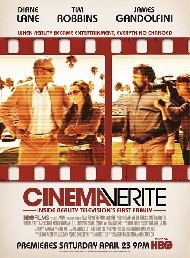
Back in April, HBO aired Cinema Verite, one of their latest movies. Based on the original hit 1973 PBS series An American Family, which followed the Santa Barbara-based Loud family over seven months in a fly-on-the wall documentary style television special. Family was the first iteration of what we now call “Reality TV” and introduced the world to a new concept of entertainment. The HBO movie supposes to be a behind-the-scenes look at what happened outside of the scope of the cameras and shows what the American public did not see. Cinema Verite interweaves original footage with images from this version gives the film a bit more authenticity. It creates a seamless relationship with the original family and this new version of them.
It’s an interesting time for a movie like Cinema Verite to be made. As a society we have enough retrospection to be able to look at it as a historical text, yet remains extremely relevant today with reality TV feeling like it’s reached a fever pitch. Watching Cinema Verite with the knowledge of where reality TV has come today is particularly interesting. It’s like witnessing the moment a car skids off the road and you know what is going to happen next. Without An American Family we might not have had The Real World, The Kardashians, or any other “reality” programming.
In Cinema Verite, it was called a brave new experiment when Mrs. Pat Loud (played by Diane Lane) asks why anyone would want to participate in this intrusive over-exposure. Producer Craig Gilbert (James Gandolfini) says he is looking for “an ideal American family” to observe. He wanted to show what the American family was really like to counteract the idealism that was being depicted on The Brady Bunch and The Partridge Family and the like. This was a time where people’s public images were important and conflict and inanity was not and there was real concern over how the family would be portrayed. America had recently emerged from the tumultuous 1960s where the notion of the idyllic, nuclear, suburban family was thrown into question by rebellious youth who saw their parents’ lifestyles hypocritical and staid. According to this film, Gilbert wanted to show the new American family that has emerged, interesting and volatile. Moreover, he wanted to show the matriarch at the center is now a newly liberated female role model who shows limited similarities to the demure housewife of the 1950s. Gilbert talks about how he wanted to make this documentary series to ensure that if aliens found a time capsule of our society in a thousand years, they wouldn’t only find films of The Partridge Family, something which, as he refers to, as depicting the complete antithesis of how we really live: “fumbling around in confusion.” Pat Loud takes offense at this because she doesn’t want to give off the impression that they are struggling to make sense of their lives. This is the new American family, one which admits to its imperfections, but doesn’t consider them a flaw.
In its depiction of the origins of Family, Verite explores the Loud family’s initial hesitations of what the consequences would be should they allow cameras access to their lives. It was made clear that there would be no payment offered to the Louds so the American audience watching the show would know they were getting honesty and with money being exchanged that honestly would be lacking. That is quite a departure from the millions of dollars in payments, fees and endorsements today’s reality TV stars make.
Further, Bill Loud (played by Tim Robbins) asks about what would be private, and there is general concern about what would remain between the family and what would be accessible to the public. Right there, in that moment is the instant that the ideal of the reality Gilbert had been preaching ceases to be actual reality. It illuminates the notion fact all television is produced, edited and shaped to fit a mold that would be interesting and intriguing to viewers at home. Ultimately despite its intentions at honesty, this film goes to show just how unreal so-called reality television is.
The title of the movie, Cinema Verite comes from the style of filmmaking the documentarians sought to create. They are quoted in the film as saying they were attracted to this project because it was truthful, and the chance to do something “pure.” There was a real concern on the part of the filmmakers which dealt with their ethical responsibilities of entering people’s lives. There were a number of conflicts throughout the movie where the producer and filmmakers butted heads over where the responsibility lay – was it to the family who deserved to be shown in a respectful manner or was it to the audience who deserved to be shown the truth of what really goes on inside a family’s life. Of course, then, there is the question of “the truth.” What is the truth when the cameras are rolling? Is anyone’s behavior truly honest? And even if it is, there is an inevitable editing process that occurs which undercuts any possible honesty on the part of the subjects.
When the fighting between Bill and Pat Loud is about to reach new heights, the filmmakers, Allen and Susan Raymond, stop filming and refuse to go on despite Gilbert’s insistence that the best stuff is now happening and should be caught on camera. They refuse because, as they say, they have established a trust with the family care about them and don’t want to see them destroyed by his film. Susan threatens to expose his filmmaking technique by telling the world how he oversteps all acceptable boundaries. This highlights the almost existential conflict over what is honest and what is ethical. Because for them to honor the trust established with the family and refuse to record all intimate and private moments they are breaking the trust with the audience to be honest storytellers. This is continues to be a struggle filmmakers face today when making documentaries. It’s unlikely, however, that there this is much of an issue in the bare-all, no boundaries of reality television. Reality television today exists as an almost turf-war over who can make the most lewd show and who can embarrass the subjects the most on national television to be mocked by the entire country and the world, all for their 15 minutes of fame.
Of the family members who most easily adapted to the new intruder into his life was the flamboyant oldest son, Lance. This was the case with the original and is also made clear in Verite. One of the most charming sequences in the Family was when Lance took his mother to a drag show, and true to the original, this version also makes that the seminal moment in the film, solidifying Mrs. loud as the understanding mother and whose main goal is to support her children no matter what. Further, it was an early moment in the movie when she learns just how her life is going to be changed by this series and that her every move will be judged by society, so she makes a choice. Does she want to be considered the unsupportive mother or does she want to be the woman who encourages her son’s lewd and outlandish behavior. Early on in the movie we see what becomes an overarching theme of the movie: the importance of crafting a televisual image. When the cameras are turned on, nothing is objective and all has some meaning that can be made from it and Pat Loud learns that early on.
In a particularly interesting moment at the drag cabaret show, one of the performers, as part of her act, declares, “One must never let the public behind the scenes because then they will be disillusioned and then they will be angry with you for it is the illusion they love.” Speaking both to the audience in her theater as well as breaking the fourth wall and speaking to the audience at home, she acknowledges the lasting effect of Family and foreshadows the ire that this production with elicit from viewers.
Ultimately, the most dramatic episode of this movie is Pat’s decision to divorce her husband. In a meta-sense, this is the climactic scene of both An American Family as well as Cinema Verite. When he set out to make the film, Gilbert didn’t know how things would turn out, but HBO does have the benefit of hindsight, so they were able to shape the narrative of the film to lead up to this dramatic crescendo. From the first few minutes of the movie, there is an almost constant allusion to Pat’s unhappiness with her husband’s constant traveling. Further, Verite shows the development a close friendship between Pat and Craig Gilbert that, hints to possibly something more than a platonic relationship. The whole movie builds to the moment when this supposedly ideal family breaks apart. When the moment does come and Pat tells her children her intentions to leave their father, one of the daughters exclaims, “You can’t get divorced! We’re the American family.” In 1973 divorce was still taboo, while in 2011, divorce is unfortunately the hallmark of the All-American family. This comment pulls the viewer out of the narrative to consider what it truly means to be “The American Family.” Have our values changed, or has our over exposure to the inner-goings on of life just exposed us for what we really are?
A big question this movie brings to mind asks what role does television play in our daily lives? Is it a recording of our lives or a reflection? There’s no way to know whether they Louds would have gotten divorced had the cameras never been present in their lives. Video cameras can heighten the pressure and drama of any event, so the Louds might have been victim of that. The filmmakers spoke about achieving a truthful recording of the lives of the Loud family. Is that even possible? What is the truth then? Does it become what you put in front of the camera even if it is dramatized? Are there ethics about putting people’s lives on screen and showing their intimate moments?
Pat Loud tells Gilbert that she will tell Bill she’s leaving him on camera but she wants her kids and her brother off screen. She wants to be able to keep some moments private while also giving the audience what she has been conditioned to believe they deserve. Further, Gilbert has convinced her that she is now a role model to American women and by publicly telling her husband that she is leaving him, her role as such will be confirmed in the eyes of American women.
The movie’s last few minutes is dedicated to the aftermath of An American Family. Original news coverage tells of the 10 million viewers the show garnered every week and its immense popularity. It also shows the hate mail and negative press the family received. People say they are the death of the American family while newspaper headlines declare theirs, “The Divorce of the Year.” Referring to Lance, headlines question the acceptability of “Openly Gay on National TV” as Lance became the first open homosexual on television. TV talking heads called it “An American Tragedy” and says it calls into question “the” American family.
Why were they so despised? Was America being forced to see that the white picket fences we’ve hid behind for so long was just a façade? Furthermore, what has happened between the fury over the Louds and today when dysfunction in family life today is celebrated and networks fight to find the most outlandish groups of people to humiliate on national television?
The movie closes on a quote from Lance where he says, “Family is eternal…Divorce can't destroy it. Television didn't devour it. We're still standing. Loud and Proud.” He loved his family and knew that despite how the cameras showed them, they supported each other no matter what. Maybe that should be the legacy of when An American Family is: proving to the world that despite all else, family is of the utmost importance. The fact that they showed a united front to the media after the show aired, and that Bill and Pat ultimately reconciled because that was Lance’s dying wish, that no matter what family is paramount. Dysfunction often comes with the territory, but it is how we get through the struggles is what makes a family.
Was An American Family really “cinema verite?” Is truthful television or film ever really possible? It’s hard to make that claim, and even though it bore a generation of lewd reality television, maybe we should consider the lasting legacy of the Loud family to be their willingness to be honest and to show American audiences that the American family is one that is not perfect and has its struggles, but ultimately loves and supports one another.
The Help
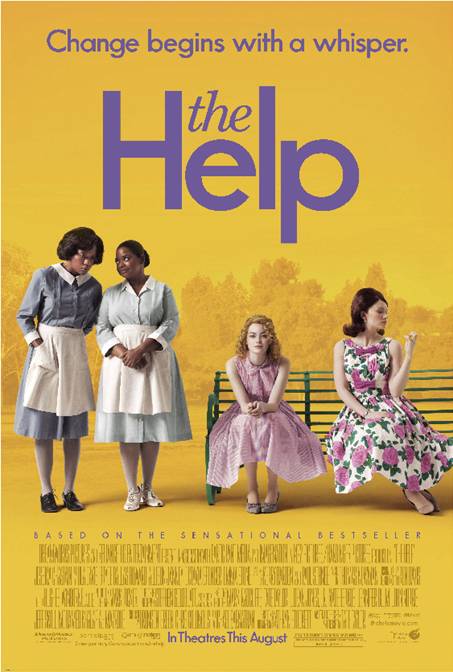
The Help is a movie based on Kathryn Stockett’s 2009 novel of the same name. Directed by Tate Taylor, it tells the story of the relationships between white women and their maids in 1963 Jackson, Mississippi. Shot in vibrant, vivid colors, the visual landscape of the film juxtaposes what was going on beneath the surface of society. In the early days of the Civil Rights movement and in the height of Jim Crow laws, the American South was a far from a pleasant time for the black population. Prohibited from sharing public spaces from their white counterparts, and living under the guise of “separate but equal,” blacks were forced to use separate everything from building entrances and water fountains to hospitals and supermarkets.
In The Help, a young idealistic young woman named Skeeter (the always delightful Emma Stone in one of her more powerful roles to date) has recently returned home from college, liberal and enlightened, and beginning to reintegrate into her old life. Upon attempting to do so, she learns just closed minded and racist her friends are. Her childhood friend and socialite Hilly Holbrook (Bryce Dallas Howard) has made it her mission to create a law that forces the black maids to use separate toilets in the homes of their white owners. Enraged by this explicit hypocrisy, that the maids can love and altogether raise the white children but cannot use the same toilet as the rest of the family, the aspiring journalist Skeeter decides to do something about it. Encouraged by an editor from Harper and Row in New York, Skeeter decides to write a book in which the maids are allowed and encouraged to tell their stories. She begins by asking her one of her friends’ maids, Aibileen Clark (Viola Davis) to tell her story. Initially she is met with refusal out of fear of repercussions. However, as things continue to get worse in Jackson and across the South, Aibileen convinces her friend Minny (Octavia Spencer) and the other maids in town to tell their stories and they begin to come forward.
This film, and the book upon which it’s based, have gotten a lot of criticism from Black groups claiming that it’s not the place of the white people to tell their stories, and that they don’t need white people to help them. Moreover, on the day of the film’s release the association of Black Women Historians claim that the story “distorts, ignores, and trivialized the experience of black domestic workers.” However, it seems that that argument misses the entire point of the story. This film is not meant to be a historical account of every aspect of racism in Jim Crow South. It’s not merely about the self-important white person aiding helpless black people. Rather, the message of the film is a lot more powerful. It’s about people of different races and backgrounds coming together to help each other. Yes, without Skeeter’s enlightenment against the inappropriate ways of her peers it would be unlikely for Aibileen, Minny, and the countless other maids’ stories to be told. However, without the maids agreeing to tell their stories Skeeter would not have been able to find her voice and prove to her mother and the world that she is capable of becoming an important writer, as she so wishes. Celia Foote, the social outcast who employs Minny after Hilly fires her, would never found the confidence to be a good wife and step out from the social pariah-dom that Hilly had forced her into.
In a recent Entertainment Weekly interview, Viola Davis admits to initially having reservations about taking on this role, with similar feelings about the potential one-dimensional depiction of black maids, “because a white woman was writing what I felt was our story, and once again she’s going to get it wrong and she’s only going to skim the surface.” However, “ultimately the story, and what she calls the deep humanity of the characters, won her over. ‘That’s what people bristle at: the maids,” she says. “I’ve played lawyers and doctors who are less explored and more of an archetype than these maids.’” (http://insidemovies.ew.com/2011/08/11/black-women-historians-come-out-against-the-help/). Further, as there are limited roles for strong, adult black women in film today, she was proud to play such a strong, honest character. It’s somewhat ironic that the role which allows her play just that is as a black maid in 1960s Mississippi. Miss Davis, however, brings strength, courage and nobility to her character. There is a quiet grace in the way in which she depicts the proud yet oppressed Aibileen who, despite knowing her place in society, has always strived for a better life and insisted on being more than others told her she could be. Her most touching moments are when she is caring for Mae Mobley, the young daughter of her employer, Elizabeth. The mantra she teaches Mae Mobley is “You is smart. You is kind. You is important.” Elizabeth is unable to care for her daughter in the way she deserves and Aibileen steps in and takes on the role of mother to the toddler and teaches her compassion and love, something in which she wishes so dearly could be something the world would show her.
Is seems as though there have been a lot of television shows and films emerge recently about the 1960s (Mad Men, The Help, the upcoming television shows, Pan Am and The Playboy Club). They also all seem to be there to say something about our current society rather than just being a retrospective. The 1960s was, as much as we romanticize and nostalgize about it, was a time of great social unrest and insecurities. It also is a good allegory for our current social and political situation in 2011. Civil Rights for minority groups is still an issue, with conservative politicians thinking they can discriminate against and be heartless towards others just because they are different. Just substitute Gay Rights for Black Rights and you’ve got a very similar situation. Unfortunately in the last 50 years we have not come all that far in our compassion for minority groups, and whether or not The Help meant to highlight that, it definitely succeeds in doing so.
The film offers an important lesson for how we should be treating others in our modern, supposedly enlightened and liberal, society. “Aren’t you tired, Miss Hilly” are words Aibileen spoke to Hilly Holbrook right after her last attempt to assert her dominance over her. In that moment Aibileen might as well have said “Aren’t you tired, Miss Palin” or “Miss Bachman” or any other tea party conservative who, under a fallacious guise of being a patriot, seem to imply that the only way to be loyal to America is by discriminating against others.
Moreover, the message of the film on a number of levels is about pride in oneself despite external forces telling you otherwise. At the heart of the narrative, and the focus of the message, is of course one of civil rights. The black maids find empowerment in telling their stories and realizing they have something to be proud of. They do have a voice even if society at large is telling them otherwise. The characters that don’t find their voices are the ones that suffer, for instance Elizabeth Leefolt never learns to stand up to the overbearing Hilly and therefore loses the one woman in her life who could have taught her compassion and love for her children. Celia Foote learns is empowered by Minny to be a good wife and homemaker for her husband and not to be defined by the way the other women treat her. Even Skeeter learns to step out from under her mother’s criticisms to find her place.
The real lesson of The Help, and one which I think is as important today as it was in the height of the civil rights movement of the 1960s, is that as a country we need to be united to strengthen ourselves and our communities. The divisive words from pundits and politicians on both the left and the right side of the political spectrum is not helping our society. The only way we can be the strong, empowered nation that has made us great in the past is to put our differences behind us and unite to help each other.
Subscribe to:
Posts (Atom)