Academic Writing

Tuesday, December 06, 2011

The Muppets

Image Source

This Muppets movie, the first big screen feature film since 1999’s Muppets in Space, hit exactly the tone it should have. With the right amount of irreverentness, sarcasm and nostalgia, this movie comments on what it thinks we might have lost as a society, yet also allows for hope to creep in as well.

The story is about Gary (Jason Segel, who also co-wrote the movie), a simple and happy guy from Smalltown, USA who wants nothing more than to make his brother Walter happy. Walter has always been different from the rest of his family and a bit of a social outcast, but when he discovers the Muppets as a child he finds people just like him. (You see, Walter is a Muppet too.) So when Gary invites Walter along on his trip to LA with Mary, his long-time girlfriend (Amy Adams, perfectly casted in this sweet and charming role) so he can visit the Muppets studios and take a tour of the grounds, he’s absolutely elated.

What Walter finds when he arrives at the studios, however, is nothing like he expected. Abandoned, decrepit and all but forgotten, this once magical place of escapism and happiness now lays barren. While exploring Kermit’s office, Walter overhears a plot being hatched by the evil Tex Richman (Chris Cooper) who plans to level the studio to drill for oil. Tracking down Kermit the Frog, they decide the only way to stop Richman is to hold a Muppets variety show which will raise enough money to save the studio. The Muppets have been out of touch with one another for some time so along with Gary, Walter and Mary, Kermit sets out to regroup with his old friends and put on a show.

Peppered with tongue-in-cheek self-referentialisms and a strong awareness of its audience as both longtime and new fans, The Muppets, is adept at entertaining all groups of audiences who would enter the theater. From the one hand, Walter’s discovery of a group which is just like him and accepts him for who he is is perfect for this generation of kids who are dealing with issues of bullying and an overwhelming state of alienation. This is the younger generation who has not necessarily grown up on the Muppets but might have an idea of who they are just based on their general presence in popular culture. Walter has always been different and while he’s been able to find comfort in watching the Muppets through his TV screen, he only fully comes into his own and finds his true self once he has the opportunity to interact with them and create interpersonal connections and ultimately help them as well. This is interesting as so many of our interactions these days are done through a computer or smart phone screen and we often neglect the significance of interacting with people directly.

Secondly, the other group that this movie was made for and, not to mention, made by, are those of us who grew up on the Muppets. Spanning the 70s, 80s, and 90s, these furry creatures captured the hearts of thousands of Gen-Xers, Gen-Yers, and Millennials be it through the original show, movies, or even the Muppet Babies cartoon show.  They've popped up in youtube videos, in cameos on SNL and countless other occurrences.  It's no wonder that even those of us who might not have been huge fans of the originals (I know, blasphemy.  Sorry.), would not only want to see this movie but would hope for it to offer us a positive connection with our childhood.  Further, a lot of our pop-culture has roots in all things Muppet as now that those raised on this strong cultural force are responsible for creating the next generation of pop-culture. The fact that Segel was so passionate about bringing this project to fruition because he grew up as a fan of the show is telling of the power of the brand.

Further, as much as the movie was about Walter finding himself, it was also about Gary realizing what was truly important to him: making a life with Mary. Personally, one thing I got out of the film was that it reminded me of a time where priorities were less complicated. Where you knew what was right and wrong, in other words, childhood. Not to say we should completely regress to when we were kids, there's obviously a lot to be said about growing up, but maybe take a lesson from what was so much simpler back then and put our priorities into the right order.

The movie had me smiling from the first frame, bringing me back to when I used to watch the movies and TV shows. I loved the innocence of the narrative, the song and dance numbers and the cameos! This time of year the movies are all dark and challenging and vying for awards, so if you’re looking for some light fun, go see The Muppets. Leave all cynicism as the door, there’s no room for it in this movie. And if you can do that, you’ll enjoy enjoy yourself and the film.

Monday, December 05, 2011

Dark Shadows Insight

With the upcoming Dark Shadows movie now in production I thought I'd post this video clip of my grandfather, JJ Lupatkin, talking about his experiences working on the show.  He was the technical director of the original Dark Shadows TV show which ran on ABC from 1966-1971.  In addition to DS, over the course of his career he worked for at NBC in Studio 8H for the famed Arturo Toscanini and the NBC Symphony Orchestra, ABC's Wild World of Sports, All My Children and Live! With Regis and Kathy Lee.  My grandfather is the most modest person I know, and has never thought his contribution to television was important or significant to evolution of the medium.  As an engineer by trade, he mostly enjoyed his work as it was an opportunity to be challenged technically, never once caring for celebritydom or fame.  As a student of television and film I've tried to impress upon him just the impact he helped make, but he always rolls his eyes and just tells me that it's more important to be a good person.  In this clip you'll see how he approached his career, as he does everything in life, with passion, attention to detail, and pride.  Hopefully this will give you some insight into the roots of what will possibly be one of the blockbusters of 2012.


Wednesday, November 30, 2011

J. Edgar

Image Source

I had high expectations going in to see Clint Eastwood's J. Edgar.  Firstly because in my eyes Leo DiCaprio can do no wrong.  Sorry, I just have to admit to that bias up front.  And while Leo did come through, as this is probably one of his best performances to date, the rest of the film didn’t quite hold up to the expectations I’d set forth for it.  Secondly, given that it's an Eastwood vehicle and has gotten all the awards buzz that accompany movies, especially biopics with big names attached to them, I assumed it would be a masterpiece.

Told as a back and forth between flashbacks as an aging J. Edgar Hoover (DiCaprio) dictates his life story to a revolving door of clerks and agents who have been charged with the task of typing up his tale.  We learn about his early life as a new agent to the department of justice and how he rose in the ranks of the department from young paranoid, arrogant clerk to old, paranoid, arrogant bureau chief.  The audience is supposed to be able to keep track of different timelines, mostly, by relying on the makeup used to age the characters.  This is pretty unfortunate because the makeup was horrific, resulting in most of the characters looking like burn victims rather than old people.  The story ends up being rather convoluted and the narrative structure is more complex that it really needs to be, which is unfortunate because had it been a little more delicately handled it probably could have worked.

The movie goes on a little longer than it probably needed to, but does tell the story of a man central to shaping the America we know today, so it is an important tale to tell.  What was troubling, as is often the case with biopics, is that the lines are blurred between fact and speculation.  It has been largely assumed that Hoover was a homosexual and was in a relationship with Clyde Tolson (Armie Hammer), his right hand man and close confident for decades.  I found it somewhat troubling that for something that's speculative at best, the film does its best to make you believe it was fact. While I recognize that this is commonplace with films that take on historical figures, it seemed overdone in this one.

One overarching theme that struck me as the most significant in this film is the focus it puts on Hoover’s insistence on keeping information.  To him, as he says outright, information is power.  Hoover was famous for his information collection and he would, as the movie makes clear, threaten anyone who he considered to not to be loyal or anti-American with the dissemination of the information.  In this film, and maybe he was, he comes across rather paranoid and over the top.  He even threatens Tolson, the man who has stayed by his side for years, when he accuses him of being less than honest.  Hoover's insistence on both national and personal loyalty was paramount and would not tolerate anything less.

This control of information, and the constant references to it in the film, seem to be a direct commentary on the state of our relationship with personal information in 2011.  Take the subject of another recent biopic, Facebook founder Mark Zuckerberg in the movie The Social Network.  He too is depicted as a paranoid and arrogant guy who prides himself on the control of information and will take anyone down should they prove to be anything less than up to his standards of loyalty.  However, the main difference with this character is that his goal is to share information.  Speaking on behalf of Facebook recently, his sister announced that anonymity on the internet is no longer available.  Your information and anything you post will be subject to public viewing. They positioned it not as something which should make you upset, but just the next phase in our social evolution; it's our new reality.  Initially people might have been shocked or horrified at this notion, but it hasn't kept people from posting minute detail of their lives online.  Oversharing and publicly putting any thought, picture, or comment on display for anyone with an internet connection.  So then, is Zuckerberg the anti-Hoover as he disseminates information to the masses?  Or is the next generation of Hoover as he too controls information but is simply moderating the sharing of information in this different world?

Additionally, another relationship with modern society seems to have been made clear through the Hoover’s commentary on those who are considered to be anti-American.  In those days the threat was communism, from both abroad and domestic.  From the film, it seems as though Hoover spent his entire career keeping the communist forces at bay to keep America safe.  The idea of protecting America is once again an important social issue nearly a century after Hoover began his work.  These days we have a different enemy, but similarly the threat comes from both from outside our borders and within as well.  Now, however, those doing the accusing seems to be any news outlet who wants to boost its ratings, not a genuine interest in protecting the country.  The important lesson we must learn from this historical repetition is to not be like an opportunist as was Senator Joseph McCarthy (so stated Hoover), but to protect the country in a meaningful way.  What is not helpful is the fever pitch that has become Fox News accusing anyone who doesn’t think like them of being anti-American.

Ultimately this film set out to tell an in depth story of a man who kept secrets.  Not only the secrets of countless Americans, but secrets of his own, and secrets he never wanted coming out.  Even some of the people closest to him, and there were not that many, didn't know the true J. Edgar Hoover.  It seems as though, despite Eastwood's best intentions, while we might get a glimpse into some of his dealings, neither will we.


Sunday, November 27, 2011

The Descendants

Image Source

The Descendants is the latest George Clooney movie to be making Oscar noise (don't they all though?).  Coming quick off the heels of Ides of March, this vehicle is a departure from general Clooney-ness.  As seasoned movie-goers, we’ve become conditioned to expect to see him as often the charismatic and moral center of his films.  His characters always know what to say and can generally charm anyone he encounters.  Even when he’s not being the moral center (see Ides)¸he’s still in charge and knows how to handle any situation in which he’s placed.  It’s unusual seeing this side of Clooney, the clumsy, unsure of himself and a little paunchy, it’s nice to see that he’s actually a good actor and when he stretches his characters he can thrive in that setting as well. 

Set in Hawaii, Clooney is Matt King, a 4th or 5th generation Hawaiian whose wife is in a coma after suffering from a terrible head injury due to a boating accident.  While dealing with his wife’s current state and coming to terms with the fact that now he will have to take a more active role in his daughters’ lives, he also learns that his wife has been cheating on him.  To add to his stress level, in the coming days he will have to make a major decision regarding the sale of hundreds of acres of his family’s land on the island of Kauai.

Things all seem to pile on him at once, and unable to handle the pressure, this actor whose characters generally take things in stride, starts to crack.  In fact, Matt is someone who didn't take things in stride, he ignored them and brushed them under the rug, never wanting to deal with them.  In one particularly intense scene he starts screaming at his comatose wife, finally expressing the emotions he's been unable to share till this point. It's interesting to see this scene juxtaposed to the one when he says goodbye to her.  It's a cinematic treat seeing the character development of a character come full circle.  

As Matt is considering the sale of his family's land at the same time he is reconnecting to his daughters and coming to terms with his wife's ultimate demise, the relationship between the characters and the land is interesting.  While creating a sense of connection between the land that, as Matt admits, has come to him through nothing he’s actually done to deserve it.  Through learning to appreciate his family, the daughters who he fully admitted to being disconnected to, he also learns to appreciate this land, as is also a connection to his family.  As a parent he fully admits to being the "understudy," the parent who steps in only when his wife was unable.  Now he must take full responsibility for his daughters.  So too with the land he must accept responsibility for a property that was placed in his lap, a responsibility which is cannot neglect nor deny. 

The runaway stars of this film are the two young actresses who play the daughters.  Amara Miller is the precocious 10 year old who is more naïve than she wants you to believe.  The Secret Life of an American Teenager’s Shailene Woodley is the other daughter, Alexandra, the troublemaking 17 year old.  Alexandra’s drinking, swearing and general rebelliousness seems to be the cause of her dad’s abundance grey hair.  However, Alexandra becomes his confidant and the one person he learns to trust throughout this ordeal.  She is stronger and more mature than he ever appreciated and turns out to be the rock he can center this new life on.  Hers is a powerful performance and I’m sure we’ll be seeing more of her in the future.

As the first directorial effort from Alexander Payne since 2004’s Sideways, this film nonetheless has all the hallmarks of a Payne film.  Its aesthetics, dark, dry humor all point to Payne.  The film also shows a version of Hawaii rarely seen, and this seems to have been a very deliberate decision as it creates a sense of realism in an world which is so often considered anything but “real life.”  By setting this film in a place which is often expected to be idyllic and paradise-like the predicament in which the characters find themselves is made more universal and relatable.  As though to say, just because something looks great on the outside doesn’t mean to say there isn’t trouble there.  This also allows the audience to accept their situations as well.  Watching this film can be a lesson to us all that while we might think all our troubles are so dire and everyone else around us has it all figured out, that is not really the case and people are struggling just like us.  Just like Matt had to learn to appreciate his family, something he had begun to take for granted, only when something tragic occurred, so too should we learn from his mistakes and appreciate what we’ve got going on in our lives.

Relying on familiar tropes of, “what doesn’t kill you makes you stronger,” and “appreciate what you have before it’s gone,” I pretty much was able to ascertain a sense of how the film was going to end.  There are some twists and turns, but overall the film pretty much holds to your expectations of how a troubled family will ultimately band together to handle a severe trauma and come to appreciate each other like never before.  


Monday, November 14, 2011

Hunger Games trailer 2.0

A few months ago Lionsgate came out with what they called a trailer for The Hunger Games.  It was more of a teaser and I was not a fan (as you can read about here).  However, I woke up this morning to a new, and this time legitimate, trailer featuring all of the main players along with providing a glimpse into what Panem and District 12 will look like.  The trailer pretty much spells out the first third of the book/movie, but I guess they figure most people who are going to see the movie have read the book so they want to give fans what they think want to see.  Nonetheless, the trailer looks awesome and even though I'm still not sold on all of the casting, I'm pretty psyched to see this movie!

Enjoy!

Tuesday, November 08, 2011

Modern Day Fairy Tales

The Fall TV landscape this season has two supernatural and fantastical dramas based on fairy tales.  ABC's Once Upon A Time and NBC's Grimm are narratives which rely on familiar tropes and themes that have been in public parlance for decades, if not centuries.  Additionally, in another couple of months there will also be two similarly themed films coming out, both telling the story of Snow White.  I find this intriguing, but it's nothing new to retell old stories, in fact it seems as though that's all Hollywood's been doing lately. But it feels like something deeper going on here.

Fairy tales are deeply cultural and reveal many social anxieties. I have not yet seen either Snow White film iterations so I cannot comment on those, but I have been watching both Grimm and Once and have had some thoughts on them. Allow me to indulge.

Image source
In Grimm, our protagonist is Nick Burckhardt (David Giuntoli), a detective who recently learns from his dying aunt that he comes from a long line of Grimms, essentially monster hunters.  He acknowledges and accepts his legacy and fate as he has recently realized that he has the ability to see beyond the human exterior many of these werewolves, "blutbads" and other creatures that have been hiding in plain sight as humans.  The show is unraveling as a case-of-the-week serial with an overarching mythology as he explores who he is and where he comes from.


Once is similarly fantastical, although narrates through two parallel story lines rather than one linear story. In one story line Snow White and Prince Charming are forced to send off their infant daughter to escape the wrath of the Evil Queen who wants to kidnap her and kill them.  To punish them the Queen enacts an evil spell which causes everyone to forget who they really are.  Concurrently, the parallel story is about a little boy name Henry who lives in "Storybrooke, Maine" and has discovered that the evil witch has exiled of the fairy tale characters, including Snow White, to storybook and has made them forget who they are.  This little boy is now tasked with ensuring his family and those around him remember their true selves (and ultimately fulfill their destinies).

Some questions to ask include why is self-discovery such an important theme of these shows and why are fairy tales the method in which they are delivered to audiences?  Further, why are they important messages to be imparting?


Image source
Fairy tales are centuries old stories, which, for generations, were passed down orally.  Secondly, they are usually lesson-laden. Often tales of warning and caution, they reach deep into our psyches about things we fear.  Traditionally offered to children as cautionary tales, these stories are being marketed to adults. Be it regarding kidnapping (Hansel and Gretel), mommy/daddy issues (Snow White, and any other stories with a wicked step-parent), and the list goes on.  What these shows seem to be conveying is the sense that as a society we are like vulnerable children: unsure as to our place in this world and what the future will hold.  However, unlike children, we adults do not have the wide-eyed naivete that our young counterparts do.  We do not need the warning that bad things are out there; we are all too aware of the unfortunate realities that lie out there for us.

Therefore, are we as a society being infantilized by being given these once child-oriented stories?  Or are we as adults craving the comforts of out childhoods by seeking out these recognizable stories? Generally familiar stories are like brands and have a built in audience as people know what they will be getting. Studio and network heads know this, but it seems like it's popularity is relying on something a little more. They have also been relatively successful in an otherwise disappointing fall TV-launch season, also garnering some of the biggest buzz.

Moreover, and I think this is probably closer to the heart of the meaning behind these shows, perhaps these stories are currently important for adults to see to teach them the dangers of being too confident and not heading warnings.  We live in a world where the mistakes of those who were supposed to be taking care of the financial well being of the "99%" have wreaked havoc and caused immense financial breakdowns.  However, it is also the social and economic responsibility of every day citizens to care for themselves and for others in times of need.  Perhaps that is the underlying lesson of these modern day retelling of fairy tales.

Tuesday, September 27, 2011

1960s TV Today

Image source
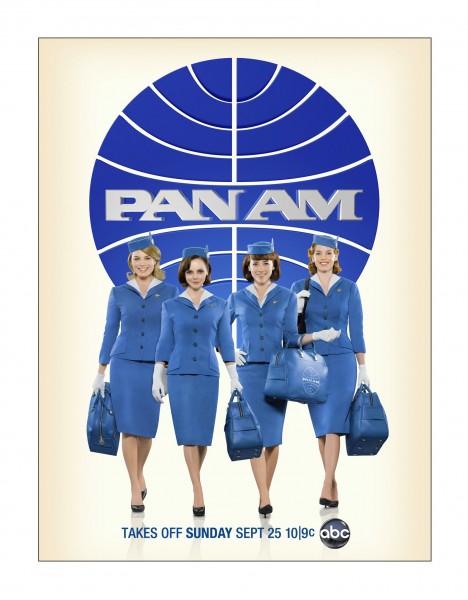
With Pan Am premiering this past Sunday night, the amount of shows which depict 1960s American in a highly nostalgic and stylized manner is now at three.  Along with Mad Men and The Playboy Club, these shows nostalgize and simplify an era that was extremely complicated on a number of levels. Politically and socially the country was in a time of major upheaval.  If we were to go by pop culture from the past 40 years or so, the 1960s seem like such a fun time with limitless drinking, great fashions, and sexual revolutionaries!  What fun!  Women were finding their voices and asserting themselves in what they thought would be a soon-to-be formerly male dominated world. The world was idealistic and excited for how they would emerge from the post-war era with free love and youth culture abounding. 

In fact, the decade was fraught with violence and uncertainty.  People who lived through it know that that this time was in fact was full of contradictions. Yes, all of the above is true, but in addition, student radicals fought for academic and political freedoms, the hippies tuned in, turned on and dropped out, and the yippies sought general anarchy.  By the end of the decade three major political leaders had been assassinated in cold blood, the Vietnam War continued to rage on, and harder drugs were beginning to take hold.  By 1970, the innocent and exciting naiveté the decade opened with had all but disappeared.

Nevertheless, pop culture and general parlance has decided that the 1960s was a better time that should be relived and revered.  Currently, Pan Am, Mad Men and Playboy Club all assert what the 1960s were like to millions of people and neglecting so much else. There are some mentions of the outside culture.  Mad Men did an episode where they mentioned that JFK was assassinated and Pan Am hints to the fact that Maggie (Christina Ricci) is someone who has radical tendencies.  But rarely do these realities of the outside world permeate the general narrative of the shows.

Image source
What I find the most interesting common thread that weaves through all of these shows is how gender roles are structured. Namely, how women are objectified and men are asserted as dominant and in control.  They all highlight the abject inequality of the sexes. And the one woman who is the most active in transcending these roles is Peggy in Mad Men, and she's characterized as a lesbian or bisexual.  In Mad Men, the men are the business leaders and the women are the sexualized. Peggy is not sexy at all; to be assertive, after all, is not sexy and must mean you have homosexual tendencies.  In The Playboy Club, men are businessmen, politicians, or gangsters and women are sexualized. In Pan Am, the men are idolized and heroic pilots or law men and the women are sexualized.

Additionally, all the men of power assert themselves by sleeping around.  This makes them sexier. Don Draper (Jon Ham) sleeps with anything that moves, neglecting his family and his marriage for filling his libido's needs. Nick Dalton (Eddie Cibrian) as an ongoing relationship with the head bunny and the stewardesses of Pan Am fly around the world sleeping with men who they think will care for them, but only realize they are being taken for fools when they meet the wives of these sleaze-balls.  For the women in all of these shows, what excited them the most is sleeping with men of power.  It feels as though it gives them power by proxy or they are able to attain a certain status based on the men they bed.  Either way, it’s still the men who have the control and the women who only have their sexuality at their disposal.

Another interesting message that all of these shows send is that of the idealization of the "man's man". This was an era where men were men and women were women; gender roles were clear and the men were at top because they are strong, successful and deserved to be there.  Women are generally frivolous and don't deserve a status of power.

So then, are the networks sending the message that this was a better time when gender roles were clear and defined?  So much else seems so idealized that why wouldn't this message extend to that as well?  For instance, in Pan Am flying is an actually enjoyable experience where the passengers were treated with respect and the airlines actually seemed to appreciate their business.  By associating these "better times" with the way gender roles were laid out, the two ideals are thereby aligned.

Image source
Pan Am tries to send the message that the stewardesses are the precursors to feminists as they are enlightened, independent women who know there is more to life than the roles they've been assigned by their parents and society.  It even asserts that these stewardesses are a result of natural selection as they have escaped their otherwise eminent futures of wives and homemakers.  True, they do have jobs which pay well and in which they get to see the world.  Nevertheless, they are still objectified and subordinate to males and their passengers.  From the strict regimenting of their uniforms (where Maggie was grounded for not wearing her girdle) to serving their pilots, the women, no matter how upwardly mobile the show wants to think, are still second class citizens.

The episode closes on a young girl watching with awe at the beautiful women in their neatly pressed uniforms and you can almost hear her thinking, "Mommy, that's what I want to be when I grow up."  They have chosen this life to see the world, but is it really a freedom or independence?  That image of the little girl directly contrasts the show’s open where a little boy is similarly staring at a plane about to take off.  The difference, however, is that he gets a nod from a pilot and gets excited about his future as such.  These don't seem like parallel hopes and dreams for the future to me. It's borderline offensive to pretend that these two dreams for the future are equal.

In fact, in many ways, this could not be further from the truth. Men and women, mostly in the younger generation were experimenting in all sorts of ways. Granted not all of these characters fall into the category of "youth" but they depict a rather narrow perspective of the era and don’t truly offer an honest perspective of the times. If the networks were really so keen on showing "the 60s" perhaps they should actually do so.

Ultimately TV is a revenue machine.  If a show doesn’t get the ratings it gets canned, no matter how good it is.  Programming (especially on network TV or basic cable) is a lot more consumable and relatable if the content is made more accessible.  The 1960s was a time of great change in this country, and is definitely one of the most important decades in our recent history.  It’s important to remember it as the complicated era it was and not simply what looks good on TV.


Thursday, September 22, 2011

Newsies!

Image source
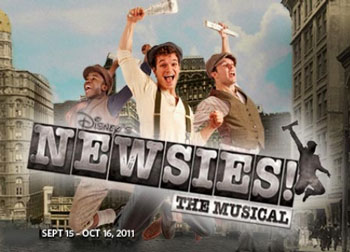
Last week The Paper Mill Playhouse premiered its new stage version of the beloved Disney musical Newsies!  Complete with new songs and revamped characters, this show remains true to the original version while making way for nuances which give it a fresh feel.  There are a few character changes, most notably, Bryan Denton (who was originally played by Bill Pullman) is now a female character, Katherine Plumber and a love interest in Jack.  They've trimmed some of the excessive characters out as well.  For instance, we no longer meet David's family.  (This also cuts out any reference to David being Jewish). 

Definitely go see it.  If you liked the movie, you will really enjoy this production.  Alan Menken and Jack Feldman, who did the music and lyrics, respectively, for the original movie have returned for production and created new numbers for the stage version.  Not all of the new songs are up to par with old ones, like there is no need for Pulitzer to keep on singing, and now it feels like there is one to many ballads.  That being said, I should also mention that I am also having a hard time remaining objective in regards to the music because I hold the old songs so close to my heart. 

What was particularly interesting was how much the message of the story holds true today.  Telling the story of how Jack Kelly (Jeremy Jordan, soon coming to Broadway in Bonnie and Clyde) as he rallies his fellow newsies to strike against the greed of Joseph Pulitzer (John Dosset, who is one of those actors you've seen in a million things).  As a group, the newsies have to learn to stand up for themselves and fight for what they believe in.  They are the "little man" going up against the power hungry corporate interests that seem to be willing to stop at nothing to improve their bottom line numbers.  Sound familiar?  It's definitely a narrative which holds strong through today.

The play, more than the movie, also hammers home the idea that it is the responsibility of the youth to stand up and make a difference in their worlds.  This is a theme and a message not uncommon to youth oriented message films since the 1950s.  It's interesting that it still needs to be mentioned over and over, as if the world hasn't gotten it.  On the other hand, it's important that each generation finds new ways to get the message across in a way that's relevant to them.

Originally choreographed by Kenny Ortega (recently of High School Musical fame), the movie offered an impressive array of talent.  The play is nothing less.  The dancing is impressive and it builds on the foundational ground that the movie did.  Now, choreographer Christopher Gattelli does a good job incorporating much of the original dance moves, but also expands upon it and lets the cast members' talents really shine through.  It's truly an impressive feat of ballet, acrobatics, and definitely coordination. 

One thing that cannot go unmentioned is the set design.  Incorporating video backdrops to depict the city and their living conditions and screens to highlight text that the characters are reading or writing on newspapers, it changes the visual landscape that one might expect from a play and further aesthetically connects it with the original film while forging its own identity at the same time. 

What was great about going to see this show in a venue such as it's in, was that you truly felt like you were surrounded by fans.  People were mouthing along to the lyrics and when new plot twists were introduced there were collective gasps from the audience.  The energy in the theater was electric, and I'm sure, intimidating for the boys on stage.  But they pulled it off.  The show on a whole is a little rough around the edges, last night's performance was only their 6th, so it's understandable.  There were a couple of almost flubbed lined and tossed props occasionally dropped in the wrong places, but I could look past it.  Judging by the standing ovation and deafening applause at the end, most of the audience felt the same.  But for this to make it to Broadway, and I really hope it does, it will definitely have to be retooled some, but for the most part it was a great nod to a great Disney film which has, and continues to, live in the hearts for so many.

Newsies! runs at the Paper Mill Playouse until October 16. 

You can buy tickets here:
http://www.papermill.org/

You can watch clips here:
http://www.papermill.org/photovideo-gallery/video-gallery.html

Here's the clip from when they recently performed on The View:

Monday, September 19, 2011

2011 Emmys!

I generally love award shows.  I love the pomp and circumstance.  I love the fashion - both terrible and awesome.  I love the acceptance speeches, especially when the winners cry/ramble/feign shock and awe.  But admittedly, they generally tend to be quite repetitive and follow pretty much the same formula year in and year out.  This year, I will say, was an exception.  The Emmy producers found innovative and interesting ways to keep the show feeling fresh.  Jane Lynch was a great host - there when you wanted her and gone when she wasn't needed.

It was also great seeing so many of my favorites win.  Modern Family with pretty much the sweep was so satisfying.  It's such a great show with clever writers and great characters.  Well deserved.  In the drama category, I LOVED that Kyle Chandler won for Friday Night Lights and I admit to shrieking just a bit when he did.  The little show that could also won for best writing, but unfortunately Connie Britton didn't score a win and Mad Men beat it for best drama, but hey, beggers can't be choosers.  (Although I will say the recent Matthew Weiner/AMC/Mad Men drama has soured the show a little bit for me and I would have liked to see the show lose to bring it down a few notches, ego-wise.)  Jon Stewart won everything in his category, which was not a surprise, and still deserved.  Even after 9 consecutive wins, his show stays fresh, interesting, and informative.

Below are some of my favorite moments.  Did you have any favorites?

The Opening:


I love how many shows got on board with participating.  The reference to Newton Minow's "Vast Wasteland" speech was excellent (which I'm sure was lost on most people watching the telecast).

 Best Actress, Comedy:


I wish I could find the announcement of the names, because honestly that was amazing, but this "beauty pageant" conceit was great.  I loved the sense of camaraderie on stage (which I'm sure speaks to their acting abilities) and when Melissa McCarthy won (which, lets be honest, was for Bridesmaids) she was so honestly taken by surprise and Amy Poehler's support was so genuine that it was one of the biggest highlights of the night.

Kyle Chandler's win for Best Actor, Drama:


The girls from the new Charlie's Angels along with Drew Barrymore presented this award.  I'd be willing to bet that this is the last time that show is going to be honored by the Academy in any way, but it was so nice seeing Lyla Garrity (aka Minka Kelly) get to present this award to Coach Taylor.  I only wish he had remembered to thank Tami before the mic went out...

Lonely Island Medly:


Why was this so much funnier than when it aired originally on SNL?  I love Michael Bolton's gravitas as though he is performing an important piece of art.  Chill dude.  The giant American Flag and general USA jingoism mockery was hilarious, especially coming off the recent CNN debates.  Oh, and thank you Emmys for finding a place for Uncle Jesse.  Hearts.

In Memoriam:


This is always my favorite part of any awards show.  Honoring  those who paved the way for today's television and  and appreciating those who came before us is so important.  I love that they continue to include it in the telecast when they are constantly making changes to encourage younger viewers.  The musical accompaniment was beautiful.  So tasteful and so poignant. 

Modern Family, Outstanding Writing in a Comedy:


Now I understand why this show is so brilliantly funny.  The hilarious comedic timing of Steve Levitan's wife!!  Loved this. 

Tuesday, September 13, 2011

Enough with the Remakes!

I get it, I really do. The Movies are a business.  While those of us purists and academics like to think of film as an art form, adhering to rules or style and aesthetics, I am savvy enough to also know that while those elements are involved, as an industry film is first and foremost a commodity and a business that needs to make money or else it will fail. 

The two schools of thought, art and business, have generally been able to coexist, making it a rather unique business model.  Hollywood has traditionally made the big budget movies and, largely beginning in the 1960s, the smaller Art House and Independent movies have been about the art form.  Nevertheless, to succeed they both have largely relied on story telling and the development of interesting characters.  However, with the recent downward trend of movie-going habits and an upsurge crappy movies it looks like the art form had been traded for pandering.  It seems that today for the medium to survive, the film industry is, for the vast majority, capitalizing merely on what they think will make the most money, forgoing all originality.  Have all stories been told? Is Pixar the only creative entity left in Hollywood?

What exactly am I referring to?  Well take last week's news that Hollywood, in it's infinite wisdom, has decided to remake Beetlejuice.  It was also recently announced that Dirty Dancing will be remade. Footloose 2.0 is about to hit theaters. And 2013 and 2014 will see remakes of Drop Dead Fred and The NeverEnding Story, respectively.  Please. How uninspired are they?  To me, it feels as though the 80s are under attack by a generation of imaginationless studio heads. The 1980s saw an upsurge in teen and adolescent-geared movies and they were hugely successful and immensely popular. The teen culture had, by the 1980s, become huge and its movies lived on in toys, promotional items and other franchises.  Today Hollywood seems to be desperately trying to recapture that magic.  They are hoping that the original audiences will return, and this time with their kids.  Movies are being greenlit by marketing executives who think in terms of demographics.  Hmm, they think, the original fans are now of child bearing age and they'll want to take their kids to this movie for the nostalgia factor.  That creates a whole new built in audience.

The sad thing to me is that rather than allowing the next generation to appreciate the original versions, they'll have a new shinier one, one which is probably overly sexualized and likely even more violent than the originals (Which, by the way, says a lot.  I had to cover my eyes for a lot of the scary scenes in the movies from when I was a kid.)  As a child of the 80s and 90s who grew up on all of those movies, I can tell you with utmost authority that these are all revered films and are in no need of revamping.  They might be a little dated with their special effects, but if we made movies just to update special effects and make it feel more modern we'd have Casablanca 2 and Rebel without a Cause 2 (Don't get any ideas, Hollywood). 

Point is, we don't need remakes of classic 80s movies.  Let this generation fall in love with Patrick Swayze as he dances at Kellermans.  Kids should be challenged to figure out what a Luck Dragon is.  Is it a dog? An actual dragon?  Let them marvel at Tim Burton's imaginative landscaping and storytelling with Beetlejuice.  But, and this is almost more important, let them have their own stories.  Let them see kids on screen who are dealing with the issues they are facing.  Movies so often reflect the culture from where they come so what does it say about our culture if no new ideas are being generated?  Telling stories from 30 years ago (ugh, has it really been that long?!) doesn't really add much to the zeitgeist.  The occasional remake is ok when it actually makes significant and interesting changes, such as landscape  (Like moving The Departed to Boston from a Chinese setting in Infernal Affairs) or when its commenting about where our culture has evolved to (note the two versions of Scarface) but so often they are terrible (Manchurian Candidate anyone?) and add nothing to the cinematic landscape (Like Gus Van Sant's shot for shot remake of Psycho).  Hollywood was once known as a Dream Factory.  These days it seems more like deja vue.

I also think these remakes talk to a bigger issue facing out culture, namely the disposable nature our society has come to value so much.  It fosters an idea of disregarding our past and only valuing the present: if there's a new one, that must mean the original is old and obsolete.  This might seem like a little dramatic, but I do think that these remakes do make a comment on our society that might be deeper than what it might initially seem.  Remaking 80s movies just to capitalize on nostalgia factors and to make a boatload of cash is an insult to our generation and a shame for the next one who won't have their own stories that reflect their lives and the times in which they are living.

Here are some of the original trailers, to remind you of a better time when Hollywood was generating new ideas and not just regurgitating old ones and trying to replicate what an entire generation already values.


Sunday, September 11, 2011

The Space Between

Image Source

Today marks the 10th anniversary of the September 11th attacks.  This is an event which has never left the American parlance from the day it occurred.  The images are burned in our minds’ eye as something we will never forget.  Across New York, and the country, people are commemorating the horrific events in many different ways.  Some are choosing memorial services, private reflection, film screenings, and so-on.  Broadcast and cable television stations are also honoring the day with programming devoted to memorializing the events.  Something like this should be covered with grace and sensitivity, and I do believe that that’s what the networks would like to be doing.  However, for so much of it, watching the networks vie for eyeballs for their 9/11coverage feels like I’m watching a modern day land-grab.  With a finite number of viewers and what feels like an infinite number of watching options, each network is desperately trying to get the most viewers to tune into their coverage of the 9/11 tragedy’s 10th anniversary.  At times it feels like this solemn event is being monetized and trivialized for rating points. 

There are some, however, which are using the best their medium has to offer to memorialize this day.   For many of the news stations it seems as though coverage will be, for the most part, interviews with survivors, first responders, politicians.  And some will be replaying footage from their original broadcasts 10 years ago.  The so-called 9/11 tapes have just been released and those will be sure to get a lot of air time.  Personally, I find a lot of it to be reliving trauma, and PTSD-inducing.  While it’s of course important to never forget, it’s also vital to move forward with the healing process and I’m not sure a constant barrage of graphic imagery, although familiar, is necessarily the best way to do that.  

USA Network has chosen a different route.  They have chosen to use artistry and storytelling to commemorate the attacks.  As part of their pro-social initiative, Characters Unite, a "public service campaign dedicated to combating prejudice, discrimination and intolerance while promoting understanding and acceptance,"  they will be showing the film The Space Between tonight at 9 pm. 

The Space Between, starring Oscar winner Melissa Leo, premiered at the 2010 Tribeca Film Festival and tells the story of Omar (Anthony Keyvan), a Pakistani-American boy who was on his way from New York to Los Angeles to attend an elite private Muslim school when the towers were hit.  His plane is grounded and he is stranded in a strange city with no family or friends around for miles. Having been left to care for him on the plane, Montine, an ornery and irritable flight attendant, agrees to take him back home to find his father, who worked in one of the towers.  As they journey back East, they learn about one another and about themselves during a time of national crisis.   

The film's plot plays a little cliché: an ill-tempered adult forced into a situation with an idealistic, innocent and somewhat precocious youngster.  The unlikely pair eventually learns to take the best the other has to offer to further their personal development and they help each other get through a particularly rough period in their lives.  Interestingly, it's almost reminiscent of 1969's Easy Rider.  While it might seem as though these two films have nothing in common, they share a link that might shed some insight into how cinema offers a look at our country in difficult times.  They are both about two unlikely heroes who travel from West to East, the opposite of the frontier exploration, and encountering what America and Americans are like in an unchartered era of unknown and fear of those who are different. Both Montine and Omar are outsiders looking for a place to fit in with society and their famlies.  They have both suffered great losses and are trying to navigate in a world where their place has been called into question.

There have been a number of films made about the attacks over the years, but none of them were particularly memorable or impressive.  Further, they generally have not tackled one of its most lasting social effects.  However, this film, made nearly 10 years after the horrific events, there is enough hindsight and even objectivity to understand and discern between Muslim extremists and the general Muslim community.  Omar’s father has taught him to be kind and generous with people and yet he is faced with prejudice and anti-Muslim sentiments time and again.  The implicit irony, of course, is that Omar is the peaceful character contrasted with Montine who instigates and incites fights pretty much wherever she goes.  This irony is a commentary on our society that perhaps the world was not ready to see (nor was Hollywood ready to make) until this time.  However, it offers an insight into our state of heightened prejudice and asks us to take a look at how we view others.  Its asks audiences to look at the whole person, not just their skin color or how they dress or any other external features, before passing judgement.

Ten years later we, as a nation, are still grappling with the questions of how something so terrible could have happened on our shores.  Our lawmakers, armed forces and all the others entrusted with our safety are trying desperately to ensure it does not happen again.  Still, we remain incredulous and unsure about what the future holds.  In this regard, Omar is our voice, the voice of the audience who is watching his story.  In one scene Omar asks Montine’s brother why God lets bad things happen.  It’s so innocent, yet at the same time, such a loaded question.  He is the voice of the audience as we are as naïve as he is, despite our attempts to understand and comprehend just how something so horrific could have happened. 

This film is an honest portrayal of two people’s stories.  It does not attempt to make any grand assumptions about the nation on a whole or how the world reacted.  It's not perfect,but it's quiet and quite gripping, and in a media landscape where everyone seems to be shouting this is the quiet whisper which actually has something to say and whose voice is worth listening to. 

Friday, September 09, 2011

Another Earth

Image source

Ever wonder what it would be like to know there was someone out there exactly like you, with the same experiences, emotions, and backgrounds you had? Someone who you could talk to and could relate exactly to you? On the one hand that would be so exciting to have someone who knows you as only you could. However, on the other hand what would that mean about your sense of self. This film asks, what is “the self” and how do you define yourself and your individual identity if there’s more than one of you?

Another Earth attempts to explore some of those issues. The story which surrounds this exploration involves Rhoda (Brit Marling), a 21 year old who was recently released from jail after driving drunk and killing a woman and her young son. Plagued with guilt, Rhoda tracks down the surviving husband to attempt to make amends. Unable to admit her misdeed to the bereaved father and widower, she makes up an excuse that she’s a housecleaner there to offer a free trial cleaning service. He accepts, and their lives once again become intertwined.

The night of Rhoda’s accident was also the night that Earth 2, as it was called, was discovered. This recently discovered planet seems to be very similar to “our” Earth, and becomes a point of instant fascination about what could be up there. By the time she is out of jail, Earth 2 has become both the target of scientific fascination as well as pop-culture interest. It has been discovered that Earth 2 is a mirror image of our Earth, with the same ecological and biological make-ups and as it turns out, another version of each human on Earth 1. An eccentric Australia millionaire (might as well have been Richard Branson) hosts a writing contest where one entrant will win a trip to Earth 2 to see exactly what's there. Initially hesitant, Rhoda eventually enters the contest to escape the world she’s in and find out if her “other self” has a better life up there.

At its heart, this film is about second chances and redemption. Rhoda is drawn to the man whose life she all but destroyed, doing her best to make amends while not having the ability to actually tell him why she’s there. John Burroughs (William Mapother), the beleaguered father, is trapped in his own misery unable to find a way out. The two are able to help one another, despite the heavy secret that lies between them.

Having only the best intentions, this film is stuffed with heavy themes ranging from the aforementioned identity and individuality to free will versus Divine Providence, being alone versus being lonely, and redemption and second chances. Unfortunately, it doesn’t have the chance to really flesh them out fully. Probably due to budget constraints as Another Earth was filmed on a shoestring budget and one of the most “indie” films I've ever seen, but it left me wanting more of a deeper exploration into these questions it brings up. Many of the issues are mentioned in passing and offered as something for the audience to think about, but the film itself doesn’t actually offer a thought or idea about them. Nevertheless, it did get me thinking about issues of identity and our place in this universe. Would there be a practical difference in our lives if another inhabitable planet was discovered with people on it who share our experiences? Is there another me out there who has managed to “do it” better than me and is more successful and happier even though she had been given the same opportunities as me?

Another issue that lies beneath the surface of the film and is never directly addressed is the issue of which Earth are these characters on? Are we egocentric enough to think they are on our planet? Or perhaps, the whole point of the movie is that we are in fact on Earth 2 and they are Earth 1. In one moment of the film Burroughs exclaims, “Do you think they are up there thinking they are Earth 2? No, they think they are Earth 1!” As humans we seem so captivated by the notion that there is life out there that we’re going to find. We assume we’re the smart, superior beings who will track others down. Maybe, however, and I think this film forces us to think about this, there are others who are looking for us and we aren’t the last word in existence. Overall, the film offers a lesson in humility and being humble despite whatever greatness you believe you deserve or are headed towards. Rhoda has been accepted to MIT the night of the crash. In the opening voice over she talks about how that night the world was hers for the taking and she could go anywhere she wanted to. Burroughs was a Yale professor and famous musician before the crash left him coma-ridden for years and unable to continue his work.

One’s world can change in an instant, and ultimately, the message that I felt that this film offered was to not take what you have for granted appreciate it and honor it. One can always ask the “what ifs” – what if I had done something differently? What if I hadn’t been offered certain opportunities? What if there was someone out there who really understood me that could help me through whatever it is I am going through? Maybe it doesn’t matter. Rhoda was so concerned about what was up there in the night sky when she crashed. Yes, she had been drinking, but she was also staring out the window at the newly discovered planet. Her mind was filled with the “what ifs” and that’s what literally caused her to veer off course and send her life into a whole new direction, lacking the promise she once had.

Thursday, September 08, 2011

Beauty and the Beast "Bonjour" Spoof

Spoofs on existing media is all the rage these days, and for good reason, they can be really awesome.  The clip below is the latest video making its way around the interwebs.  Sounding a lot like Honey Badger, this one takes on the iconic opening song of Disney's Beauty and the Beast.

Check it out.


There are so many great lines in here, and while probably NSFW, I was LOLing at my desk.  She sings about her town of  "queens and homos" as they yell "Hey Girl!" to her.  "I can hear you bitches" to the women who call her peculiar.  My favorite?  When she tells the sheep who eats her book that she's going to make it into a sweater. This is just brilliant!

Each time I've watched it (I'm up to 3x) I find new gems which make me shake with laughter.   It's awesome, I love it.  Just watch.

Wednesday, August 31, 2011

Hunger Games Trailer

On Sunday night at the MTV Video Music Awards, MTV spent a significant amount of time promoting the fact that they were going to be offering the first look at the new trailer for the much anticipated Hunger Games movie.  This movie has been getting a tremendous amount of buzz.  First the announcement that there would be a movie, then the bated breath as each new casting choice was announced (followed by debates over whether they are appropriate choices for the roles).  Personally, I think most of the casting is perfect.  I was a little skeptical about the three main characters, but after seeing them in costume I'm definitely on board. The supporting cast is really great though.  Woody Harrelson as Haymitch is amazing!  Donald Sutherland as President Snow?  Inspired!  Elizabeth Banks as Effie Trinket.  Love it!

And now, we finally get the trailer.  I loved the books and am totally psyched for the movie, so when they announced there was finally a trailer I got super excited to see a sneak peak at the wonder that would be the Hunger Games.  So here it is:


I personally think it's a huge let down as far as trailers go.  Entertainment Weekly offered more with their photo spread of the cast in costume.  All this is is Jennifer Lawrence as protagonist Katniss Everdeen running through the forest.  Where are the boys and hints to the love triangle?  Where is footage from Panem and the over-the-top looks of people from the capital?  I know they are still in the midst of shooting and it's possible not a lot exists yet, but there has to be more than what they've offered.  Maybe this is all a ploy by Lionsgate to get us talking about the film and wanting to see more.  The movie is still about 7 months away so they have to keep us wanting more till then.  Nevertheless, I hope they have something much better to offer us soon!

What do you think about it? I'd love to hear your thoughts!

Tuesday, August 30, 2011

Wilfred

Image source

Has anyone been watching FX’s new show Wilfred?  I've been watching since it premiered back in June and I have to say it’s probably one of the stranger shows on television right now.  I wouldn’t quite say I love it, but I do find it funny and I am definitely intrigued by it.

Admittedly, I am a sucker for good marketing and anything Australian, so when I saw the hilarious promos for it on FX this past Spring, I knew I was going to give it at least a try.  Wilfred stars Elijah Wood as Ryan, a depressed (and depressing) guy who can’t seem to do anything right, he’s even failed at his multiple attempts at suicide.  However, everything seems to change for him when he meets Wilfred, his neighbor’s dog.  Here’s where things begin to get weird.  The entire world sees Wilfred as a loving, albeit mischievous, dog.  However, Ryan sees a grown man wearing a dog costume (played by the creator and original Australian Wilfred, Jason Gann).  Having quit his job as a lawyer and refusing to accept gainful employment, Ryan agrees to dog-sit for Wilfred whenever Jenna (Fiona Gubelmann) needs him to.  I wouldn’t say that the two become fast friends by any means. 

Wilfred is a walking, talking id.  He has no self-control and acts on nearly all of his whims and fancies.  He’s over-sexualized, constantly having sex with “Bear,”  a giant stuffed bear he keeps in Ryan’s basement, always getting high, and often steals and loots other people’s belongings.  More specifically, he is the id to Ryan’s super ego.  Unable to stand up to anyone, be it his overbearing and nasty sister or any of the other characters that he encounters, Ryan goes through life doing as others tell him until he breaks.  Through the most unconventional means, Wilfred encourages him to stand up for himself, often in a way that wreaks havoc. 

Wilfred reminds me a lot of Fight Club.  If you haven’t seen it (which would be ridiculous) stop reading now, because I’m going to spoil the ending.  In Fight Club you spend the entire movie watching and cringing as Tyler Durden causes trouble for Edward Norton’s unnamed character.  Durden starts fights, fires and creates general chaos in the life of “The Narrator.”  Not until the end of the movie do we find out that Durden and Norton’s character are one in the same and that Durden was the embodiment of all of the desires and actions that Norton’s character could not act out on his own.  Ultimately, it was Norton’s character who was doing all of these acts and Durden was the embodiment of his id, to which he attributed the behaviors. 

Similar to Fight Club, Wilfred acts out everything that Ryan cannot or will not.  However, given that he is a dog, it’s unlikely that Wilfred is actually doing many of the things for which he is blamed.  For instance, in the pilot episode, after Ryan and Wilfred loot the house of a guy who lives down the block, Wilfred returns and places Ryan’s wallet at the scene of the crime, implicating Ryan in the crime and which will ultimately incur the wrath of the victimized neighbor.  Ryan blames Wilfred for doing that, but would be impossible to have actually happened.  In this scenario, and others similar to it, it’s likely Ryan is self-sabotaging without even knowing it and using the rascally dog as the scapegoat to him acting out on his impulses, something which he had for so long suppressed.  In this sense, Ryan becomes his own worst enemy.  Like Freud said in his theory on the Return of the Repressed (See my Black Swan review for more), as Ryan has for so long repressed his impulses they are now returning in the form of a monster, one which might ultimately lead to Ryan’s destruction.

Wilfred is definitely unusual and it does keep me coming back week after week.  Is meant to be a comedy (which means I am probably reading too much into this) and while is often funny, doesn’t always hit the mark.  However, when looked at through the psychology of a tortured young man who is trying to break free of his shell it becomes perhaps a little more meaningful than the creators intended it to be.   

Monday, August 29, 2011

Media Consolidation Today

Last year Comcast purchased NBC Universal for around $6.5 billion.
Google bought Morotola a few days ago for $12.5 billion.
Time Warner Cable says it will buy Insight Communications for $3 billion.

It seems to me that almost every day there is some grand announcement that another media company is being bought or sold. Therefore, the number of companies (and ultimately individuals) that hold the control over information and technology is shrinking.

Media consolidation has been a huge topic of conversation since media as an industry was invented. Think back to the newsreels of the 1930s and 1940s. They were owned by movie studios which had their own financial best interests in mind and therefore controlled the news audiences would see in their theaters. Despite being broken up by anti-trust laws, it seems as though we are reverting back to our old ways. BIG money gets spent buying and selling these companies, and it really becomes an issue as these companies are now charged with disseminating the news to consumers and educating them about their world while also answering to their corporate overlords.

Has the recent Murdoch/News Corp scandal taught us nothing? We now see firsthand the dangers that arise when one company, or one man, has too much power over controlling media. How are we allowing this to go on? When the Comcast/NBCU merger was being discussed in congress and the FCC, Senator Al Franken was one of the most vocal voices against the merger. A former actor and comedian who has worked directly in the television industry recognized just how much power one organization will hold over The People, and he didn’t like it one bit. To make matters more complicated, Comcast is also an internet provider which can control the speed at which people receive their news in the medium most are accessing it. This potentially gives them control to decide which neighborhoods, and thus demographics and populations, get their news faster and more efficiently that others.

Now, with Google and Motorola you thrown in technology and the Internet into the mix, people have less and less options of where to go to get what they want. When all this information is being provided by companies looking out for their best interest who wins? Definitely not the consumer. Now we get our news from the same parent company that brings us the Kardashian family. I work in this industry, (and, full disclosure, get my paycheck from NBCUniversal) and I know that yes, they are two separate departments run by very different teams with what likely adds up to opposite skill sets. However, that being said they still answer to the same bosses who have one giant financial spreadsheet.

The ironic fact that the people own the airwaves. Yup, they’re ours. That’s why if you bypass a cable box and plug your TV into the white coaxial cable that’s coming out of the wall in your apartment you’ll get all the broadcast channels.  It’s why the government gave out voucher for those set-top boxes that caused such a stir when television went digital a few years back. We have the right to free television. Ideally, the news that comes through on those sets should also be free from opinion, editorial commentary and corporate interests. Company party lines and News Directors will swear they keep the news objective, but sometimes with all this money changing hands and powerful executives putting it on the line for success, it’s sometimes hard to believe that will always be true.

Furthermore, it might be time to reconsider rating and selling ad time during the news the same way it is done for entertainment television.  This became evident to me as I wanted the news coverage of Hurricane Irene.  At least in New York, every network was trying to outdo the next and this was mainly accomplished by fear-mongering.  There's a fine line between providing necessary information to the public to ensure that they stay safe and take the precautions needed to heed the storm warnings and creating a sensationalist environment where people feel they need to stay tuned into the news channels or else they might miss some catastrophe.

I was disgusted watching the coverage of Hurricane Irene.  To start with, they send reporters out to the most dangerous areas that have had forced evacuations imposed on them.  One reporter on NY1 was driving around a Zone A area on Saturday night showing us just how empty the neighborhood was actually said, "I hope no police men are watching this."  Another reporter in Virginia was at a loss for words trying to comprehend how people could walking around and driving in the streets despite the repeated warnings.  How about they start setting the examples?  How can they expect people to take the necessary precautions when they don't set the standard?

Getting blown in the strong winds and sprayed by water does not actually give audiences new information.  Rather it continues this cycle of sensationalism in the news that is not actually helpful.  But, people watch that nonsense and it gets ratings, and ultimately benefits the aforementioned bottom line, so news stations won't stop doing it.  Of course there were a lot of ravaged neighborhoods and vital information did need to be shared, but the news far surpassed any sort of helpful information.  Furthermore, once the storm had passed, newscasters continued to implore with viewers that they should remain tuned in because something bad might be coming that they need to know about.  This is came across as a last ditch effort to keep viewers tuned in while knowing that there was not anything essential that they would need to be covering.  A stand must be made against this kind of "news reporting."  It's insulting to be pandered to like that and it's an embarrassment to journalism.

So what can we do about this?  Well, it's our responsibility as informed and engaged consumers to be aware of what's going on and to be vocal about our concerns.  When it comes to corporate interests, if mergers are being discussed that don't seem to overstepping their boundaries, write to your congresspeople.  Don't let big business get in the way of your human interests.  If there are stories in the news that aren't being covered with the objectivity that they deserve, write to your news station or newspaper.  And finally, do not stand for the kind of sensationalist journalism that has been coming our way for the sake of ratings.  Don't get sucked into the insanity that these so-called journalists are imposing on our airwaves and insist on accurate, informative and helpful news-sharing by your local, national and cable stations.